
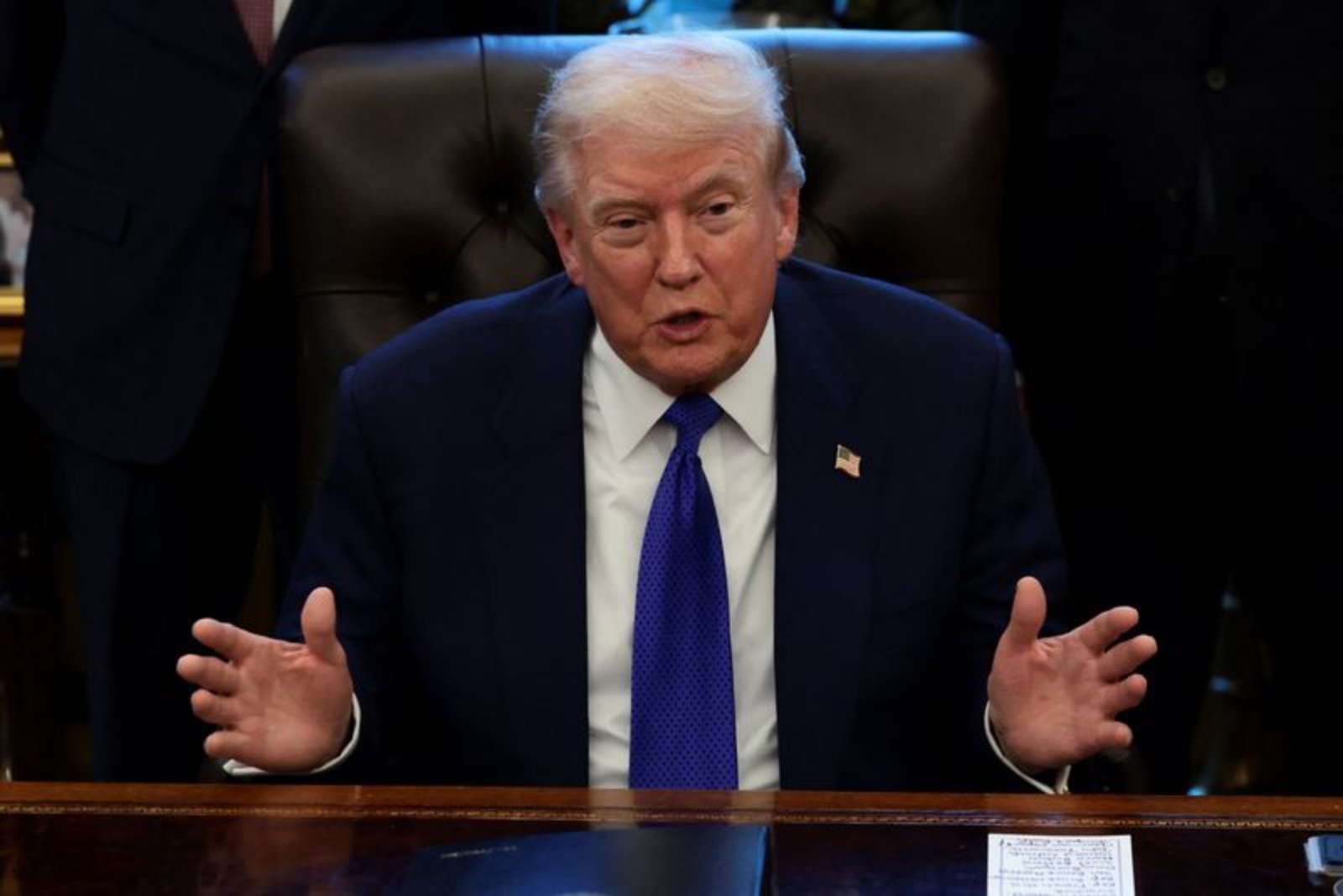
Feb 6 - U.S. President Donald Trump signed an executive order that reshapes how the United States prioritizes foreign customers for American weapons, the White House announced on Friday. The directive, named the "America First Arms Transfer Strategy," instructs federal agencies to tilt arms sales toward countries that have made substantial investments in their own defense and that hold strategic roles or occupy critical geographies.
The administration said the strategy is intended to accelerate deliveries of U.S.-manufactured weapons to partners it deems essential for regional security and to harness foreign defense purchases to expand domestic production capacity. The executive order does not list any specific countries.
In a fact sheet released alongside the order, the White House explained the policy shift, stating: "Future arms sales will prioritize American interests by using foreign purchases and capital to build American production and capacity." The document frames the change as both a national security and industrial policy initiative.
Under the new approach, the Secretaries of Defense, State, and Commerce are charged with assembling a catalog of prioritized platforms and systems and with identifying sales opportunities that align with the strategy's goals. Historically, the administration said, U.S. arms sales were managed on a first-come, first-served basis, with deviations permitted only after significant hurdles were cleared and a particular country was granted priority.
The executive order also directs efforts to streamline bureaucratic procedures that have slowed transfers. That includes enhanced end-use monitoring and more efficient third-party transfer protocols, intended to reduce delays and increase transparency in the sales process. The White House said a prior "partner-first" approach resulted in production backlogs and delivery delays because orders did not always match U.S. manufacturing capabilities.
By prioritizing buyers with higher defense spending and those the administration considers strategically important, the order aims to align U.S. defense exports with objectives for national security and domestic industrial revitalization.
The text of the executive order was accompanied by a note that, in 2025, NATO leaders supported a new defense spending target of 5% of GDP and reiterated their commitment to mutual defense. The White House did not expand on how that pledge intersects with the new U.S. strategy beyond the inclusion of the NATO reference in the background material.
Separately, the materials distributed with the order included a promotional segment on investment research tools, posing the question: "What are the best investment opportunities in 2026?" The notice recommended using data-driven platforms to evaluate opportunities and mentioned a product called WarrenAI as an example of an analytical aid.