
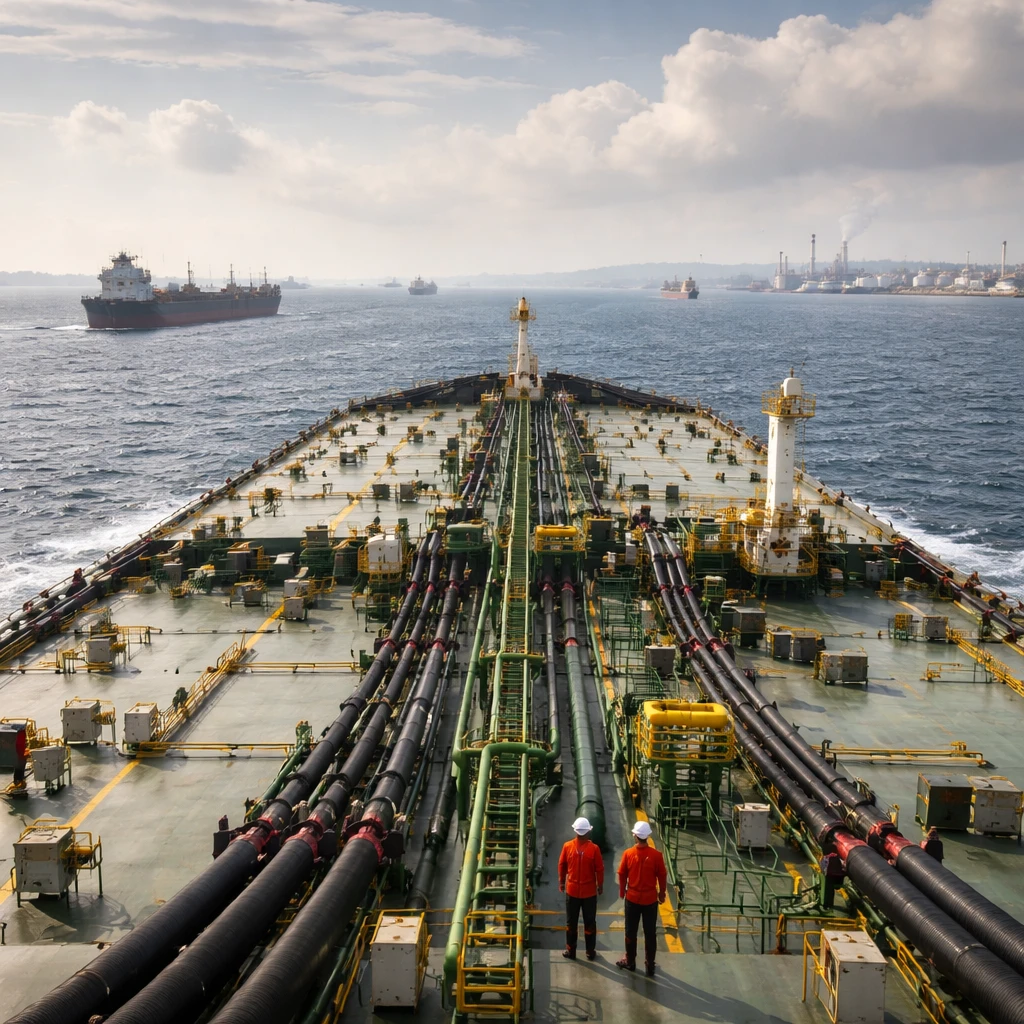
The White House has authorized a 30-day sanctions waiver that allows Iranian crude already loaded on tankers to be delivered and sold, a measure expected to add about 140 million barrels of crude to the global market. The move is being presented by senior administration officials as a tactical response to sharply higher energy costs that have passed the $100-a-barrel mark.
Administrative rationale
Treasury Secretary Scott Bessent described the action as a strategic shift intended to use existing Iranian supplies as a "buffer" to shield U.S. consumers and businesses in the run-up to the November midterm elections. The waiver applies only to oil already at sea and allows deliveries through April 19.
Officials say the United States itself is not a meaningful buyer of Iranian crude, noting that the primary recipients will be refiners in Asia, with China, India, and South Korea expected to be the main beneficiaries. Energy Secretary Chris Wright said the barrels could reach Asian processing hubs within days, producing a near-term easing of market pressure after a sustained price rally.
Market context and stated intent
The administration has framed the action as a way to "use Iranian barrels against Tehran," seeking to expand physical supply while attempting to prevent Iran from freely accessing the revenues produced from those sales. Bessent emphasized that a financial choke point on Iran remains a priority, saying, "Washington will maintain maximum pressure on Iran and its ability to access the international financial system."
This temporary relaxation follows other recent adjustments to energy-related sanctions policy. It is the third such easing by the Treasury in the space of two weeks, coming on the heels of comparable moves related to Russian oil. Officials say these steps reflect the severity of the current supply crunch.
Where the squeeze is coming from
Energy markets have tightened amid disruptions linked to the U.S.-Israeli conflict with Tehran. Since the launch of "Operation Epic Fury" on February 28, crude prices have climbed about 50 percent, according to administration accounts. The situation has been aggravated by the effective closure of the Strait of Hormuz, a key maritime chokepoint through which roughly 20 percent of global liquefied natural gas and crude passes.
Responding to the disruption, the administration has made several policy moves to stabilize fuel flows, including a 60-day waiver of the Jones Act designed to ease domestic fuel movement. The current release of roughly 140 million barrels is intended to offer immediate relief, though officials stress that the ultimate trajectory of prices will depend on how long hostilities persist.
Implications and limits
While the waiver may temper near-term price spikes by increasing available supply, officials underline that the measure is temporary and narrowly tailored. The administration continues to prioritize restrictions on Iran's access to the international financial system even as it permits the physical movement of oil for a limited window aimed at stabilizing market conditions.