
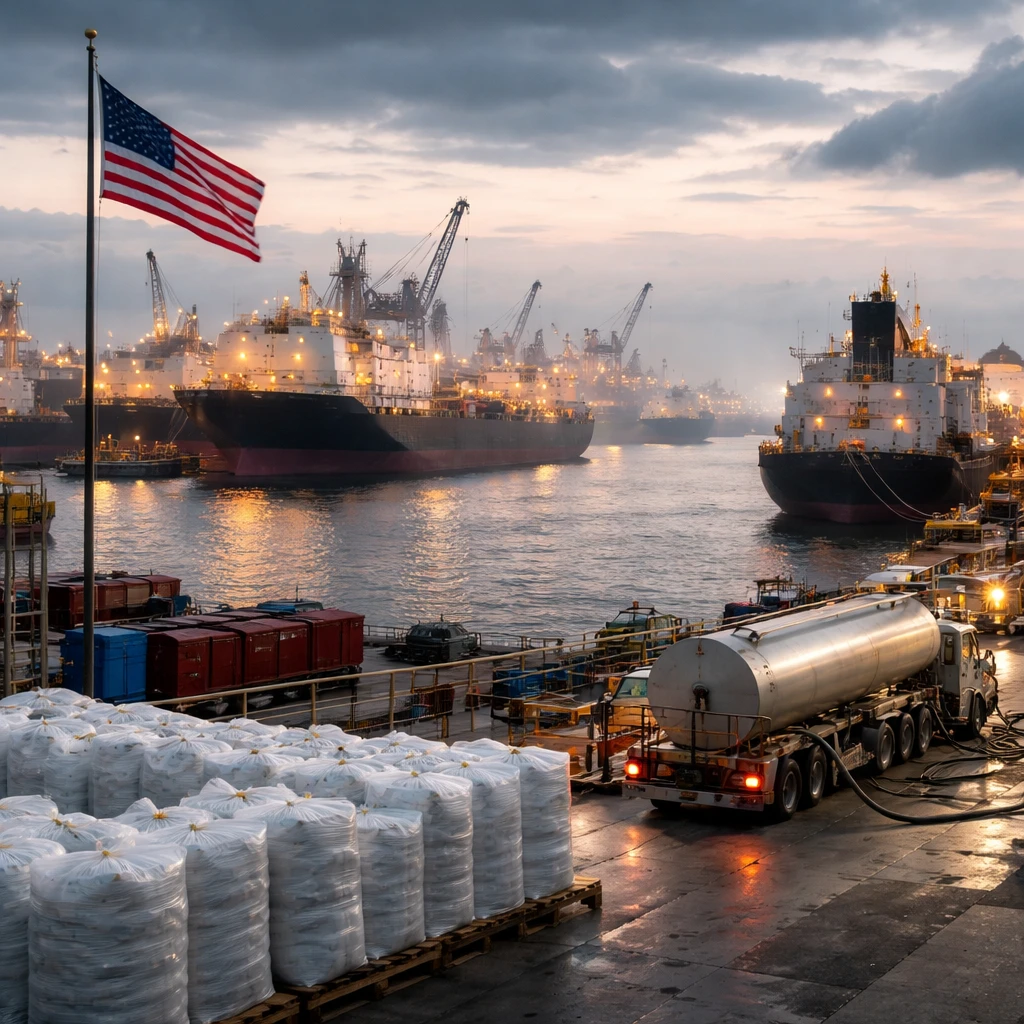
The White House on Wednesday said it has authorized a 60-day waiver of the Jones Act's domestic shipping requirements to help alleviate disruptions in fuel and fertilizer deliveries. The move is intended to facilitate quicker and broader movement of critical energy and agricultural inputs to U.S. ports as supply pressures mount.
White House spokeswoman Karoline Leavitt described the decision to issue the waiver as a targeted step to blunt short-term dislocations in the oil market while U.S. military forces continue to pursue the objectives of Operation Epic Fury. Leavitt said the temporary relief will permit resources such as oil, natural gas, fertilizer and coal to flow more freely into U.S. ports for the 60-day period.
The administration said it remains focused on strengthening critical supply chains even as it takes this temporary regulatory action. The decision comes amid elevated energy prices, a matter that carries political significance for President Donald Trump and other Republican officials who have emphasized that their policies would keep fuel affordable for American consumers.
U.S. pump prices have risen since U.S. and Israeli attacks on Iran began on February 28, a confrontation that has effectively constrained passage through the Strait of Hormuz - the waterway that serves as the outlet for around a fifth of global oil and liquefied natural gas supplies. The disruption in maritime flows has also affected fertilizer availability, a particular concern for U.S. agricultural stakeholders.
Under the Jones Act, cargo moved between U.S. ports must be transported on vessels that are U.S.-built, U.S.-flagged and predominantly U.S.-owned. That regulatory requirement sharply narrows the pool of tankers available for domestic coastal shipments, a constraint that is backed by maritime industry unions.
By pausing the rule for two months, the administration will allow foreign vessels to carry domestic cargoes between U.S. ports. Officials and analysts note that the temporary waiver could lower shipping costs and accelerate deliveries, although analysts have said the effect on retail gasoline prices at the pump is likely to be limited.
- Scope: The waiver covers oil, natural gas, fertilizer and coal shipments between U.S. ports for 60 days.
- Rationale: Officials cite short-term mitigation of oil market disruptions while military operations continue.
- Limitations: Analysts expect only a modest impact on pump prices despite potential shipping efficiencies.