
Overview
Humanoid robots are positioned to become a major segment of automation in the coming decade, according to a Barclays report. Analysts behind the report estimate the humanoid market could be worth as much as $200 billion by 2035, and that humanoids could form part of a broader "physical AI" ecosystem valued at up to $1 trillion by the same year.
From lab to real-world settings
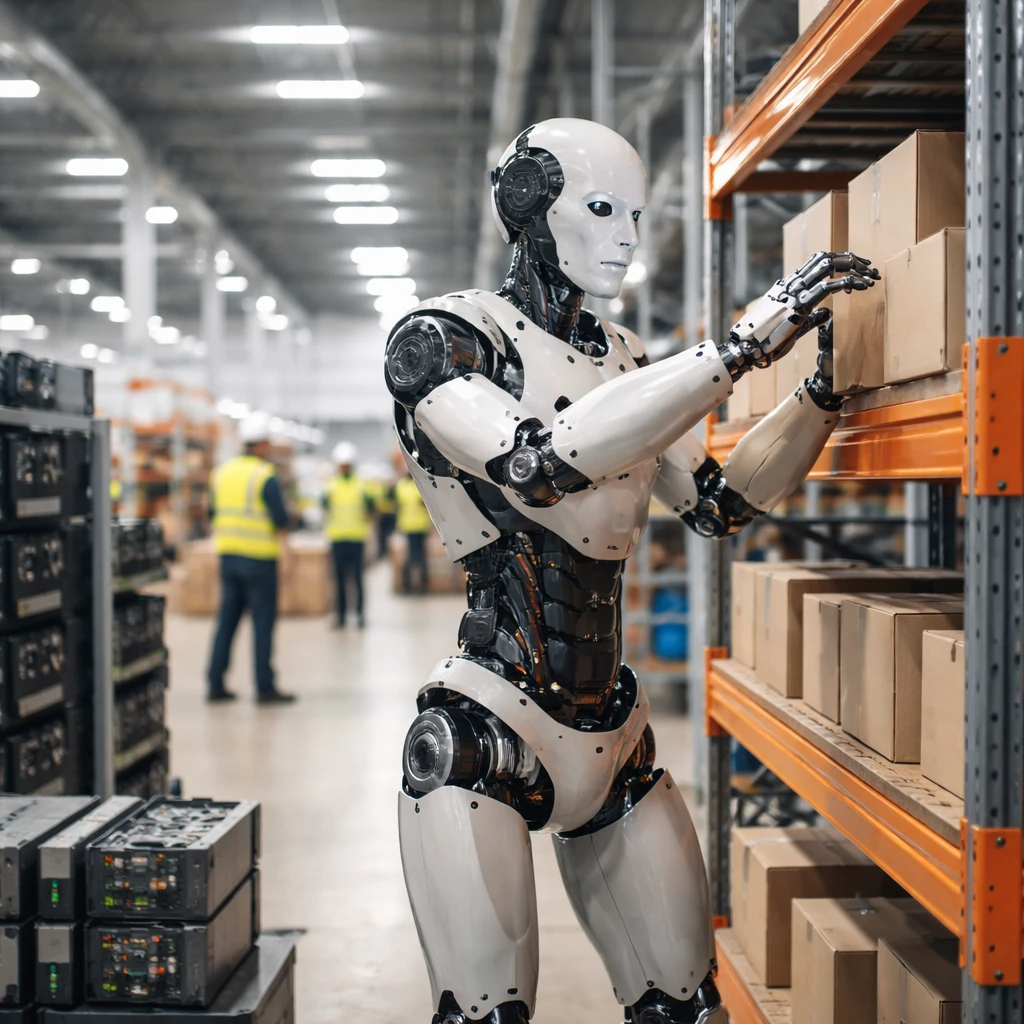
The report describes humanoids as the next phase of automation after traditional industrial equipment and software-driven AI. Unlike conventional industrial robots, which often require reconfigured facilities and custom tooling, humanoids are engineered to operate in environments already tailored to human workers. That compatibility allows them to use existing tools, buildings and workflows without major infrastructure changes and supports potential deployment across multiple settings including factories, warehouses, healthcare facilities and eventually residences.
Drivers of demand
Barclays points to demographic and structural forces as demand drivers. Aging populations, growing urbanization and chronic labor shortages in sectors such as manufacturing, logistics, agriculture and healthcare are identified as catalysts for adoption. The analysis also highlights a qualitative difference in what humanoids can automate: they are viewed as capable of taking on whole jobs rather than only discrete tasks, which expands their prospective use cases.
Phased deployment
Deployment is expected to roll out in stages. Barclays outlines an early phase, from roughly 2025 through 2030, that would concentrate on manufacturing, logistics, warehousing, construction and agricultural operations. A later phase could extend deployment into healthcare, hospitality, education and household uses, contingent on improvements in safety and reliability.
Cost trends and manufacturing
Production expenses for humanoid robots have fallen dramatically over the past decade. The report cites a drop from approximately $3 million per unit a decade ago to around $100,000 at present. It also notes that some Chinese manufacturers have driven prices even lower, benefiting from vertically integrated supply chains and access to essential materials.
Current scale and geography
As of 2025, China accounts for the bulk of global humanoid robot deployments, representing about 85% of installations. Industry deployments are estimated at roughly 15,000 units in 2025 and could increase to about 60,000 units in 2026 as commercialization accelerates.
Core components
The Barclays report identifies three core technology groups underpinning the industry: AI computing systems, actuators and batteries. Among these, actuator systems represent the largest share of production costs.
Implications for markets and sectors
- Manufacturing and logistics could see accelerated automation without major facility overhauls.
- Healthcare and household sectors are potential future markets, subject to safety and reliability improvements.
- Geographic concentration of current deployments is heavily skewed toward China.