
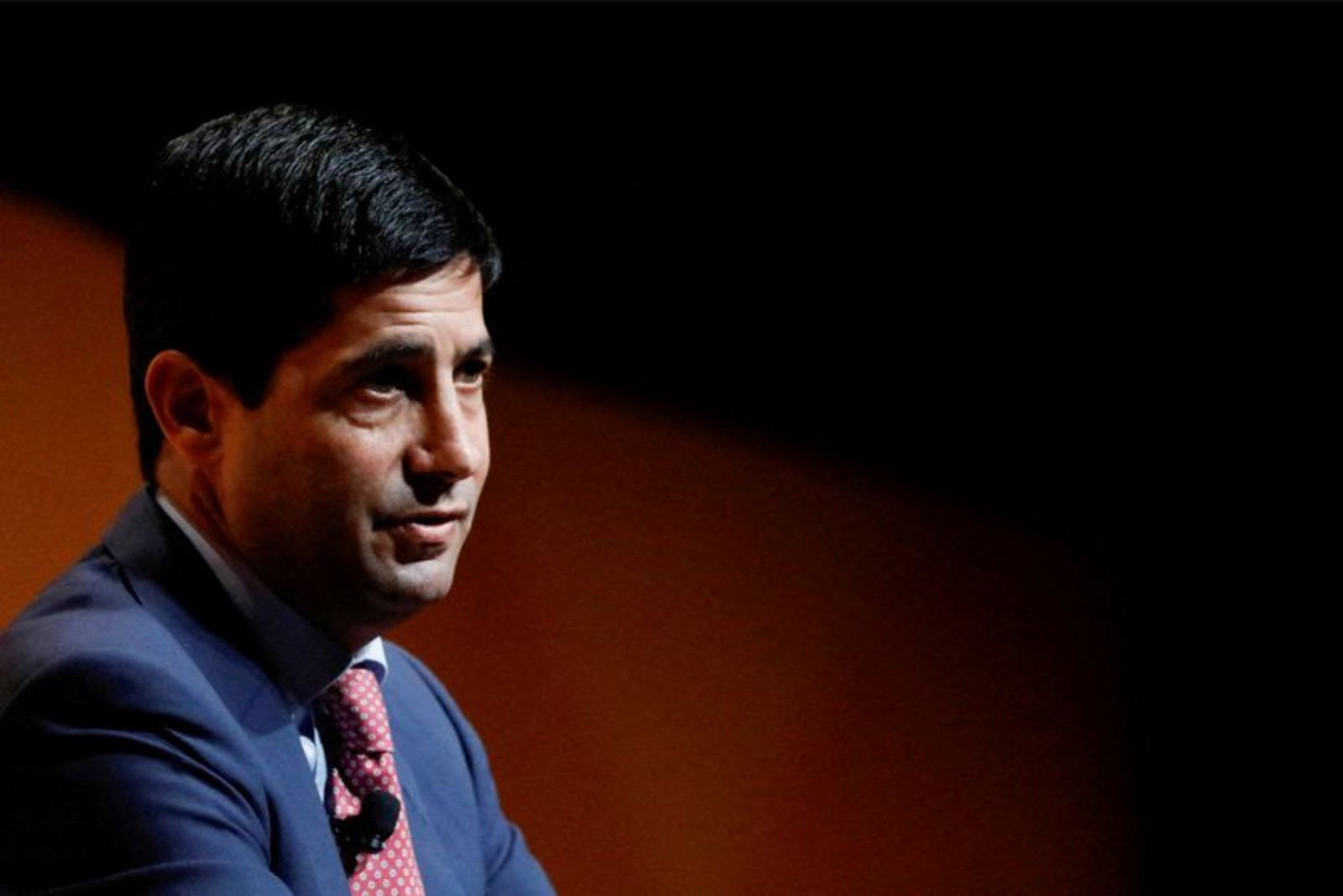
WASHINGTON, March 12 - The likelihood that President Donald Trump’s choice to lead the Federal Reserve, Kevin Warsh, could swiftly move policy toward lower interest rates is declining in the view of investors and analysts. Market expectations for initial rate cuts have been pushed back and the scope of potential easing appears more limited as an oil price shock persists amid widening conflict in the Middle East.
Despite coordinated releases from major developed economies from strategic oil reserves, the price of Brent crude climbed above $100 a barrel on Thursday. Market pressure has been driven by repeated Iranian attacks on shipping in the Strait of Hormuz, additional closures of oil infrastructure in the region, and a shift in U.S. rhetoric from hints of a quick end to hostilities to public demands that Iran offer "unconditional surrender." The intensifying situation has weighed on a range of household and market indicators.
At the consumer level, the national average price for a gallon of gasoline rose to nearly $3.60 on Thursday from under $3 prior to the outbreak of hostilities. Mortgage markets reacted as well: the 30-year fixed mortgage rate climbed to 6.11% this week from 6.00% the prior week, according to housing agency Freddie Mac. Yields on various maturities of U.S. government debt have also risen since the start of U.S.-Israeli bombing in Iran, presenting a potential difficulty for efforts to restrain federal deficits if higher rates persist.
Stock markets have fallen sharply amid the geopolitical shock, a move that could erode a source of spending support for wealthier households. Central bankers typically treat sudden commodity supply disruptions as transitory disturbances to inflation. Still, the longer oil stays elevated, the more it can push up headline prices - not only at the pump but through higher diesel costs for trucking, rising airfares and potentially more expensive food if fertilizer prices are affected.
With inflation already above the Fed’s 2% objective and memories of the pandemic-era price surge still influencing public perceptions, policymakers are conscious of the risks to their credibility. They are wary that easing policy in the face of sustained price increases would send the wrong signal. Vincent Reinhart, chief economist at BNY Investments, said the Fed’s reaction will "depend on the scale, scope, and length" of the shock, noting that increased energy costs ripple through the economy in complicated ways, raising some prices while prompting consumers to reallocate or delay spending and altering expectations for growth and hiring.
Reinhart added that public attitudes toward inflation have been shaped by the recent period of high inflation and that "If expectations are less well anchored, it’ll show up more in inflation," rather than primarily as a hit to growth. He concluded that "this is a situation in which uncertainty is elevated and the appropriate policy is to sit and wait to see what happens."
Federal Reserve officials are widely expected to keep the policy rate unchanged at 3.5% to 3.75% at their meeting next week. Attention will instead focus on the wording of the policy statement, the details Fed Chair Jerome Powell provides in his press conference, and updated economic projections from policymakers assessing the war’s initial effects on inflation, employment, growth and the interest rate outlook.
Officials face an especially murky outlook. The Iran conflict is front and center, but other unsettled forces - including tariff policy, immigration, and recent regulatory and tax actions - could influence household and business behaviour. Official data arrive with a lag, and it may take time for shifts in activity to appear in higher-frequency measures.
Data from non-traditional spending trackers offer an early window into consumer adjustments since the outbreak. Michael Gunther, senior vice president for research and market intelligence at Consumer Edge, which aggregates credit and debit card spending, said there have been some signs consumers are adapting to higher gas prices by ordering more from online retailers and increasing per-trip spending at stores, perhaps to reduce driving frequency. Still, he said, "in terms of meaningful drop-offs in spending since Saturday, the 28th of February -- we are not seeing it."
As oil-related inflation concerns mount, markets have pushed back expectations for when a new Fed chair might begin cutting rates. Anticipation that Warsh would inaugurate his tenure with a rate cut at a June meeting has shifted markedly later in the calendar, with some market measures now pointing to cuts as late as December. Data from the CME Group’s FedWatch tool indicates an even more extended delay, with the next cut not priced in until late 2027.
Warsh still requires Senate confirmation before an expected transition from Chair Powell in May. Gregory Daco, chief economist at EY Parthenon, said he now expects the Fed to delay cuts until December and that "it is entirely plausible that the Fed won’t deliver any rate cuts this year," a scenario that could place Warsh out of step with the White House’s repeated calls, including on Thursday, for immediate and substantial rate reductions.
Complicating the near-term picture is the lag in official inflation measures. The Fed’s preferred gauge - the Personal Consumption Expenditures (PCE) Price Index - is due to be released for January, and analysts polled expect headline PCE inflation to have accelerated to an annualized 3.1% in January from 3.0% the prior month. That estimate excludes volatile food and energy components, which could soon push the headline rate higher and intensify debate among policymakers over how much of the rise to "look through" as temporary.
Labor market data adds another dimension to the policy dilemma. The most recent figures showed firms cut 92,000 jobs in February, an unexpected decline that has sharpened concerns about softening labor demand. The public’s inflation outlook will be further tested by the University of Michigan consumer sentiment survey due Friday, an indicator that often moves with gasoline prices.
Luke Tilley, chief economist at Wilmington Trust, expects the Fed to adopt a still-cautious tone at the meeting given concerns about inflation expectations, while acknowledging downside risks to growth that he believes will ultimately prompt a series of rate reductions later in the year. He pointed to the concentration of job gains in a single sector - health care - and warned that "we’ve never had a time where we were losing this many jobs outside of health care, that we didn’t go into recession." He added, "I don’t see us at a really solid place to be managing an energy price cycle like this right now."
Policy makers and markets now face a narrow path: contain the rising risk that energy costs amplify inflation and expectations, while remaining alert to emerging signs of slowing activity and employment. How long crude prices stay elevated, and whether disruptions to the region’s output and shipping persist, will shape both the Fed’s rhetoric next week and the horizon for any eventual easing under a new chair.