
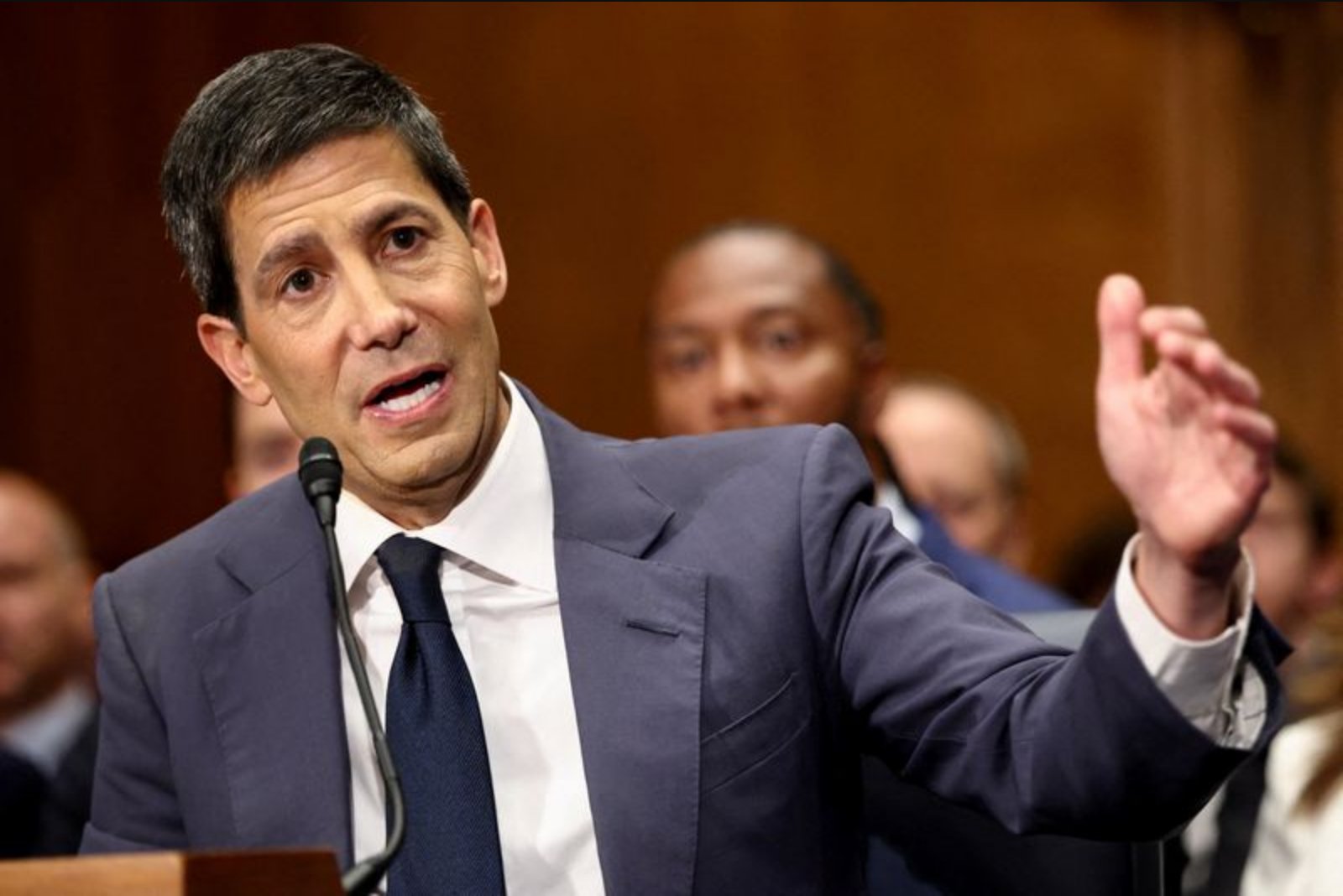
Kevin Warsh will assume leadership of the U.S. Federal Reserve on Friday, entering the central bank at a moment of heightened policy tension and economic uncertainty. The White House plans to administer his oath of office at 11 a.m. ET (1500 GMT). His arrival follows a year-long, public vetting process in which his criticisms of current Fed officials, prescriptions for rate cuts and close ties to President Donald Trump distinguished him from other nominees.
Warsh, 56, argued during his confirmation process and in past public statements that the central bank had "begun to lose its way" by the time he left a prior governorship in 2011 in opposition to Fed bond-buying. He has laid out a set of reform ambitions for the institution he will now lead. Yet his immediate task may be less institutional overhaul than an acute policy dilemma: how to respond to inflation that is elevated and possibly on an upward path.
Fed officials face a dual challenge. On one hand, an ongoing boom in artificial intelligence is transforming elements of the economy in ways that policymakers describe as potentially profound for workers, firms and consumers, but difficult to assess in real time. On the other hand, a set of shocks are exerting upward pressure on prices. The article's source material identifies contributing factors such as oil prices topping $100 a barrel amid the U.S.-Israeli war with Iran, elevated import tariffs and rising utility and other costs associated with the rollout of AI systems.
Warsh has emphasized the central bank's toolset and the choices it entails. At his Senate confirmation hearing he stated, "Inflation is the Fed's choice," a comment that underscores the leverage central bankers have through control of short-term interest rates to encourage or discourage spending and, in turn, influence inflation relative to the Fed's 2% target. The Fed has not met that target for more than five years and current inflation sits more than a percentage point above it.
That gap frames the difficult trade-offs the new chair confronts. Bringing inflation back toward target can require policy steps that at times run counter to the priorities of the presidential administration, and can also conflict with the Fed's aim of maximizing employment. How Warsh balances those objectives - and how markets read his early signals - will shape his standing as an inflation fighter, which the article notes is likely to be the principal metric by which his tenure is judged.
Market developments already present immediate pressures. Global bond markets have been bid higher, a sign investors are increasingly concerned about persistent inflation and are demanding higher yields. Within the Fed, several officials have been preparing markets for the possibility of higher interest rates; their public comments have set a backdrop that complicates any immediate pivot toward rate reductions.
Warsh will also operate in a politically charged environment. President Trump has publicly criticized the previous chair, characterizing him as "too late" in cutting rates, and has viewed rate increases as disruptive to his economic agenda. Trump backed Warsh in the selection process and will administer the oath Friday. The new chair's actions and statements will be scrutinized not only by markets and colleagues but also by the White House. That scrutiny includes existing institutional tensions - for example, ongoing disputes surrounding attempts to remove a governor from the board, with a coming Supreme Court decision noted in the source material related to the president's so far unsuccessful effort to fire Governor Lisa Cook.
Warsh will join a Board of Governors that includes other recent appointees. One such colleague is Christopher Waller, another Trump appointee who was considered for the chair's role and who delivered public remarks about policy views on the Friday before Warsh's swearing-in. Waller, a long-serving Fed staff veteran, has grown more cautious about the timing of rate cuts as inflation pressures have mounted. Should his stance become still more hawkish, it could further alter expectations that the Fed will need to lift rates or keep them higher for longer.
One immediate operational milestone will be the Fed's scheduled meeting on June 16-17, when policymakers will vote on interest rates and release updated economic projections. Among Warsh's early substantive choices is whether to include his own "dot" - an official projection of where he expects interest rates to be at the end of the year - in the set of forecasts the board publishes. Including a dot could reveal whether his outlook aligns with colleagues he has criticized for "groupthink," or whether he will stand apart. That choice carries implications for market clarity: becoming an outlier could increase market confusion at a time when long-term U.S. rates are already moving higher.
The Fed's decisions extend into areas that directly affect households and the broader political economy. Monetary policy influences a range of consumer-facing and politically sensitive rates, such as mortgage interest on home loans. Many of the factors driving current inflation are outside the Fed's direct control - the article points to visible price pressures like $4.50-per-gallon gasoline - but such items have become tangible reminders of promises by the presidential administration to reduce inflation, a task now squarely in Warsh's hands to address.
Summary
Kevin Warsh takes office as Fed chair at a moment of significant policy strain: rising inflation above target, global bond markets pricing higher rates, and rapid technological change from AI whose economic effects are hard to measure in real time. Early decisions - particularly whether to disclose his year-end interest-rate projection at the Fed's June meeting - will indicate whether he blends with or diverges from his colleagues and will affect market expectations about the path of rates.
Key points
- Leadership transition: Warsh will be sworn in as Fed chair at the White House at 11 a.m. ET (1500 GMT) and brings a reform agenda and prior criticism of the Fed's direction.
- Policy environment: Inflation remains more than a percentage point above the Fed's 2% target and the central bank faces pressure from higher oil prices, tariffs and cost increases tied to AI implementation - all factors complicating interest-rate decisions. (Sectors impacted: energy, consumer finance, utilities, technology.)
- Market expectations: Global bond markets are bidding up yields and some Fed officials have signaled that higher rates may be needed, placing immediate focus on whether the Fed will tighten further or hold steady. (Sectors impacted: fixed income markets, housing, banking.)
Risks and uncertainties
- Inflation trajectory: Inflation is already high and could move higher owing to several identified shocks - including oil above $100 per barrel, tariffs and AI-related cost increases - complicating the Fed's mandate and policy response. (Impacted sectors: energy, consumer goods, utilities.)
- Market reaction to policy signals: If Warsh's early policy communications differ materially from his colleagues - for example on the June meeting "dot" projection - markets could become more volatile as investors reassess the likely path of interest rates. (Impacted sectors: bond markets, mortgage lending, equity valuations.)
- Political and institutional tension: The Fed's choices may at times conflict with the administration's objectives, and ongoing disputes - including a pending Supreme Court decision tied to the president's attempt to remove a governor - create additional uncertainty. (Impacted sectors: public policy, governance, financial markets.)
The coming weeks will place Warsh's early judgment under a microscope: how he reads economic data, how he communicates with markets and the White House, and whether he prioritizes rapid steps to rein in inflation or opts for a more measured approach in light of employment and institutional considerations.