
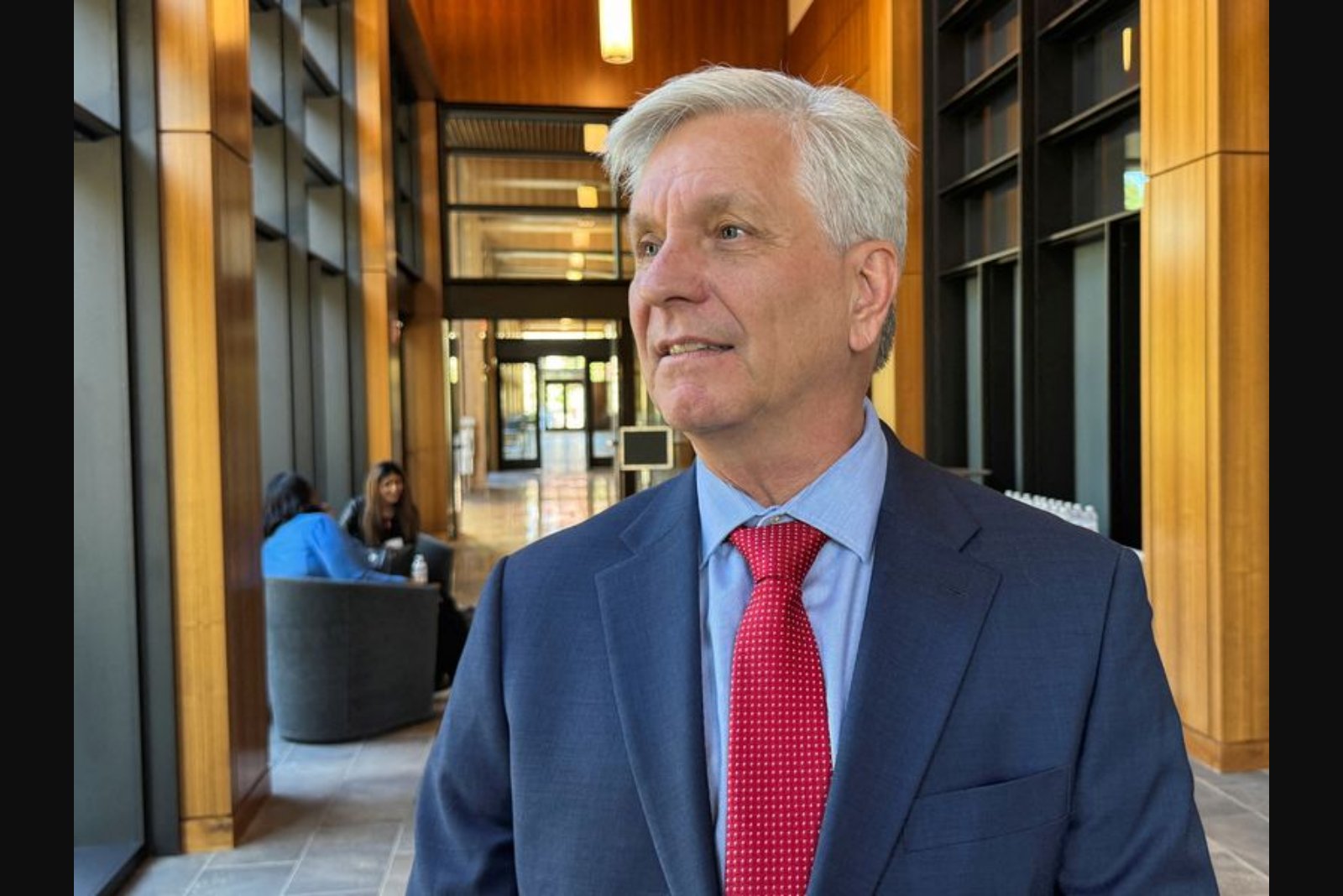
U.S. Federal Reserve Governor Christopher Waller said he had planned to register a dissent in favor of cutting interest rates at the central bank's current policy meeting after a worse-than-expected labor report for February, but recent developments in the Middle East convinced him to step back from that position.
Speaking on CNBC's Squawk Box, Waller recounted that when the February employment figures showed a decline of 92,000 jobs, his initial reaction was to oppose the Fed's decision to hold its policy rate steady and to push for a rate reduction. "When the latest jobs report showed a loss of 92,000 jobs last month 'I thought that's it, I'm dissenting,'" he said.
He described a rapid reassessment in the days after the jobs report. Waller said the closure of the Strait of Hormuz and the prospect that the Iran war would be more prolonged than initially anticipated changed his view. Those developments, he said, pointed to an oil shock that could keep energy prices higher for an extended period.
"Since that time, the Strait of Hormuz was closed. This is looking like it's going to be a much more protracted conflict, and oil prices are going to stay high for a longer time. So that suggested inflation was more of a concern," he said, adding that inflation could persist depending on how high energy prices rise and for how long.
Waller's account frames his move from an initial inclination to dissent toward a more cautious posture at a meeting where policymakers ultimately decided to keep the policy rate unchanged. He emphasized that the trajectory of inflation now appears more uncertain because of energy price dynamics tied to events in the Gulf region.
The governor stressed that the duration and magnitude of higher energy prices will be key to whether inflationary pressures prove persistent, and he indicated he prefers to wait for greater clarity on the economic fallout from the Iran war before advocating a change in policy direction.
Context and implications
Waller's comments tie a near-term labor surprise to an abrupt shift in the balance of risks facing the Federal Reserve - from a softening labor market that might call for looser policy, to a supply-driven inflationary risk stemming from higher oil prices linked to geopolitical developments. He portrayed his decision-making as contingent on evolving data and on how long and how far energy costs rise.
Limitations - Waller noted that the ultimate path for policy depends on how the conflict unfolds and on subsequent effects on energy prices and inflation; he did not provide a timeline for reassessment.