
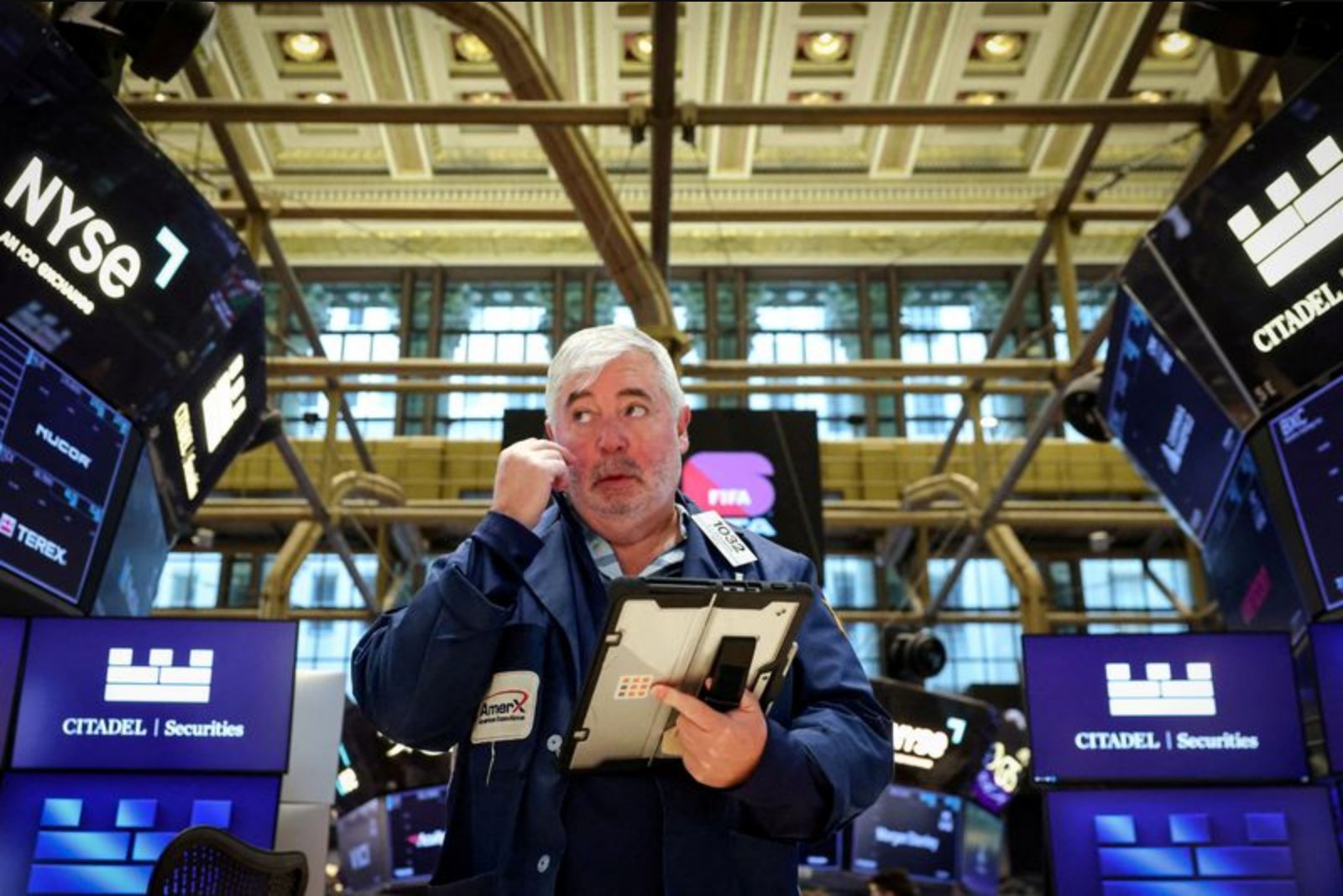
March 3 - U.S. equity futures moved lower as market participants assessed the market ramifications of a widening Middle East conflict and the prospect that a jump in energy costs could feed into broader inflation. With the confrontation showing few signs of easing, benchmark oil prices rose 2.2%, gold prices extended a fifth consecutive session of gains, the U.S. dollar strengthened, and the yield on the U.S. 10-year Treasury climbed to its highest reading in more than a week.
The deterioration in geopolitical tensions followed a weekend air campaign by the U.S. and Israel against Iran. The strikes hit Tehran and resulted in the death of Iranian Supreme Leader Ali Khamenei, according to the reporting in this article. Iran and its proxy Hezbollah launched retaliatory actions, pulling additional parts of the Gulf region into the conflict.
U.S. President Donald Trump sought to justify a broader, open-ended military campaign, saying on Monday that the operation was ahead of expectations. The escalation has heightened investor concern about a potential energy supply shock, particularly after reports that the Strait of Hormuz was closed to marine traffic. Analysts and traders are watching how a sharp rise in oil prices might transmit to consumer prices and corporate costs.
That concern has fed into pricing for monetary policy: the market has increasingly factored in that the Federal Reserve is unlikely to move to cut interest rates in the near term. Higher energy prices and a run-up in inflation readings would complicate the Fed's task as policymakers appear to hold diverging views on the path of rates.
Attention in markets now turns to a packed slate of U.S. economic reports later in the week, which will include January retail sales, private payrolls data from ADP, and the monthly non-farm payrolls report that is closely watched by investors for signals on labor market momentum and inflationary pressure.
At 02:41 a.m. ET, U.S. equity futures were notably weaker: Dow E-minis were down 494 points, or 1.01%, S&P 500 E-minis were down 72.5 points, or 1.05%, and Nasdaq 100 E-minis were down 332.75 points, or 1.33%.
During regular trading on Monday, U.S. stock markets opened on weaker footing but recovered some losses as bargain-seeking buying emerged in large-cap technology names, with strong demand observed for AI-related leaders such as Nvidia and Microsoft. The travel and airline sectors, conversely, were among the most affected, suffering from flight cancellations, higher jet-fuel costs and broad closures of Middle Eastern airspace.
By the close on Monday, the S&P 500 finished effectively flat, the Nasdaq rose 0.4%, and the Dow slipped 0.1% as investors weighed the geopolitical developments against pockets of buying interest.
Markets will also be monitoring remarks from Federal Reserve officials later in the day. John Williams, a voting member of the Fed's policymaking committee, is scheduled to speak, as are Jeffrey Schmid and Neel Kashkari. Their comments will be parsed for further clues about internal views on the outlook for interest rates amid rising inflationary risks tied to energy.