
Economy March 17, 2026

Wadephul Says Military Action Is Not a Realistic Path for Iran

German foreign minister warns controlled regime change would risk chaos; reiterates stance on Russia sanctions and expresses optimism on Franco-German FCAS talks

By Marcus Reed
Wadephul Says Military Action Is Not a Realistic Path for Iran

German Foreign Minister Johann Wadephul told a Berlin audience that a military solution to the Iran conflict is unrealistic and that engineered regime change would risk chaos harmful to Germany, the region and Iranians. Speaking at an event hosted by the ZEIT media group alongside his French counterpart, Wadephul also said now is not the time to lift sanctions on Russia, noted Moscow's unwillingness to compromise, and voiced hope that German and French leaders can settle differences over the FCAS fighter program.

Key Points

  • Wadephul stated a military solution to the Iran conflict is not realistic, and described controlled regime change as a hypothetical idea that is not realistic.
  • He warned that instability in Iran would harm German, regional, and Iranian interests, arguing chaos would be detrimental.
  • Wadephul said it is not the time to reduce sanctions on Russia, noting Germany remains willing to talk but that Moscow has shown no willingness to compromise.
  • He expressed optimism that German and French leaders can reach an agreement on the FCAS fighter project.

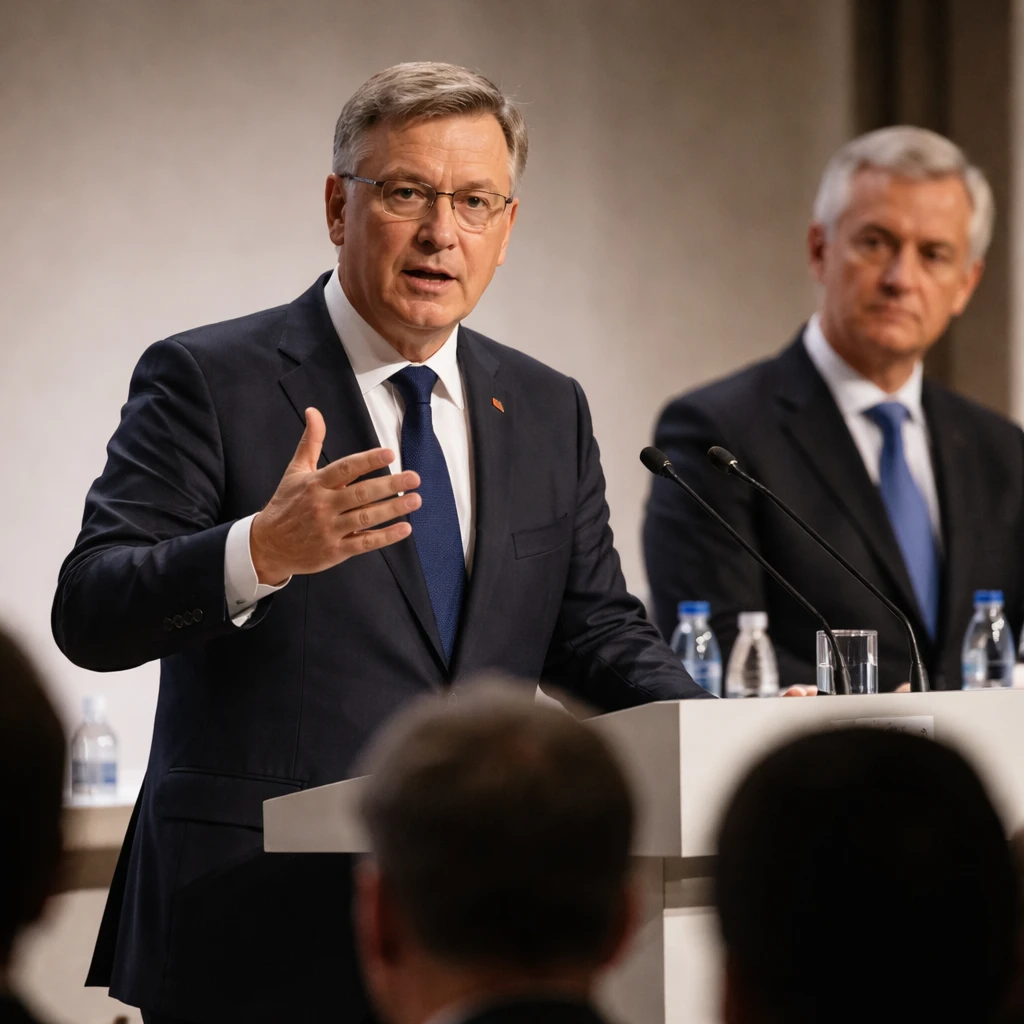
Germany's Foreign Minister Johann Wadephul told attendees at a Berlin forum on Tuesday that military intervention in the Iran conflict is not a viable option. The event was hosted by the ZEIT media group, and Wadephul spoke alongside his French counterpart.

Wadephul said that trying to achieve a managed change of government in Iran is not realistic and warned that instability inside the country would harm German, regional and Iranian interests. He framed the idea of engineered regime change as hypothetical and impractical.

"There will be no military solution. And to have a controlled regime change, is, I would say, a hypothetical idea, which is not realistic," Wadephul said during the event.

The foreign minister emphasized that, despite his assessment of the character of Iran's government, allowing instability to take hold would be detrimental to the population of Iran and to the wider region. He presented the avoidance of chaotic outcomes as a principal consideration in rejecting military approaches or schemes aimed at rapid political engineering.

On related foreign policy topics, Wadephul addressed Germany's stance toward Russia. He said this is not the time to reduce sanctions on Moscow. While he indicated Germany remains prepared to engage in dialogue with Russia, he added that Russia has so far shown no willingness to make compromises.

Wadephul also commented on defense cooperation between Germany and France. He expressed optimism that leaders from the two countries can reach an agreement on the Future Combat Air System (FCAS) fighter project, signaling a positive tone about resolving outstanding issues on the program.


Context and takeaway - Wadephul's remarks at the ZEIT-hosted event underline a German policy position that rejects military solutions for the Iran conflict, warns against attempts at controlled regime change due to risks of chaos, maintains sanctions on Russia as untimely, and conveys cautious optimism about bilateral defense talks with France over the FCAS project.

Risks

  • Potential instability in Iran could have negative effects on the region and on populations within Iran - this could affect geopolitical stability and related markets.
  • Continued reluctance by Russia to compromise may keep sanctions in place, sustaining geopolitical tensions that can influence energy and defense sectors.
  • Unresolved issues around the FCAS fighter project between Germany and France could delay defense procurement plans if leaders do not reach agreement.

More from Economy

Chile orders nearly $4 billion in spending cuts to shore up public finances Mar 17, 2026 Trump Criticizes NATO Over Reluctance to Help in Strait of Hormuz, Says U.S. Does Not Need Assistance Mar 17, 2026 U.S. Urged Syria to Consider Cross-Border Push Against Hezbollah; Damascus Remains Wary Mar 17, 2026 Head of Norway’s Sovereign Fund Urges Europe to Merge Capital Markets Mar 17, 2026 Moscow Pledges Steadfast Support for Cuba After U.S. President Says He Will 'Take' the Island Mar 17, 2026