
Economy February 18, 2026

U.S. to Withdraw All Troops from Syria After Decade-Long Mission

Approximately 1,000 personnel to leave strategic outposts, with remaining forces scheduled to depart over the next two months

By Marcus Reed
U.S. to Withdraw All Troops from Syria After Decade-Long Mission

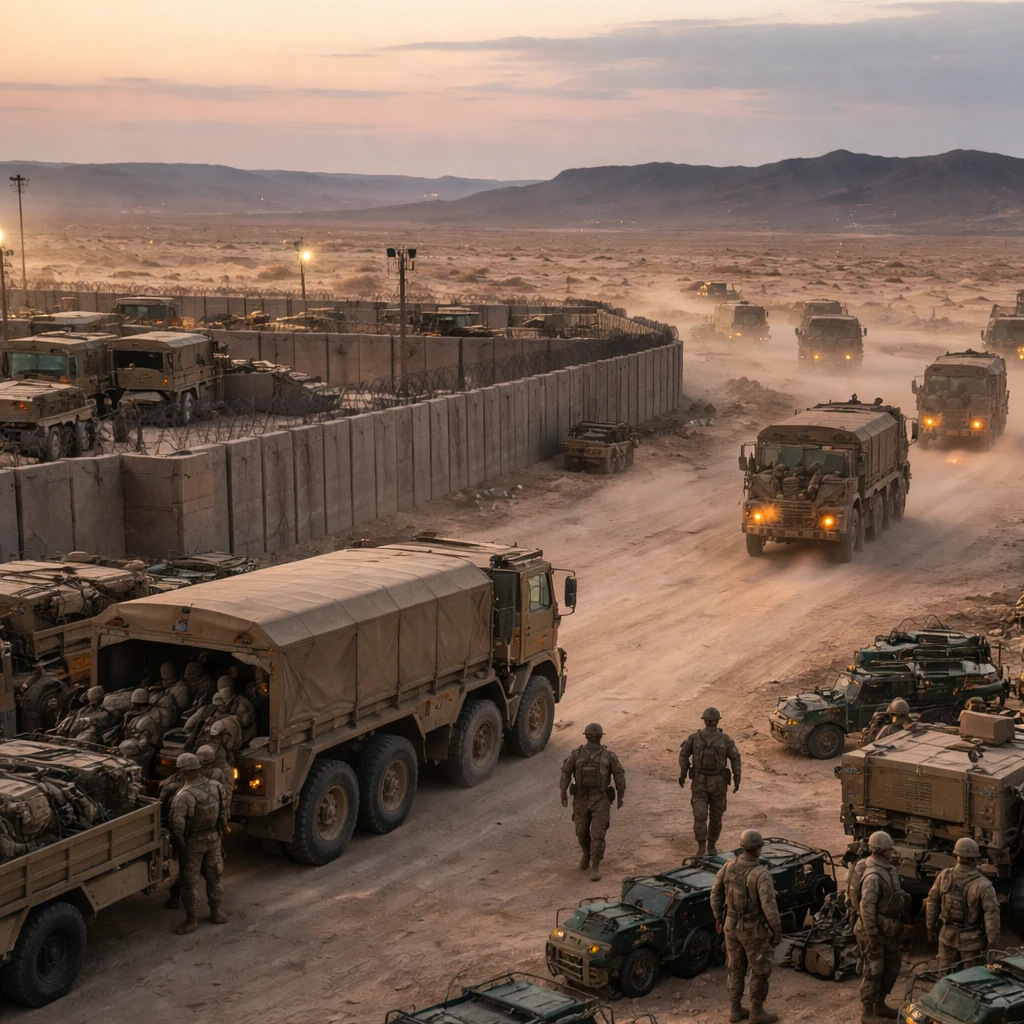
The United States is removing its roughly 1,000 troops from Syria, ending a military presence that stretched about a decade. U.S. officials say key positions including the Al Tanf garrison and the Al-Shaddadi base have already been vacated, and the rest of the force will be pulled out within two months. Officials also emphasize that the withdrawal is separate from current naval and air deployments in the Middle East that remain positioned for potential action related to Iran.

Key Points

  • The U.S. is withdrawing approximately 1,000 troops from Syria, concluding a military operation that lasted about a decade.
  • U.S. forces have already exited the Al Tanf garrison on the Syria-Jordan-Iraq border and the Al-Shaddadi base in northeast Syria; remaining troops will leave within two months.
  • Officials say the ground-force withdrawal is separate from current U.S. naval and air deployments in the Middle East, which are positioned for potential action tied to Iran if nuclear negotiations fail.

The United States is completing the withdrawal of its military presence in Syria, ending an operation that lasted about a decade, officials said.

U.S. authorities reported that roughly 1,000 troops will be removed from the country. The military has already withdrawn forces from the Al Tanf garrison - a strategically located outpost near the borders of Syria, Jordan and Iraq - and from the Al-Shaddadi base in northeast Syria earlier this month.

Officials indicated that the remaining American personnel will depart other locations in Syria over the coming two months, completing the full pullout.


Officials and timeline

According to statements from U.S. officials, the pullback has proceeded in phases with key positions already vacated. The decision to withdraw forces follows consideration of a broader drawdown that became public in January, when reports indicated that U.S. policymakers were weighing a complete exit from Syria.

Separation from other regional deployments

Officials stressed that this decision to remove ground forces from Syria is not linked to ongoing U.S. naval and air deployments elsewhere in the Middle East. Those naval and air assets remain positioned so they could conduct strikes if negotiations over Iran's nuclear program fail. The officials noted that the deployments in the region serve a different, separate purpose from the troop withdrawals on the ground in Syria.

Regional security context

U.S. officials also cited potential regional risks tied to the Iran situation. Iran has threatened to retaliate against American troops in the region in the event the United States carries out airstrikes. Officials framed the current posture - a withdrawal of ground forces from Syria alongside continued naval and air readiness - as distinct but contemporaneous developments.

The unfolding withdrawal marks the end of a mission that spanned roughly a decade and will conclude as the remaining forces leave Syrian locations within the specified two-month window.

Risks

  • Threat of Iranian retaliation - Iran has threatened to target American troops in the region if the U.S. conducts airstrikes, creating a potential for escalation tied to the broader regional posture.
  • Uncertainty in completion - the full withdrawal depends on executing the planned troop departures over the next two months, leaving a limited near-term period of operational transition.
  • Contingent regional actions - naval and air forces remain positioned for possible strikes if negotiations over Iran's nuclear program fail, introducing conditional risks tied to diplomatic outcomes.

More from Economy

Bessent: Administration to Shift Tariff Strategy After Supreme Court Ruling Feb 20, 2026 Trump Repeats Call for Much Lower Interest Rates, Criticizes Fed Chair Feb 20, 2026 White House to Apply 10% Global Tariff for 150 Days, Citing Trade Act Authority Feb 20, 2026 Trump directs temporary 10% global tariff under Trade Act after Supreme Court rebuke Feb 20, 2026 Trump Announces Plan for 'Even Stronger' Tariff Actions After Supreme Court Setback Feb 20, 2026