
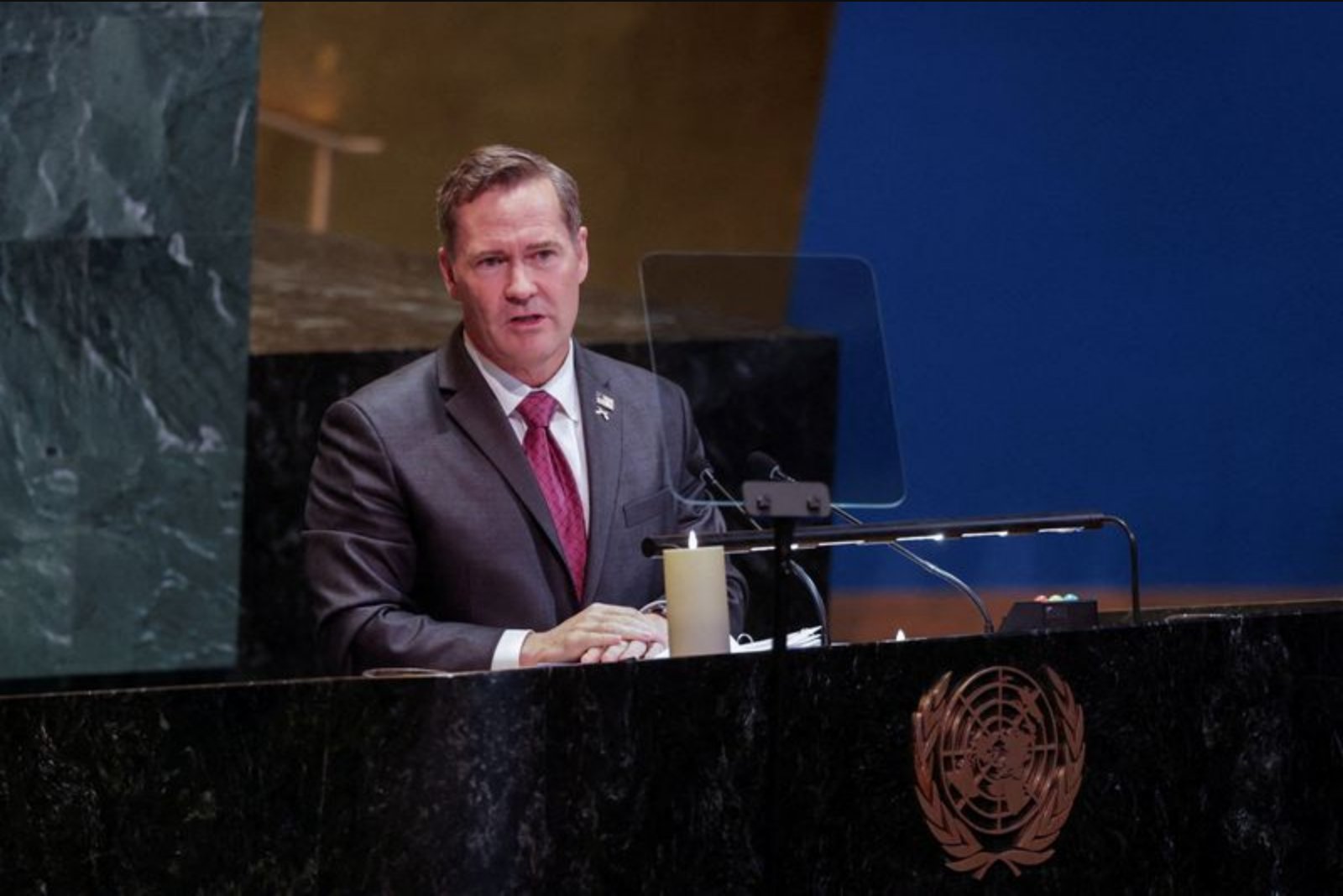
GENEVA, Feb 11 - The United States will continue to press the United Nations to implement reforms even as it moves to pay outstanding dues, the U.S. ambassador to the U.N. said on Wednesday in Geneva. The ambassador said a down payment from Washington to the global organisation would arrive within weeks, though he did not specify the amount.
The U.S. remains the largest contributor to the U.N. system but, under the administration of President Donald Trump, has withheld mandatory payments to the U.N.'s regular and peacekeeping budgets and has sharply reduced voluntary funding to agencies that manage their own budgets. U.N. officials reported that as of the start of February the United States owed $2.19 billion to the regular U.N. budget, accounting for more than 95% of what all countries owed collectively. In addition, the U.S. owes $2.4 billion for current and past peacekeeping missions and $43.6 million for U.N. tribunals.
Addressing reporters, Ambassador Mike Waltz said Washington will both make payments and continue to demand changes in how the U.N. operates. "We’re going to continue sustained pressure on demanding efficiency. We’re going to continue to ask these agencies to do at least the same amount, if not more, with less," he said. He added: "We’re going to pay those dues and we’re going to continue to demand reforms. We’re off to a good start," referring to recently launched reforms at the U.N. Secretariat that led to a 20% reduction in its regular budget.
The 20% cut to the Secretariat's regular budget was achieved through measures that included slashing thousands of jobs, instituting a hiring freeze and limiting staff travel. Waltz said those measures represent a start but that further efficiency gains are necessary.
Waltz is undertaking a two-day visit to Geneva to meet officials from several U.N. agencies, including the refugee agency, UNHCR, which is confronting the most severe budget cuts in its history. In January, the U.S. announced withdrawals from dozens of international organisations and U.N. entities, asserting that they operated contrary to U.S. national interests. The U.S. formally left the World Health Organization in the same month.
During his comments in Geneva, the ambassador outlined several cost-saving approaches he said the U.N. should adopt. He urged wider use of remote work arrangements and greater deployment of artificial intelligence for translation tasks. He also suggested relocating staff away from the U.N. headquarters that are based in two of the world's most expensive cities - New York and Geneva.
Some agencies have already begun to move personnel to lower-cost locations. The article notes that UNICEF, for example, has announced relocations of thousands of staff to cheaper sites.
Waltz did not provide details on the size of the imminent U.S. payment or the timetable beyond saying it would arrive within weeks. He reiterated the dual approach that Washington intends to pursue: restoring at least part of its financial contributions while sustaining pressure on the U.N. to shrink costs and boost efficiency.
Contextual takeaway: The U.S. stance combines a commitment to meet financial obligations with continued demands for institutional reform. The focus is on cost reductions, workforce changes and leveraging technology to lower operating costs, while negotiations over the precise amount and timing of payments remain unresolved.