
President Donald Trump told reporters Friday that the United States could pursue a "friendly takeover of Cuba" as the White House looks to leverage the island's worsening energy situation to broaden American influence across the region.
Speaking as he left the White House for Texas, the president framed the prospect in humanitarian terms, saying:
"They’re in big trouble, and we could very well do something good, I think, very positive for the people that were expelled, or worse, from Cuba that live here,"and added,
"You know, we have people living here that want to go back to Cuba."
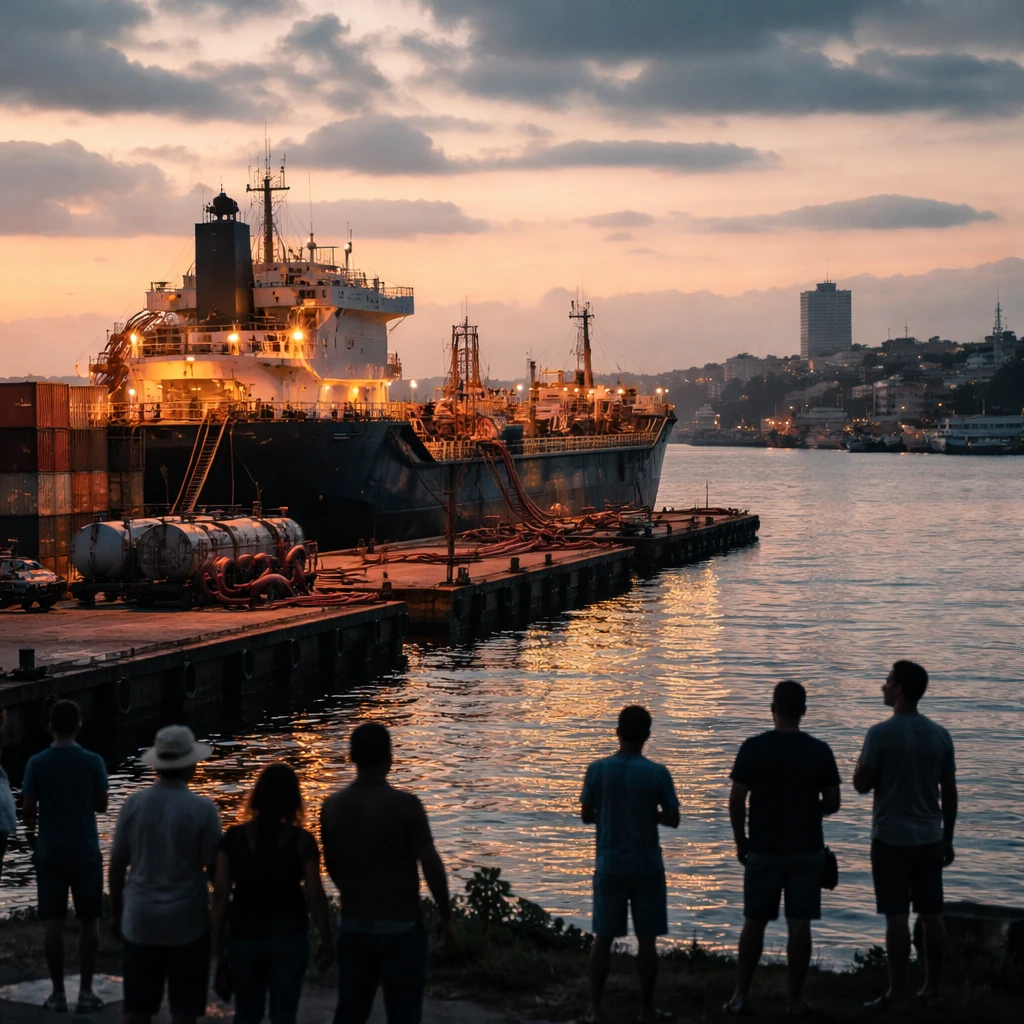
Earlier this week the administration announced plans to permit fuel shipments from U.S. energy companies to private businesses on the island. Officials described the approach as a means to increase Cuba's economic reliance on the United States, strengthen its nascent private sector, and in turn weaken the hold of the Communist government.
The statement on fuel access comes amid heightened bilateral tensions tied to U.S. operations in the region. Cuba's government has faced mounting pressure in the wake of a U.S. raid to capture Venezuela's Nicolas Maduro. Washington has since encouraged Venezuela's interim government to sever its long-standing partnership with Cuba and to stop exporting oil to the island.
Mr. Trump's public remarks mark his most extensive comments on Cuba policy during the unfolding energy crisis. The administration's twin track of permitting fuel sales to private Cuban firms while pressing Caracas to halt oil deliveries underscores a strategic effort to reshape economic and political ties in the region.
Summary
The Trump administration is seeking to capitalize on Cuba's deepening energy shortage by allowing U.S. fuel shipments to private Cuban companies and publicly raising the possibility of a "friendly takeover" to expand U.S. influence, while urging Venezuela to end oil exports to the island.
Key points
- The president said the U.S. could pursue a "friendly takeover of Cuba," commenting on the island's energy troubles and the presence of Cuban exiles in the United States who wish to return.
- The administration authorized fuel shipments from American energy companies to private Cuban businesses as a policy to increase Cuba's economic dependence on the U.S. and to bolster the private sector.
- U.S. pressure on Cuba is linked to recent action against Venezuela and appeals to Venezuela's interim government to stop sending oil to Cuba.
Risks and uncertainties
- Political risk: The approach could intensify tensions between the U.S. and Cuba, affecting diplomatic relations and regional stability.
- Energy market impact: Disruption of Venezuelan oil exports to Cuba could alter fuel availability on the island and affect regional oil flows.
- Economic exposure: Policies intended to increase Cuba's economic reliance on the U.S. may create uncertainty for businesses and markets engaged in the region.