
U.S. Trade Representative Jamieson Greer on Tuesday laid out the most specific timetable so far for re-establishing a presidential tariff regime after a recent Supreme Court ruling removed earlier duties. Greer said the administration expects to complete multiple trade investigations within five months, a step he framed as necessary to allow President Donald Trump to impose new, targeted tariffs.
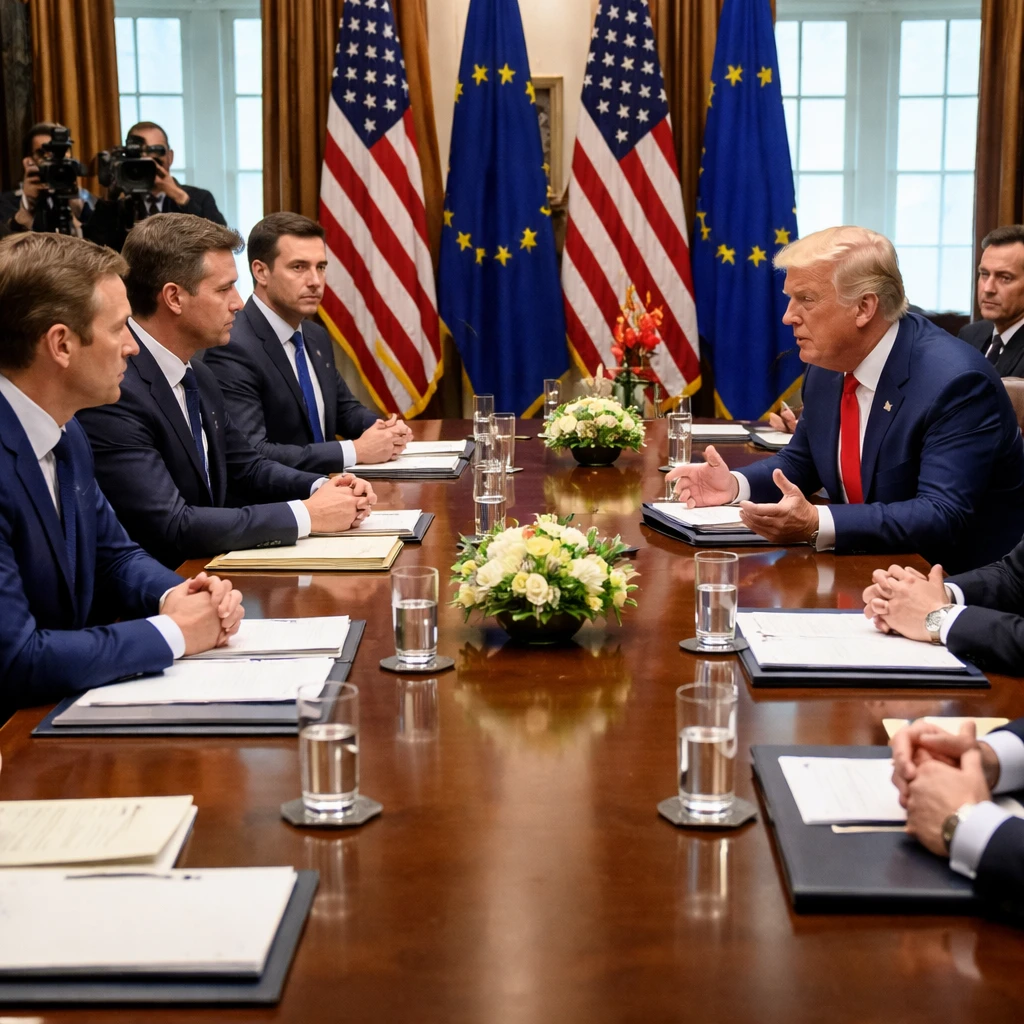
The comments came during a White House meeting between Trump and German Chancellor Friedrich Merz. Greer said the president enacted a global baseline tariff following a Feb. 20 court decision, and noted that measure can remain in force for up to 150 days without requiring congressional approval.
"By the time the five-month period has elapsed, we’ll have completed investigations," Greer said. "We know there are countries out there with deals who are very interested in keeping the deals."
Greer explained that the forthcoming inquiries will be conducted under Section 301 of the 1974 Trade Act, the statute that gives the White House authority to impose tariffs when it determines foreign actions restrict U.S. commerce. "We need to go through and investigate all these unfair trading practices," he said, adding that the probes are intended to "make sure that we’re protecting US economic security."
The U.S. has already opened Section 301 investigations into China, Brazil and Nicaragua. Greer did not identify any additional nations that will be subject to new inquiries.
President Trump commented on the process, saying: "We're doing the various studies and things, and we'll be coming out with tariffs, different tariffs on different countries."
Trade partners and international officials have pushed for clarification of the U.S. approach since the Supreme Court decision, which created uncertainty for global trade relationships. Several major economies expressed concern that the administration's method for reimposing duties could conflict with agreements those partners reached last year to reduce tariffs.
Key points
- The administration expects to finish multiple trade investigations within five months, paving the way for replacement tariffs.
- Investigations will be undertaken under Section 301 of the 1974 Trade Act, a legal basis for U.S. tariffs when foreign practices are judged to restrict U.S. commerce.
- Sectors tied to international trade, such as manufacturing, exporters, and import-dependent industries, may be most directly affected by changes in tariff policy and country-specific duties.
Risks and uncertainties
- It is unclear which additional countries beyond China, Brazil and Nicaragua will be investigated - this creates uncertainty for industries exposed to specific trade relationships.
- Trading partners have voiced concerns that the administration's tariff reinstatement could violate agreements made last year to reduce duties, raising the prospect of diplomatic or trade tensions that could affect multinational supply chains.
Note: The administration's timeline and approach were described by U.S. Trade Representative Jamieson Greer and President Donald Trump during public remarks; no further countries or procedural details were specified.