
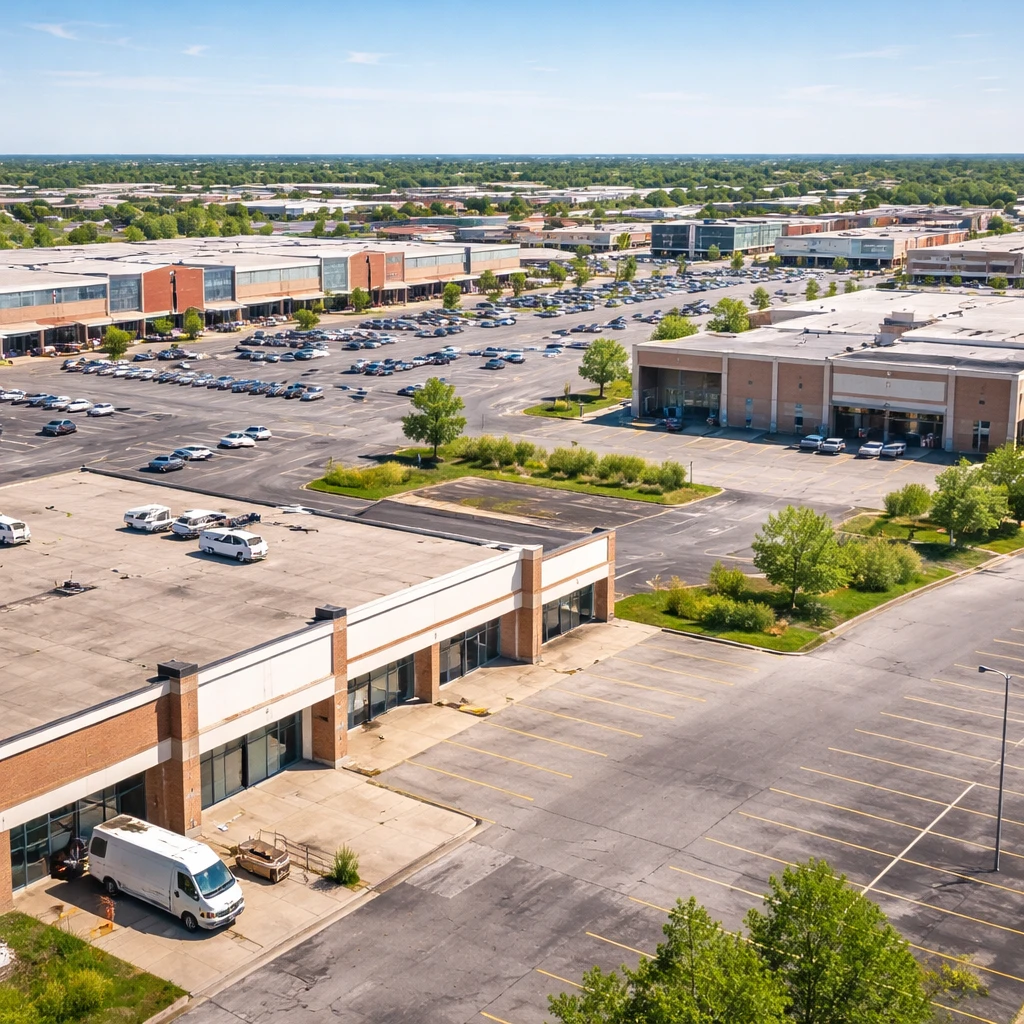
The U.S. retail landscape faces a notable shift in the coming decade as the steady rise of online shopping reduces the need for an extensive network of physical stores, according to a report by Bernstein.
Bernstein highlights that the United States has substantially more retail space per capita than other advanced economies. The report estimates about 24 square feet of retail space per person in the U.S., a level that far outstrips comparable measures in countries such as Canada, Australia and the U.K.
With e-commerce continuing to take a larger slice of consumer spending, that surplus of physical retail real estate is increasingly exposed. Bernstein projects that between 2 billion to 6 billion square feet of retail space could become unnecessary over the coming decades - a quantity equivalent to roughly 15,000 to 40,000 large-format stores.
The report frames this development as part of a long-term trend. Online sales now represent roughly 17% of retail activity, a substantial rise from about 3% in the early 1990s. That shift in buying habits is accelerating pressure on brick-and-mortar operators and altering the economics of maintaining a broad physical presence.
However, Bernstein notes that many vacated retail sites are unlikely to sit empty for long. Historical patterns of store closures suggest a majority of former retail spaces are eventually reoccupied by other retail tenants, while a significant share are repurposed for non-retail uses as developers seek to extract value from established locations.
Possible conversions include use as gyms, healthcare centers, self-storage facilities, schools or residential housing. Smaller retail footprints may be adapted for logistics purposes tied to online commerce. In particular, analysts expect some smaller formats - for example, dollar stores - to be converted into so-called dark stores that serve as fulfillment centers for e-commerce orders and help accelerate delivery times.
Not all retail formats face equal disruption. Bernstein points to warehouse clubs and home-improvement chains as relatively resilient to the threat posed by e-commerce. By contrast, certain traditional mass retailers could encounter more persistent structural pressure if the trend toward online purchasing keeps advancing.
As the retail footprint evolves, the report implies a broad set of implications for property owners, retail operators and logistics providers. The conversion of space into alternative uses or fulfillment centers would reshape demand across commercial real estate and distribution networks, even as some categories of stores retain steady demand.
Implications and considerations
- Widespread closures or repurposing of stores are possible as online sales continue to grow.
- Many empty retail properties historically find new occupants or new uses rather than remaining vacant long term.
- Certain formats - warehouse clubs and home-improvement outlets - appear more insulated from e-commerce competition.