
Economy February 26, 2026

U.S. Presses Iran to Eliminate Key Nuclear Sites as Talks Continue in Geneva

American envoys demand dismantling of facilities and permanent restrictions while Tehran rejects proposals; negotiations extend into evening amid added U.S. military deployments

By Hana Yamamoto
U.S. Presses Iran to Eliminate Key Nuclear Sites as Talks Continue in Geneva

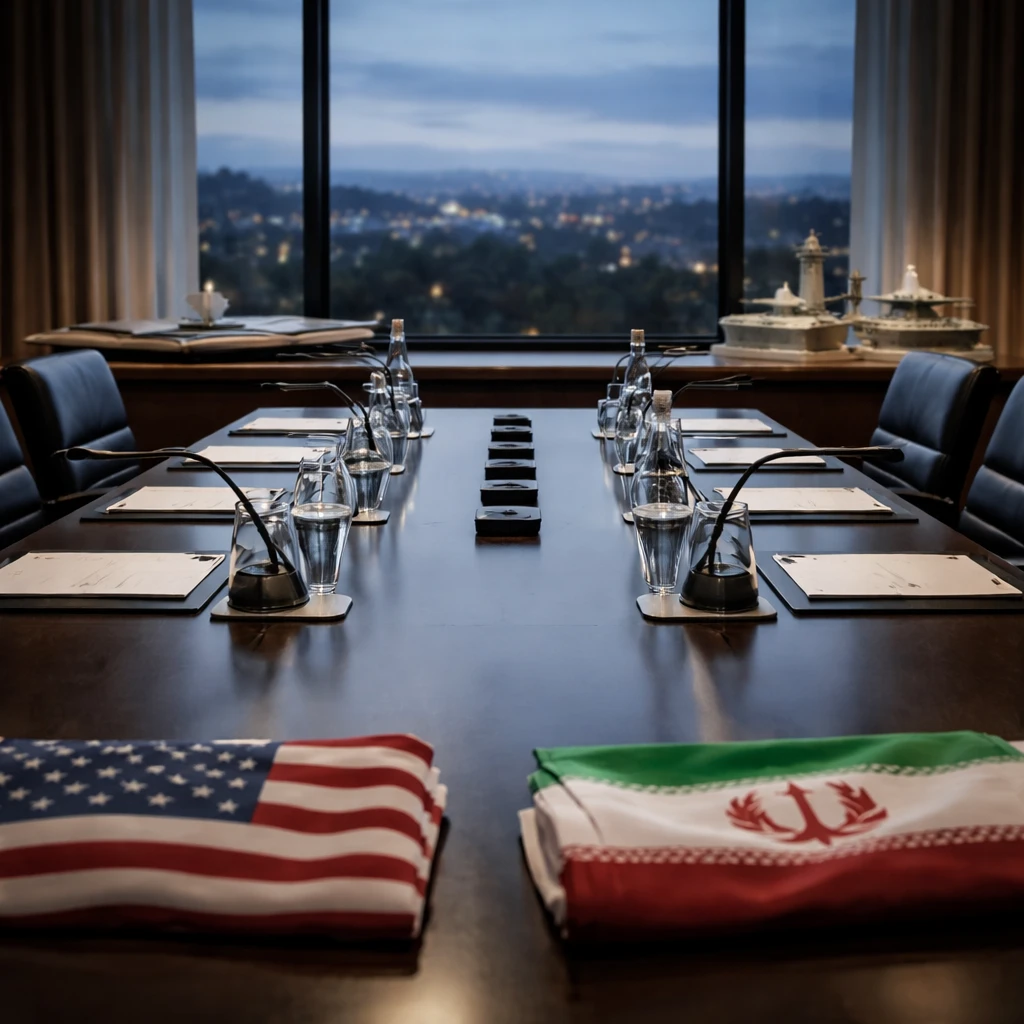
U.S. negotiators in Geneva presented stringent conditions to Iranian counterparts, calling for the destruction of principal nuclear facilities at Fordow, Natanz and Isfahan, the transfer of remaining enriched uranium to the United States, and permanent, non-expiring limits on Iran's nuclear program. Iran refused those demands and declined to halt enrichment, dismantle sites or transfer stockpiles. Talks continued into the evening as the U.S. also increased military assets in the region. The discussions aim to secure an agreement that would avert military action.

Key Points

  • U.S. envoys demanded Iran dismantle three principal nuclear facilities - Fordow, Natanz and Isfahan - and transfer all remaining enriched uranium to the United States.
  • Iran refused to halt enrichment, dismantle sites, transfer uranium stockpiles, or accept permanent restrictions; negotiations continued into the evening.
  • The United States also deployed additional military assets to the region as diplomatic efforts continued; energy and defense sectors may be sensitive to developments arising from these talks.

The United States advanced a set of stringent demands to Iran during nuclear discussions held in Geneva on Thursday, pressing Tehran for substantial, irreversible concessions and simultaneously moving additional military resources into the surrounding region.

U.S. envoys identified as Steve Witkoff and Jared Kushner told Iranian negotiators that Washington requires the destruction of three main nuclear installations - Fordow, Natanz and Isfahan - and insisted that Iran hand over all remaining enriched uranium to U.S. custody. The American delegation further specified that any acceptable arrangement must be permanent and without sunset provisions.

Iran rejected those proposals, refusing to stop enriching uranium, to dismantle its nuclear facilities, to transfer its uranium stockpiles to another country, or to accept permanent constraints on its nuclear program. The rejection came from Tehran amid the Geneva talks, and delegations remained in negotiations into the evening.

Officials continued discussions at length as both sides engaged over the terms. The sessions are framed by U.S. officials as an effort to reach an accord that would remove the prospect of military action against Iran.

Alongside the diplomatic engagement in Geneva, the United States deployed additional military assets to the region. The dual track of pushing for a stringent diplomatic settlement while reinforcing military presence underscores the stakes attached to the outcome of the talks.

Negotiators emphasized permanence as a critical feature of any deal, with the U.S. side rejecting arrangements that include expiration clauses. Tehran, in turn, maintained its stance against halting enrichment activity or accepting the transfer or dismantling of key nuclear infrastructure.

As of Thursday evening, the discussions were ongoing. The persistence of talks suggests negotiators remained engaged even after the Iranian refusal of the U.S. demands, with both sides continuing to explore whether a path to agreement exists that would avert the need for military measures.


Clear summary

The United States demanded the destruction of major Iranian nuclear sites and the transfer of enriched uranium to U.S. control, while insisting on permanent restrictions; Iran rejected those demands and the parties continued talks into the evening amid additional U.S. military deployments aimed at preventing military action.

Risks

  • Iran's explicit rejection of the U.S. demands increases the risk that negotiators may fail to reach an agreement that prevents military action - a development with potential implications for regional security and defense-related markets.
  • Failure to secure permanent, non-expiring restrictions could leave the underlying nuclear dispute unresolved, prolonging political and strategic uncertainty.
  • The simultaneous deployment of additional U.S. military assets raises the possibility of heightened tensions in the region while diplomatic negotiations remain ongoing.

More from Economy

Mortgage Rates Slip Under 6% as Market Volatility, Not Fundamentals, Drive Drop Feb 26, 2026 Canada Signals Cautious Optimism as USMCA Review Nears Feb 26, 2026 Judge Allows White House Ballroom Work to Proceed After Preservationists Lose Bid to Halt Construction Feb 26, 2026 30-Year Mortgage Rate Slips Under 6% for First Time in Years Feb 26, 2026 Preparations for Trump-Xi Beijing Summit Lag as Clock Ticks Down Feb 26, 2026