
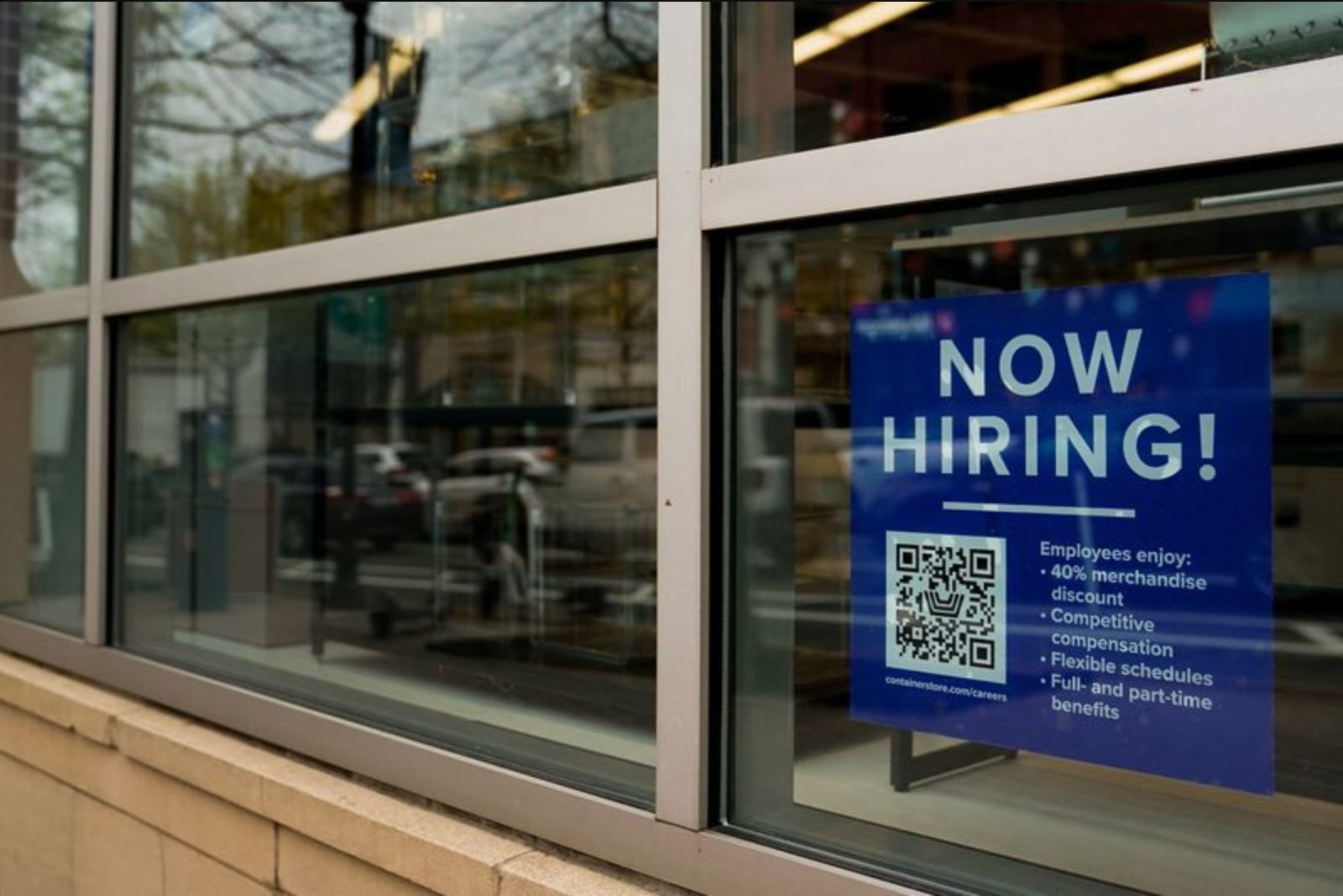
The U.S. labor market is expected to show some improvement in January as payroll gains likely picked up after a weak December, driven in part by a reduction in the number of holiday-related layoffs that typically hit businesses early in the year. The unemployment rate is forecast to remain unchanged at 4.4% while annual wage growth appears to be easing.
Economists surveyed by Reuters anticipated nonfarm payrolls rose by 70,000 jobs in January, following a 50,000 increase in December. Individual estimates in the survey ranged from a loss of 10,000 jobs to a gain of 135,000 jobs. Some private-sector measures have even suggested overall job losses last month.
Analysts caution that the seasonal pattern helps explain part of the expected uptick. Retailers and delivery firms hired fewer temporary workers during the most recent holiday period than is typical, and January is ordinarily the largest month for holiday-related layoffs. With lower seasonal hiring, there would be fewer layoffs to register in January, which mechanically can lift reported employment in the month.
Diane Swonk, chief economist at KPMG, argued that the headline unemployment figure masks deeper strains in the labor market. "The underlying stress in the labor market is greater than the overall unemployment suggests," she said. "Wages are cooling, it’s harder to get a job if you lose a job, and it’s harder to get a job if you’re a new graduate. It still is a very much frozen labor market, as hot as the economy looks on paper."
Beyond seasonality, economists point to policy-driven uncertainty that has restrained hiring. Many said the administration’s trade and immigration measures have chilled labor demand, even as the anticipated impact of tax cuts offers a potential offset that could bolster hiring later in the year.
The Labor Department’s employment release for January, which was delayed by a three-day government shutdown, will come with methodological updates that could affect the headline payroll tally. Effective with the January report, the Bureau of Labor Statistics will revise its birth-and-death model to incorporate current sample information on a monthly basis. This model attempts to estimate jobs gained or lost because of business openings and closures and has been criticized for overstating payrolls in the past.
At the same time the BLS will publish its annual benchmark payrolls revision. In its prior update the agency estimated the economy likely created 911,000 fewer jobs in the 12 months through March 2025 than earlier estimated. Economists broadly expected the benchmark downgrade to be in the 750,000 to 900,000 range.
Economists at Goldman Sachs estimated that the update to the birth-and-death model could subtract 30,000 to 50,000 jobs from payroll growth relative to recent months. They also anticipated downward revisions to payroll data for the April to December 2025 period.
Labor supply trends are another factor weighing on employment growth. Lightcast senior labor economist Ron Hetrick described the situation succinctly: "People are still leaving the country. I think that is what has been hurting some of the payroll numbers," adding that the overall picture is "anemic." White House economic adviser Kevin Hassett warned on Monday that slower labor force growth will likely result in lower job gains in coming months.
Population data reinforce that labor-force challenges are nontrivial. The Census Bureau reported that the nation’s population rose by just 1.8 million people, or 0.5%, to 341.8 million in the year ending June 2025. That muted population growth feeds through to the potential size of the working-age population and the labor force.
The BLS will also introduce new annual population controls for the household survey with February’s employment report, after those changes were delayed by last year’s 43-day government shutdown. Because the unemployment rate is derived from the household survey, adjustments to population controls can affect the denominator and thus the measured jobless rate.
Given the recent reduction in labor-force growth, economists estimate the U.S. economy needs to generate roughly 10,000 to 50,000 jobs per month simply to keep pace with expansion of the working-age population. A steady unemployment rate could contribute to expectations that the Federal Reserve will remain on hold through the end of Fed Chair Jerome Powell’s term in May. The U.S. central bank last month kept its policy range for the federal funds rate at 3.50% to 3.75%.
While some market participants have speculated about the role of artificial intelligence in changing hiring patterns, economists cautioned it is premature to assign AI a central role in the labor-market stagnation. They acknowledged, however, that rising AI-related investment may divert funds that might otherwise have been deployed to increase payroll head counts.
Trade policy has continued to be cited as a drag on hiring. Economists referenced the administration’s recent threats of additional tariffs on European allies related to disputes over Greenland purchases as an example of policy-driven uncertainty that businesses factor into hiring and investment decisions. Although the administration stepped back from that stance, other high-profile moves, including an assertion that Venezuela would be placed under temporary U.S. control following the reported capture of President Nicolas Maduro, added to an atmosphere of unpredictability.
Hetrick said the companies he has spoken with emphasize how shifting tariff decisions complicate their cost planning. "I have been on the road talking a lot recently, and I’ve spoken to a lot of companies, and they said that the uncertainty is a big part," he said. "The reason why they say it’s a big part is because their input costs keep changing. So every time a tariff changes, they have to recalibrate their input costs for the things that they’re making."
Taken together, the combination of lower seasonal layoffs, methodological changes at the BLS, constrained labor supply, and policy uncertainty frame the reasons why January's employment report is expected to show only modest payroll gains, a steady unemployment rate, and cooling wage growth.