
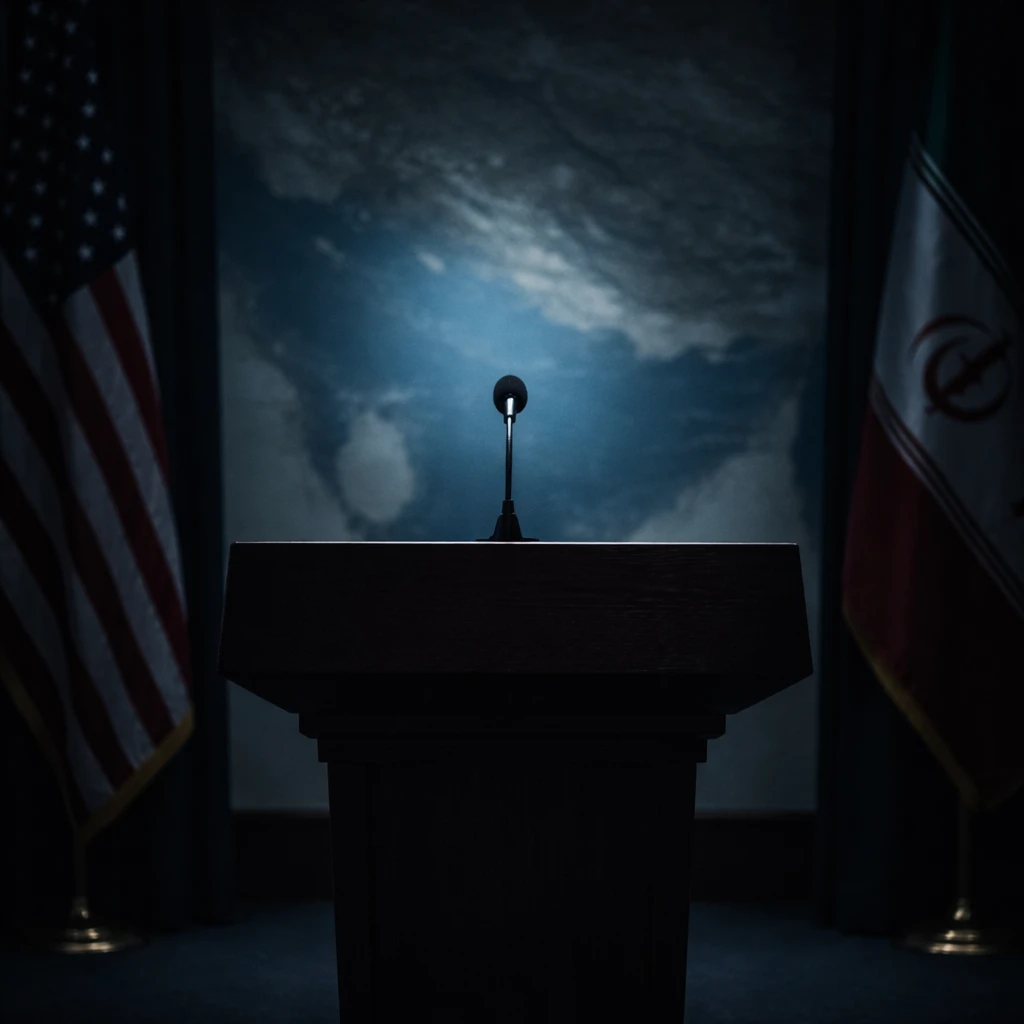
U.S. Defense Secretary Pete Hegseth told reporters on Friday that Mojtaba Khamenei, who was recently chosen as Iran's supreme leader by a clerical assembly, is wounded and is likely disfigured. His comment added to limited, and at times conflicting, public information about the leader's physical condition.
President Donald Trump also addressed the matter earlier on Friday during an interview, saying he thinks Khamenei is alive but "damaged." In the interview, Mr. Trump stated, "I think he probably is (alive). I think he is damaged, but I think he's probably alive in some form, you know." Those remarks were broadcast by Fox News late on Thursday.
Iranian authorities have provided little visual confirmation since the clerical assembly announced Khamenei's selection on Sunday. The new supreme leader has not been seen in public by Iranians following that selection. His initial comments after being named were not delivered in person; instead, a television presenter read his statements on Thursday.
In those televised remarks, Khamenei pledged to keep the Strait of Hormuz closed and urged neighboring countries to close U.S. military bases on their territory or face the risk of being targeted by Iran. The remarks, as presented on state television, conveyed a hardline posture regarding control of the strategic waterway and the presence of U.S. military installations in the region.
Separate reporting and circulating rumors on Thursday suggested the new leader may have suffered the loss of a leg. The reports about his condition have not been fully corroborated by Iranian authorities, and public visibility of Khamenei since his selection remains limited.
The new leader is the son of Iran's former supreme leader, who, according to statements in this reporting, was killed on the first day of the U.S. and Israel's war on Iran. Beyond the accounts noted above, available information about the new leader's health and mobility is sparse and contains conflicting elements.
Contextual notes
The combination of U.S. official statements, the president's comments, the absence of public appearances by the newly named leader, and circulating rumors has left significant uncertainty about his physical state. The leader's first officially released remarks placed emphasis on the Strait of Hormuz and the presence of U.S. bases in neighboring countries, as read by state television rather than delivered directly.