
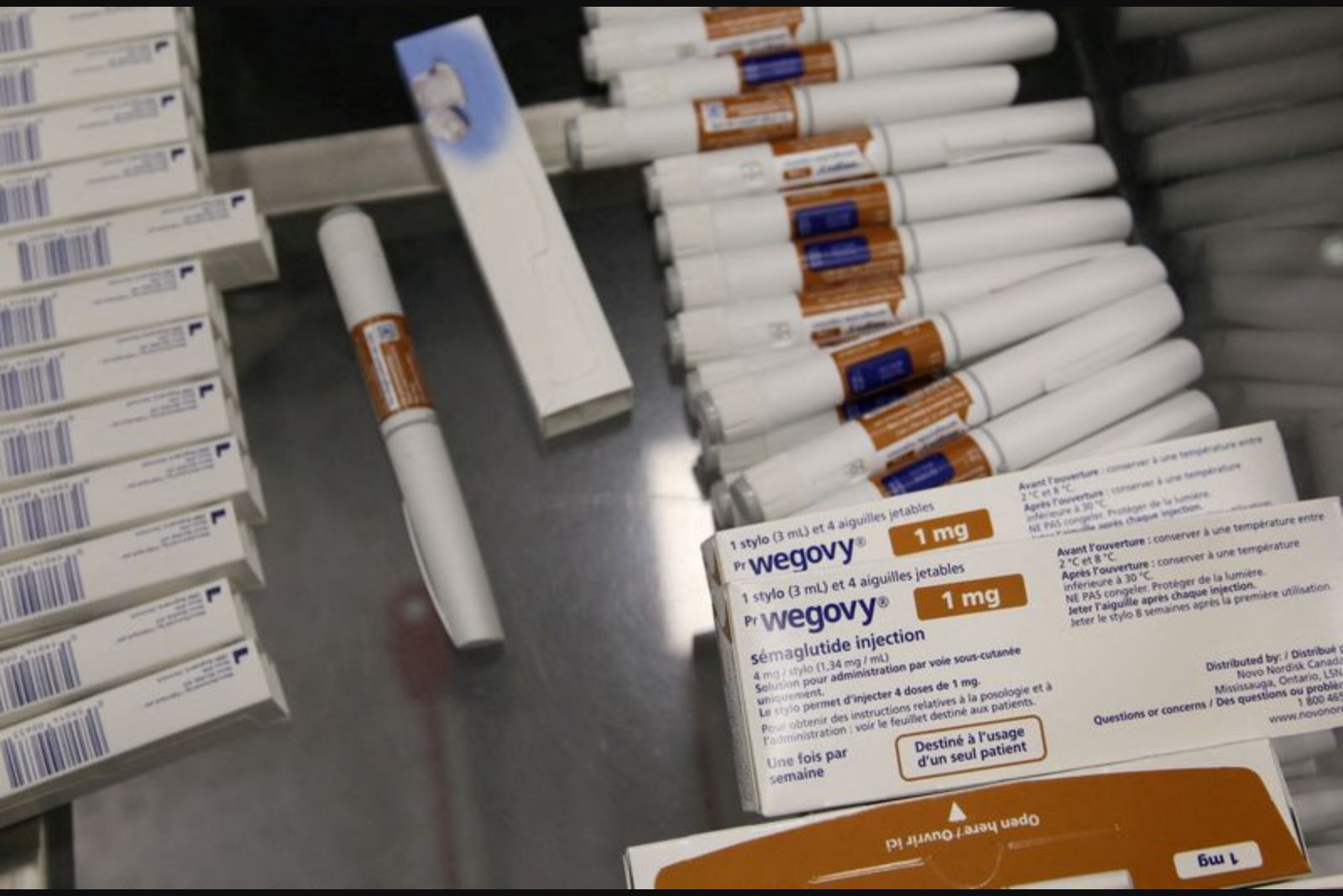
The U.S. government could seek court orders or monetary penalties against Hims, the online telehealth company that announced plans to sell a compounded, lower-cost version of Novo Nordisk's Wegovy weight-loss medication, legal experts said. The company announced a $49 version of the product last week but reversed course after the Food and Drug Administration signaled it would take action.
Department of Health and Human Services general counsel Mike Stuart has said the FDA has referred Hims to the Department of Justice for possible legal violations. Three attorneys interviewed for this piece said the Justice Department could pursue an injunction, civil fines or criminal penalties under the Food, Drug, and Cosmetic Act if it concludes Hims marketed an unapproved drug.
Legal analysts and former agency lawyers described potential next steps and the constraints on enforcement in light of Hims' rapid retreat from its original plan. Hims and its affiliate Hers Health publicly announced the cheaper compounded version of Wegovy, which prompted the FDA to warn the company it could face regulatory action. Hims later said it would not offer the compounded weight-loss pill.
Stuart has framed the FDA's response as partly intended to protect the investments drugmakers make in pursuing formal FDA approval and to ensure product safety. He was quoted as saying that compounders, compared with the pharmaceutical industry more broadly, have not expended the same, "inordinate amount of money" to demonstrate that products are safe and effective.
Hims did not reply to a request for comment for this report. Meanwhile, manufacturers of GLP-1 weight-loss drugs, including Novo Nordisk and Eli Lilly, have been working to expand supply amid surging demand for their products. Those drugmakers have argued some compounding operations are effectively producing unapproved copies of commercially available medicines.
Under federal law, compounded pharmaceuticals are permitted in narrowly defined circumstances - for example, to address shortages or to tailor medications for an individual patient's medical needs. Outside those conditions, the FDA has the authority to take enforcement action when compounders appear to be bypassing the federal approval process by manufacturing products that are already sold commercially, according to three attorneys consulted for this article.
Hims has defended its approach by saying its formulations are tailored to patients' medical requirements. But a central question for regulators is whether the company’s products were sufficiently personalized to fall within the statutory compounding exceptions. Two attorneys with expertise in FDA regulatory matters noted that publicly available information about Hims' manufacturing and prescribing practices is limited, making that determination difficult from the outside.
As an enforcement step, the FDA could examine Hims’ records to determine whether prescriptions and clinical justification for compounded drugs are properly documented. Nathan Beaver, a partner at Foley and Lardner, said those inspections could happen solely at the FDA's initiative or in collaboration with state regulators, who license compounding pharmacies.
Because Hims announced on Saturday that it would not proceed with offering the compounded pill, some legal observers suggested the Department of Justice might opt not to file a case. James Boiani, an attorney at Epstein, Becker & Green, P.C., said that if Hims has already withdrawn the product and is no longer pursuing the sale, it is not evident there is a present case or controversy for DOJ to litigate.
Regulators and legal specialists, however, could still examine Hims' other product lines. The federal government could shift focus to injectable compounded weight-loss medications Hims offers that contain semaglutide, the active ingredient in Wegovy. James Shehan, chair of the FDA regulatory practice at Lowenstein Sandler and a former general counsel at Novo Nordisk, noted that enforcement would likely be more complicated for injectables because differences in dosage and inactive ingredients give compounders a stronger argument that their products are permissible under the law.
Attorneys emphasized that the FDA alone cannot litigate in court; it needs the Department of Justice to bring enforcement actions. The agencies typically coordinate, with FDA counsel interpreting the Food, Drug, and Cosmetic Act and the Justice Department leading any subsequent legal proceedings. Shehan summarized that when the FDA refers a matter, it is typical for Justice to act on the referral.
Regulatory scrutiny of marketing and advertising has also figured in recent agency engagement. HHS sent warning letters last September to Novo, Hims and other companies about potentially misleading advertising. Separately, the FDA told Novo on February 5 that a television advertisement for its weight-loss drug gave the misleading impression that Wegovy represented an advancement over other GLP-1 medications.
Legal practitioners and regulators now face a number of judgment calls: whether Hims’ withdrawn pill offering nonetheless merits action, whether records reveal insufficient personalization to qualify for compounding exceptions, and whether to pursue injectables where the regulatory analysis is more nuanced. For now, agency referrals and investigatory options remain the primary levers available to federal authorities.
Summary
Federal officials have referred Hims to the Justice Department after the telehealth firm briefly proposed selling a compounded, lower-priced copy of Wegovy. Attorneys say DOJ could seek injunctions or fines if Hims is found to have marketed an unapproved drug, but Hims' public withdrawal of the pill offer could limit the scope of potential legal action. Regulators may instead scrutinize records or turn attention to compounded injectables containing semaglutide.