
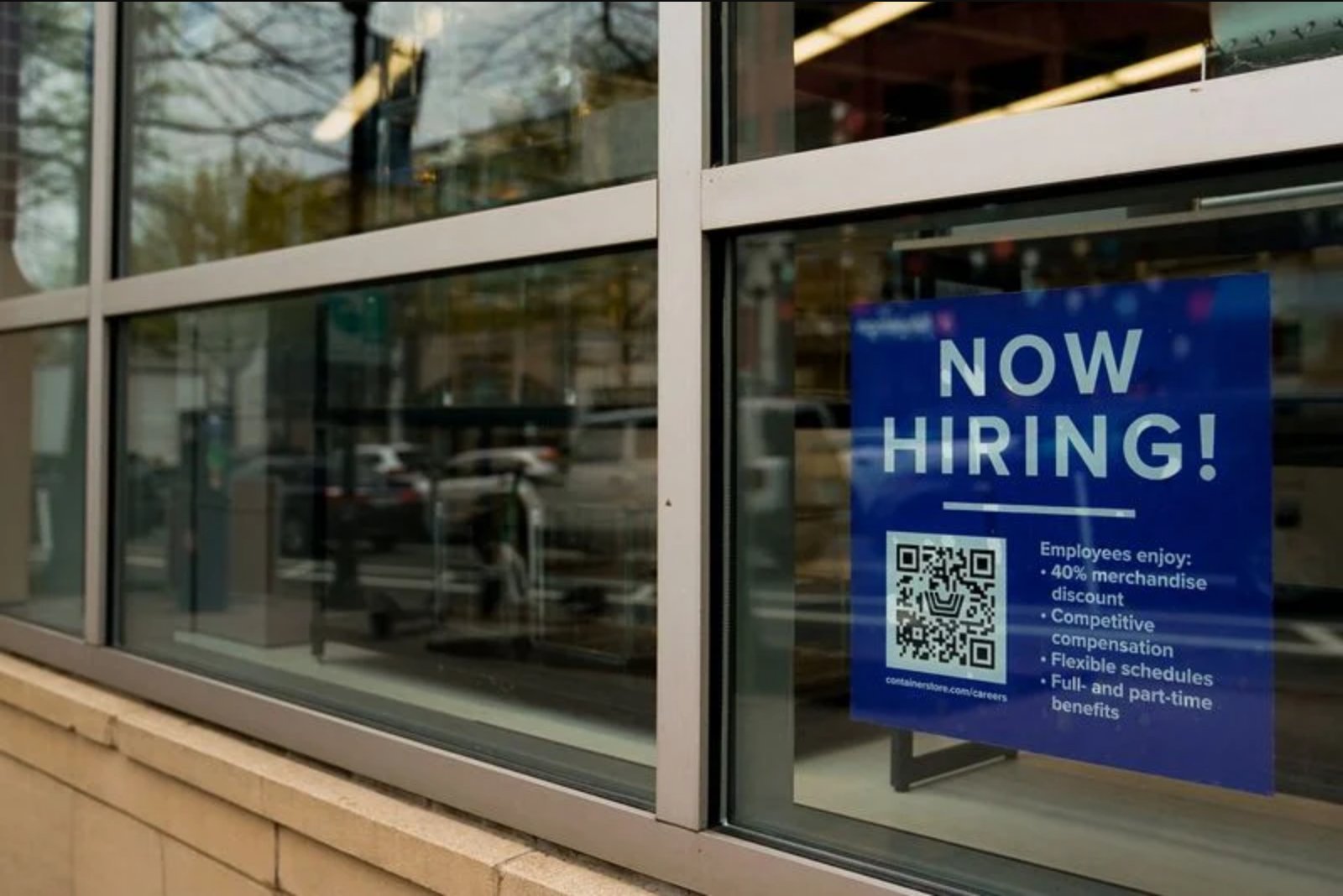
WASHINGTON, June 2 - U.S. job openings rose by a larger-than-expected margin in April, reaching the highest level in nearly two years, while hiring fell, likely reflecting lingering economic uncertainty.
The Labor Department's Job Openings and Labor Turnover Survey (JOLTS) reported that vacancies climbed by 731,000 to 7.618 million at the end of April, the most since May 2024. Economists had been expecting about 6.88 million unfilled positions.
The openings rate increased to 4.6% from 4.2% in March. At the same time, hiring slipped by 419,000 to 5.116 million, a decline that lowered the hires rate to 3.2% from 3.5% a month earlier.
Measured layoffs and discharges also eased, dropping 192,000 to 1.692 million. The layoffs rate fell to 1.1% from 1.2% in the prior month. Separately, first-time applications for unemployment benefits remain at historically low levels, and the three-month U.S.-Israeli war on Iran has not produced a discernible effect on the labor market, according to the report.
The pattern in recent months shows job growth posting back-to-back gains above 100,000, suggesting parts of the labor market may be stabilizing after a period of volatility in 2025 related largely to economic uncertainty from import tariffs. But the simultaneous rise in openings and pullback in hires highlights a disconnect between employers' demand for workers and actual hiring activity.
Attention now turns to the closely watched employment report for May, due on Friday. A survey of economists expects nonfarm payrolls to have increased by 85,000 jobs in May, following a 115,000 rise in April. The unemployment rate is forecast to hold at 4.3%.
Financial market participants view a steady labor market as reinforcing expectations that the Federal Reserve will keep its benchmark overnight interest rate in the 3.50% to 3.75% range into next year, while monitoring inflation developments tied to the conflict in the Middle East. The government reported last week that inflation accelerated in April at the fastest pace in three years.
In sum, April's JOLTS data underscore persistent labor demand alongside softer hiring, setting up a crucial read on May payrolls and keeping market focus on inflation and central bank policy as key determinants of near-term economic momentum.