
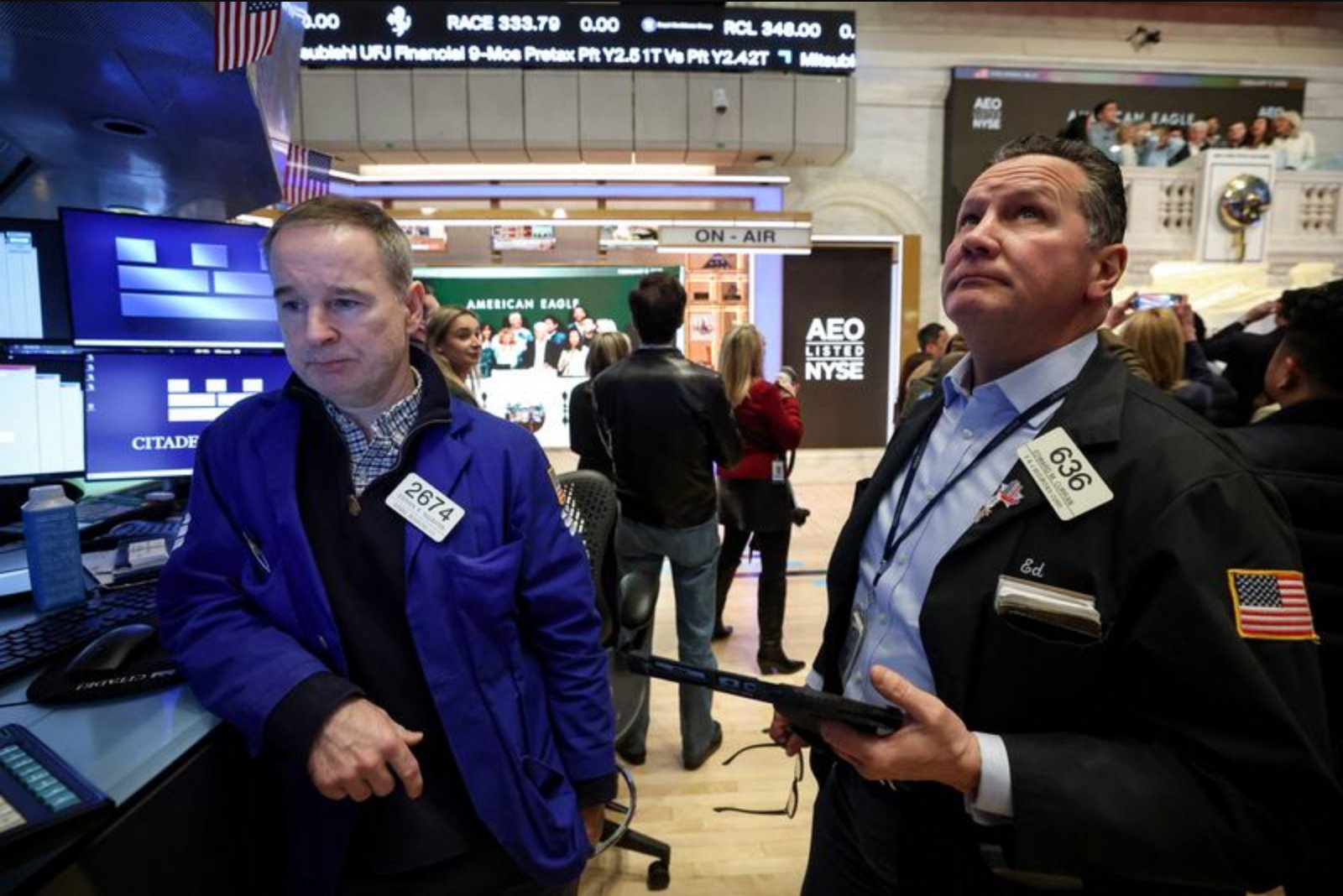
Feb 11 - U.S. stock index futures were muted on Wednesday as traders and investors braced for a January employment report that was postponed because of a partial government shutdown, while also watching a slate of corporate earnings.
The labor report is anticipated to show an increase in U.S. job growth even as the broader labor market remains soft, a dynamic the article attributes to tariff uncertainty and constraints stemming from tighter immigration enforcement. Market participants are parsing the numbers for clues about the Federal Reserve's next steps; a recent stall in retail sales has lifted the market-implied probability of an April rate cut to 35.5% from 32.2% the previous day, according to CME Group's FedWatch tool.
Despite the shift toward a possible April reduction, traders still expect the Fed's first cut to come in June, the month when President Donald Trump's nominee for the Fed chair, Kevin Warsh, is anticipated to assume leadership if confirmed by the Senate. The article notes that any unexpected outcome in the upcoming labor figures or in Friday's key inflation release could rapidly alter the expected path for policy.
Early electronic futures activity showed modest divergence across major contracts. At 05:08 a.m., Dow E-minis were up 13 points, or 0.03%, S&P 500 E-minis were down 6.5 points, or 0.09%, and Nasdaq 100 E-minis fell 64.75 points, or 0.26%.
Quarterly earnings continued to command attention. Cloud and network security provider Cloudflare rose 14% after issuing an above-consensus forecast for full-year and first-quarter sales. The article highlights renewed scrutiny on AI-driven disruption, which has recently hit sectors and industries thought to be vulnerable - most notably the software segment, which experienced a sharp drawdown last week. Brokerages also came under pressure after startup Altruist unveiled AI-enabled tax-planning features that raised competitive concerns.
Individual stock moves included a 7.2% decline in Robinhood following a fourth-quarter revenue print below Wall Street estimates. Other notable pre-market reports included results or announcements from Kraft Heinz, T-Mobile, Shopify and Humana. The broader market picture showed the S&P 500 and Nasdaq closing lower on Tuesday, even as the Dow notched its third consecutive record close. The S&P 500, however, remained not far from its late-January record high.
Policy developments also featured in market positioning. A narrowly divided U.S. House of Representatives on Tuesday rejected a Republican attempt to halt legislative challenges to the president's tariffs, a vote that could permit Democrats to seek reversal of tariffs placed on Canada. The article further notes that a Supreme Court ruling on the legality of the tariffs is expected in the coming months.
In health care and consumer moves, Moderna's shares slid 8.8% after the U.S. Food and Drug Administration opted not to review the drugmaker's approval application for its influenza vaccine. Ride-hailing firm Lyft saw its stock tumble 17% after issuing a quarterly profit forecast and reporting annual ride volumes that fell short of analysts' expectations.
The article closes by underscoring that incoming labor and inflation reports, along with ongoing corporate earnings, have the potential to quickly reshape expectations for monetary policy and sector performance.