
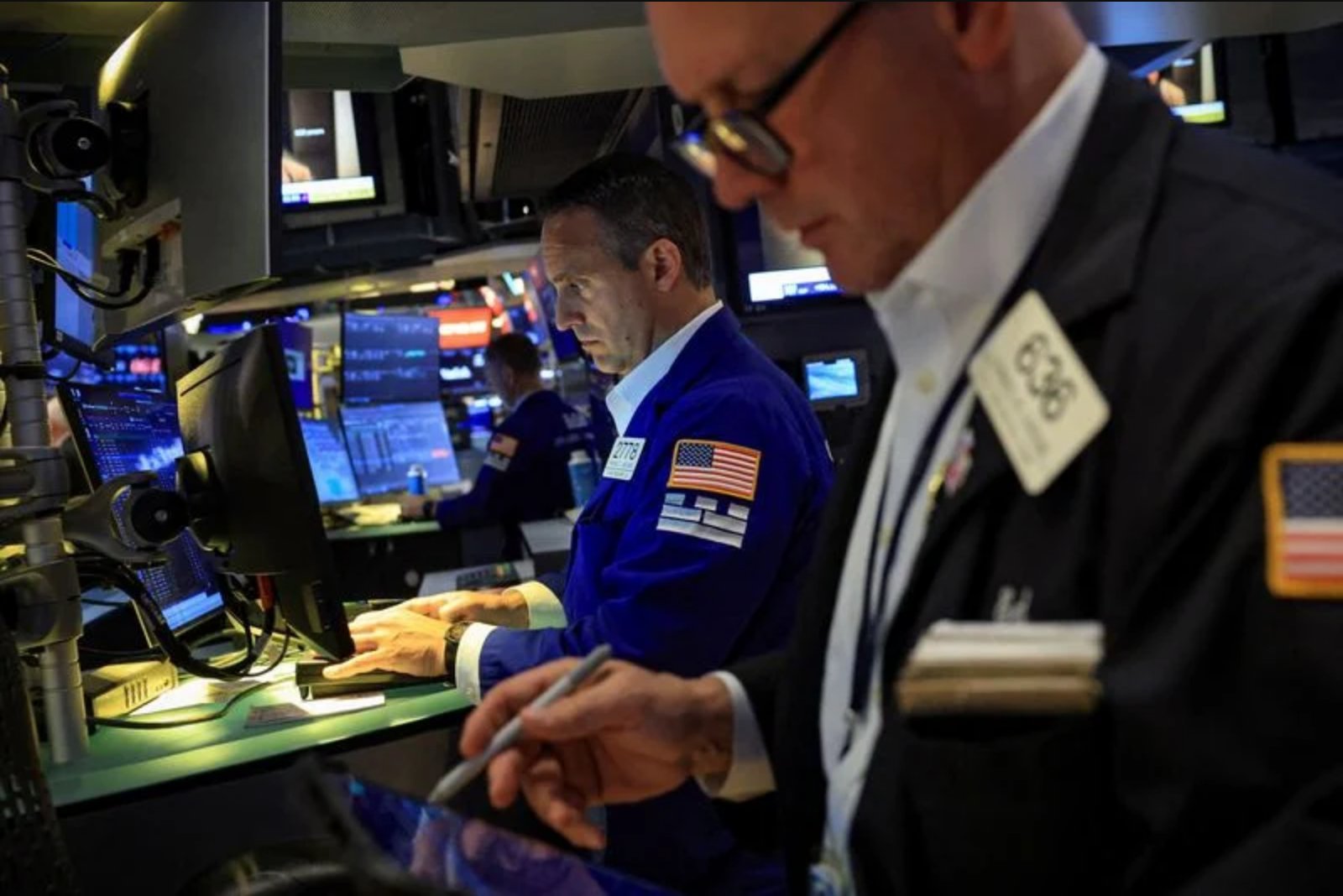
U.S. and global equity markets initiated July with limited directional conviction, marked by a broad pullback in technology shares and pronounced weakness in semiconductor stocks that dragged on Wall Street indices. The trading session was characterized by uneven movement across major benchmarks, with European equities also contracting. Concurrently, comments from Federal Reserve Chair Kevin Warsh regarding a reduction in inflationary pressures provided support to precious metals and facilitated a moderation in the dollar's previous gains.
Market participants are currently navigating a complex data environment. U.S. factory activity showed deceleration in June, though the component tracking prices paid remains elevated. In the labor market, private payroll growth fell short of consensus estimates, while announced layoffs decreased. Across the Atlantic, Eurozone manufacturing output concluded its strongest quarter since 2022, accompanied by easing war-related cost pressures. In the banking sector, German institutions have rejected the European Central Bank's potential proposal to double required minimum reserves.
On the trade front, the Trump administration has declined to extend the existing U.S. trade agreement with Mexico and Canada, initiating a decade-long process to reshape the framework prior to its expiration. This development adds a layer of long-term uncertainty to cross-border commercial flows.
Key market movements reflected these macroeconomic and policy shifts. U.S. stocks dipped during choppy trading, while Europe's STOXX index also declined. Within specific sectors, chip stocks dropped 6.3%. A notable exception was Meta, which surged after Bloomberg reported the company is building a cloud business to sell excess AI computing capacity. In foreign exchange, the dollar's gains faded as Warsh softened his inflation rhetoric, while the yen rebounded from a 40-year low. Benchmark Treasury yields pared gains following Warsh's remarks. In commodities, WTI and Brent crude prices settled down 1.3% and 1.4%, respectively, while gold jumped significantly.
Political and corporate disclosures also drew attention. U.S. President Donald Trump reported over $1.4 billion in income from his family's crypto business last year. His 2025 annual disclosure to the U.S. Office of Government Ethics revealed that he now derives most of his income from digital assets that have benefited from his policies. The filings indicate almost $800 million from World Liberty Financial, a crypto venture he and his sons co-founded, and another $635 million from the sale of his Trump meme coins.
On the policy front, Warsh made his international debut as Chair of the U.S. Federal Reserve during his appearance at the European Central Bank Forum in Sintra, Portugal. He asserted the central bank's independence but declined, alongside other central bankers, to provide detailed commentary on the economy or the future trajectory of interest rates. Warsh stated he hopes the Fed will shift its focus to real-time data for monetary policy decisions and rely less on backward-looking government surveys.
Geopolitical developments continue to influence market dynamics. The U.S. and Iran held technical talks in Doha with a focus on the Strait of Hormuz. The discussions aim to resume traffic flow through the crucial waterway, release frozen Iranian assets, and secure a lasting ceasefire based on a 14-point interim accord signed last month, which established a 60-day period of negotiations toward a permanent peace deal. Progress on more complex issues has been limited following tit-for-tat airstrikes that have threatened the fragile truce.
Looking ahead, market participants will monitor several key economic releases and events. These include the U.S. payrolls report for June, U.S. factory orders for May, and developments in the Middle East. Energy market moves and social media posts from President Trump are also on the radar. Internationally, traders are watching the Eurozone unemployment rate for May, Switzerland CPI for June, and France's budget balance for May. Services PMI data will be released for China, Japan, Australia, and Ireland for June. Several Federal Reserve members are scheduled to speak, including New York Fed President John Williams, San Francisco Fed President Mary Daly, and Dallas Fed President Lorie Logan.