
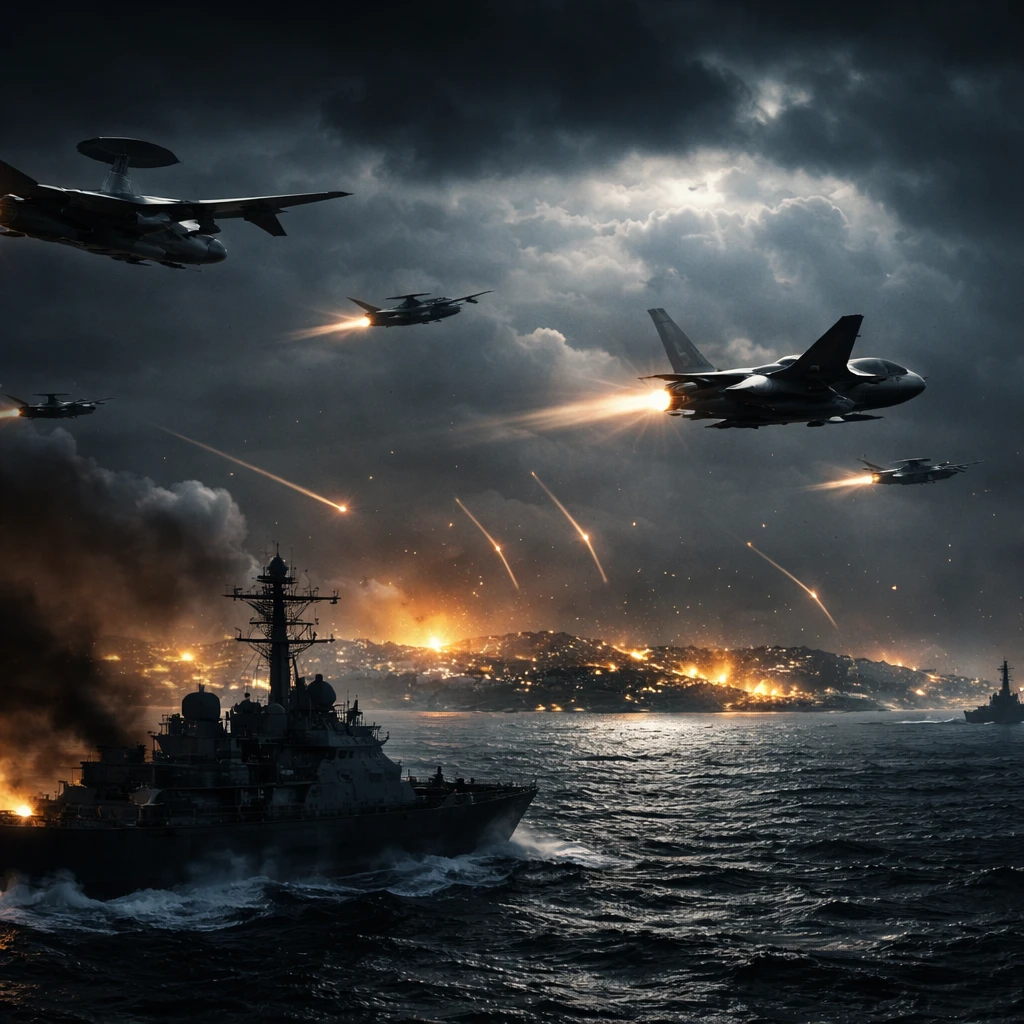
The United States has secured complete control of Iranian airspace just four days after the launch of Operation Epic Fury, Pentagon officials said Wednesday at a briefing in Washington.
Defense Secretary Pete Hegseth, speaking alongside Chairman of the Joint Chiefs of Staff Air Force General Dan Gaine, said U.S. and Israeli forces now operate without contested opposition in the skies over Iran, enabling continuous missions aimed at Iranian military locations.
Hegseth described the campaign, which began on Saturday morning, as delivering an intensity of air power he compared to previous conflicts. He said the current operation has employed twice the aerial firepower used during the 2003 Iraq invasion and amounts to seven times the intensity of Israel's operations during the 12 Day War, as reported by the secretary.
General Gaine provided operational metrics indicating a marked reduction in Iranian strike activity. He reported that Iranian ballistic missile launches have fallen 86% compared with the first day of the conflict, and that launches in the most recent 24-hour period dropped by 23%. Drone launches by Iranian forces are down about 73% from the opening days of the campaign, the chairman said.
The Pentagon confirmed that six American service members have been killed in the fighting. Four of the fallen were identified as members of the 103rd Sustainment Command, U.S. Army Reserves based in Des Moines, Iowa: Captain Cody Corke, Sergeant First Class Noah Tiedjens, Sergeant First Class Nicole Amour, and Sergeant Declan Cody. Two additional names are being withheld pending notification of next of kin.
U.S. forces have struck more than 2,000 targets since operations began, officials said. Those strikes have destroyed in excess of 20 Iranian naval vessels, including a submarine. On Tuesday, a U.S. submarine used a Mark 48 torpedo to sink an Iranian warship in the Indian Ocean; Pentagon officials described this as the first torpedo sinking of an enemy vessel by the U.S. Navy since World War Two. Separately, the Iranian frigate Soleimani was also sunk on Tuesday night, Pentagon officials reported.
Hegseth told reporters the campaign has effectively eliminated Iran's air force and left its navy combat ineffective. He also said Iranian senior leadership has either been killed or rendered unable to communicate effectively, according to the secretary's remarks at the briefing.
The Pentagon said it is shifting from the use of standoff munitions to GPS-guided precision gravity bombs in 500-, 1,000- and 2,000-pound variants. Hegseth stated that U.S. stockpiles of those precision gravity munitions are nearly unlimited.
Officials added that more than 90% of American personnel who had been stationed at bases within range of Iranian fire have been moved out of harm's way. The defense secretary said regional partners are also contributing to defensive measures: Jordan, Bahrain, Saudi Arabia, the United Arab Emirates, Qatar and Kuwait are participating in operations intended to protect regional assets and forces.
Qatari fighter aircraft shot down two Iranian bombers during the campaign, an engagement officials noted as the first of its kind for Qatar.
The Pentagon is investigating reports that a girls school in southern Iran was struck on Saturday. Hegseth reiterated that U.S. forces do not target civilian locations, and the incident is under review.
General Gaine said Iran has launched more than 500 ballistic missiles and 2,000 drones at targets across the region since the operation began on Saturday. Pentagon leaders outlined the stated objectives of Operation Epic Fury as eliminating Iran's ballistic missile systems, destroying the Iranian Navy and preventing Iran from developing nuclear weapons.
Operational context and immediate effects
Officials framed the rapid establishment of air superiority as a force-multiplying development that has reduced the observable rate of Iranian missile and drone launches. The reported degradation of Iran's naval and air capabilities, together with the relocation of vulnerable U.S. forces, reflects a focus on both attrition of Iranian military assets and force protection for U.S. personnel in the region.
Human cost
The confirmed U.S. fatalities underscore the human toll of the campaign. The Pentagon has publicly identified four of the six deceased service members and said it will withhold the other two names until families are notified.
Ongoing assessments
Investigations into civilian casualties and continued monitoring of Iranian launch activity are active components of the Pentagon's reporting, according to the officials who briefed the press.