
Economy May 26, 2026 09:10 AM

U.S. and Armenia Formalize Strategic Partnership During Airport Meeting

Marco Rubio and Ararat Mirzoyan sign three pacts including a transit corridor, critical minerals framework and strategic partnership amid looming parliamentary vote

By Jordan Park

U.S. Secretary of State Marco Rubio and Armenian Foreign Minister Ararat Mirzoyan signed a strategic partnership agreement at Yerevan's Zvartnots International Airport, accompanied by accords on critical minerals and a proposed 43-kilometer transit corridor linking Azerbaijan to its Nakhchevan exclave and onward to Turkey. The move comes days ahead of Armenia's June 7 parliamentary elections and follows a Kremlin warning about possible changes to Russian gas pricing if Armenia shifts away from integration with Moscow.

U.S. and Armenia Formalize Strategic Partnership During Airport Meeting

Key Points

  • Three agreements were signed in Yerevan: a strategic partnership, a critical minerals framework, and a cooperation deal on a proposed 43-kilometer transit corridor across southern Armenia - sectors impacted include diplomacy, mining and resource supply chains, and regional transport/logistics.
  • The transit corridor would provide Azerbaijan with a direct route to its exclave of Nakhchevan and onward to Turkey, affecting regional transport links and trade routes - sectors impacted include trade and logistics.
  • The signings occurred less than two weeks before Armenia's parliamentary elections on June 7, a political context that could influence foreign policy orientation and related market sentiment - sectors impacted include energy and regional political risk assessments.

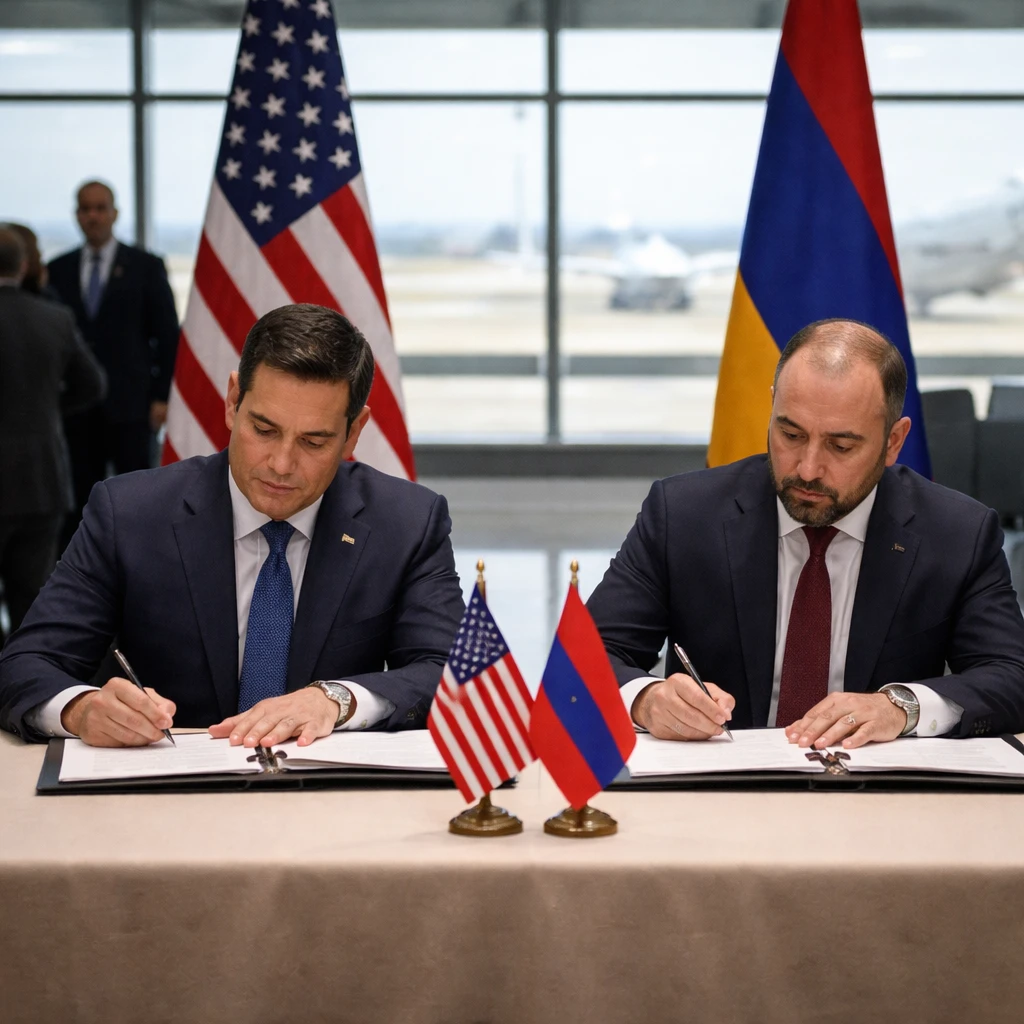
U.S. Secretary of State Marco Rubio and Armenian Foreign Minister Ararat Mirzoyan concluded a signing ceremony in Yerevan on Tuesday, formalizing a bilateral strategic partnership and two additional agreements during a brief stopover at Zvartnots International Airport.

The three documents signed at the airport include a strategic partnership agreement, a framework agreement addressing critical minerals, and a cooperation deal concerning a proposed 43-kilometer transit corridor across southern Armenia.

The proposed transit corridor is described in the agreement as a route that would furnish Azerbaijan with a direct link to its exclave of Nakhchevan, and from there a connection onward to Turkey, which the document notes is Baku's closest ally. The other signed framework focuses on critical minerals, while the strategic partnership establishes a broader bilateral relationship between the United States and Armenia.

Rubio's appearance in Yerevan and the timing of the signings coincided with a narrow window ahead of national elections. The agreement was signed less than two weeks before Armenia's parliamentary elections scheduled for June 7. The political stakes were underscored by the domestic contest: Prime Minister Nikol Pashinyan's Civil Contract party, which advocates closer ties with Western nations, will compete against several opposition parties, many of which are characterized by pro-Russian positions.

The diplomatic move also drew a response from Moscow. On Monday, the Kremlin warned that Armenia could lose the favorable price it currently pays for Russian gas if the country were to move away from integration with Russia. That statement frames an economic consideration tied to Armenia's external alignments and the recent agreements.

The signing at Zvartnots International Airport followed Rubio's brief stopover in the Armenian capital. Officials on both sides completed the paperwork at the airport site, marking a compact but significant diplomatic exchange that included cooperation across strategic, resource-focused and transit-related areas.


Context and immediate facts

  • The three signed documents are: a strategic partnership agreement, a critical minerals framework, and a cooperation agreement on a proposed 43-kilometer transit corridor in southern Armenia.
  • The corridor would give Azerbaijan a direct route to Nakhchevan and onward to Turkey, identified in the agreement as Baku's closest ally.
  • The signings occurred at Zvartnots International Airport during Rubio's short stop in Yerevan, on the eve of parliamentary elections scheduled for June 7.
  • The Kremlin stated that favorable Russian gas pricing for Armenia could be at risk if Armenia moves away from integration with Russia.

Risks

  • Potential changes in Armenia's foreign alignment could affect its energy arrangements: the Kremlin warned that Armenia could lose the favorable price it pays for Russian gas if it moves away from integration with Russia - this risk pertains to the energy sector and gas markets.
  • The proposed transit corridor and closer ties with the United States may heighten geopolitical tensions in the region, introducing uncertainty for transport, trade and logistics sectors that would rely on stable transit arrangements.
  • Domestic political outcomes from the June 7 parliamentary elections could alter the durability or implementation timeline of the agreements, creating uncertainty for sectors tied to those agreements such as critical minerals development and associated supply chains.

More from Economy

SpaceX IPO, ECB Rate Move and Global Data Set the Week’s Market Agenda Jun 5, 2026 AirTrunk Pledges $30 Billion to Build 5 GW of Data Centre Capacity in India by 2030 Jun 5, 2026 Bank Indonesia to Draft Rules to Reflect Expanded Economic Mandate Jun 5, 2026 UK Home Prices Slip in May as Middle East Tensions and Cost Pressures Curb Demand Jun 5, 2026 Fitch Lowers Global Growth Forecast, Raises Oil Price Outlook Amid US-Iran Conflict Jun 5, 2026