
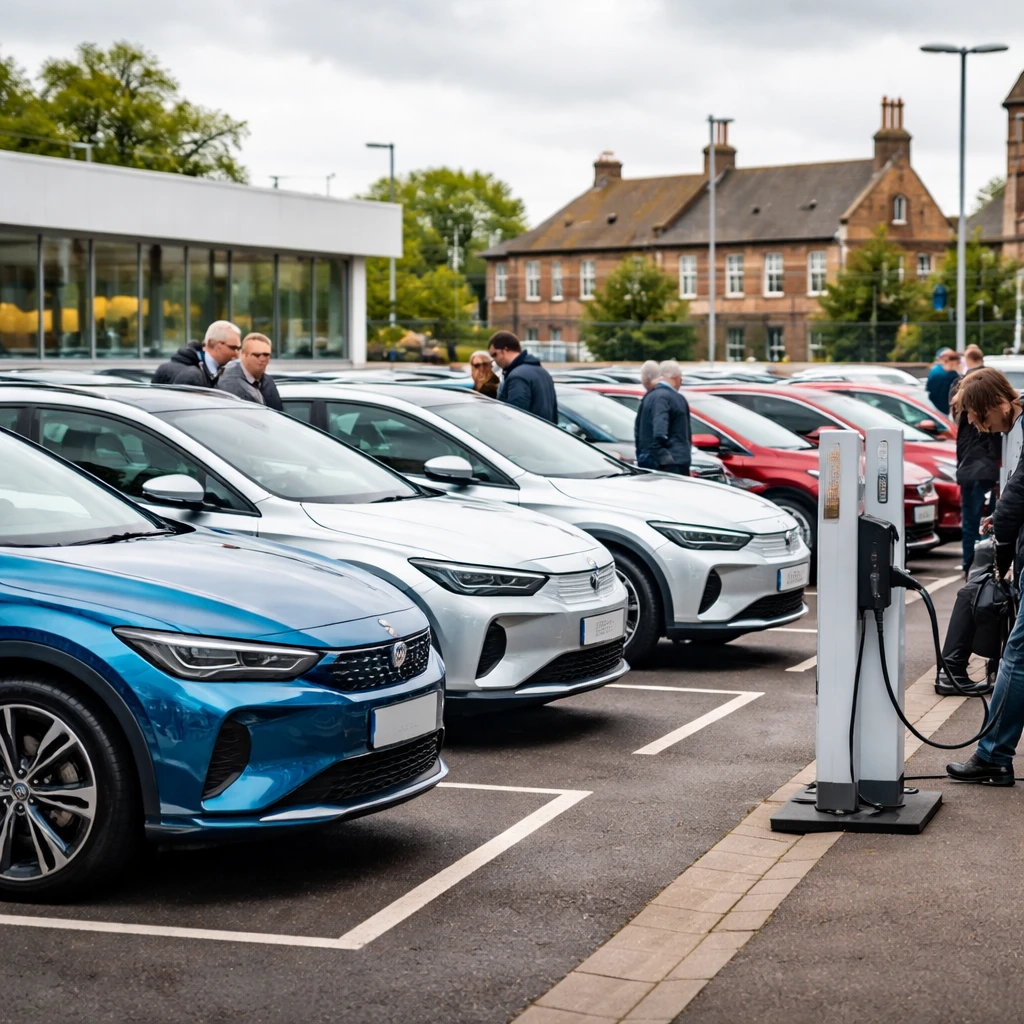
Britain's new car market strengthened in May, with registrations increasing 7.1% compared with the same month last year, marking the best May performance since 2019, according to data published by the Society of Motor Manufacturers and Traders.
Total new car registrations in May came to 160,662 vehicles. Battery electric vehicles were the standout performer, rising 34.2% - the largest increment recorded across the main vehicle categories.
Industry officials linked part of the shift toward electric vehicles to higher fuel prices. "Rising fuel costs, largely driven by global oil shocks from the Iran war, have pushed customers toward electric alternatives across Europe," the data release noted.
Battery electric models now represent roughly 24% of total car sales so far this year. That figure remains below the 33% share the UK has set as a target.
Commenting on the pace of the transition, SMMT chief executive Mike Hawes said: "The EV transition is progressing, but consumer uptake still lags behind even today’s targets, let alone the ambition set out in the latest Carbon Budget."
Industry participants pointed to a convergence of factors supporting retail demand. Melanie Lane, CEO of EV charging provider Pod, said: "We’re seeing surging interest linked to macro shocks earlier in the year now materialise into real consumer demand." Registrations from individual buyers increased 17.2% in May, a rise the industry attributed to a wider model choice, competitive offers from retailers and continued government backing for schemes such as the Electric Car Grant.
Separately, data released by New Automotive on Wednesday indicated new car sales rose by about 6% year-on-year, a gain New Automotive said was driven by demand for plug-in vehicles. The SMMT and New Automotive use different data sources and calculation methods, which accounts for the variation in their headline growth figures.
Market implications
- Stronger retail demand and a growing model lineup have pushed individual buyer registrations higher.
- Electric vehicle growth continues to outpace other segments, though the current share of sales remains under the policy target.
- Different industry datasets show similar directional trends but report slightly different rates of growth due to methodological differences.