
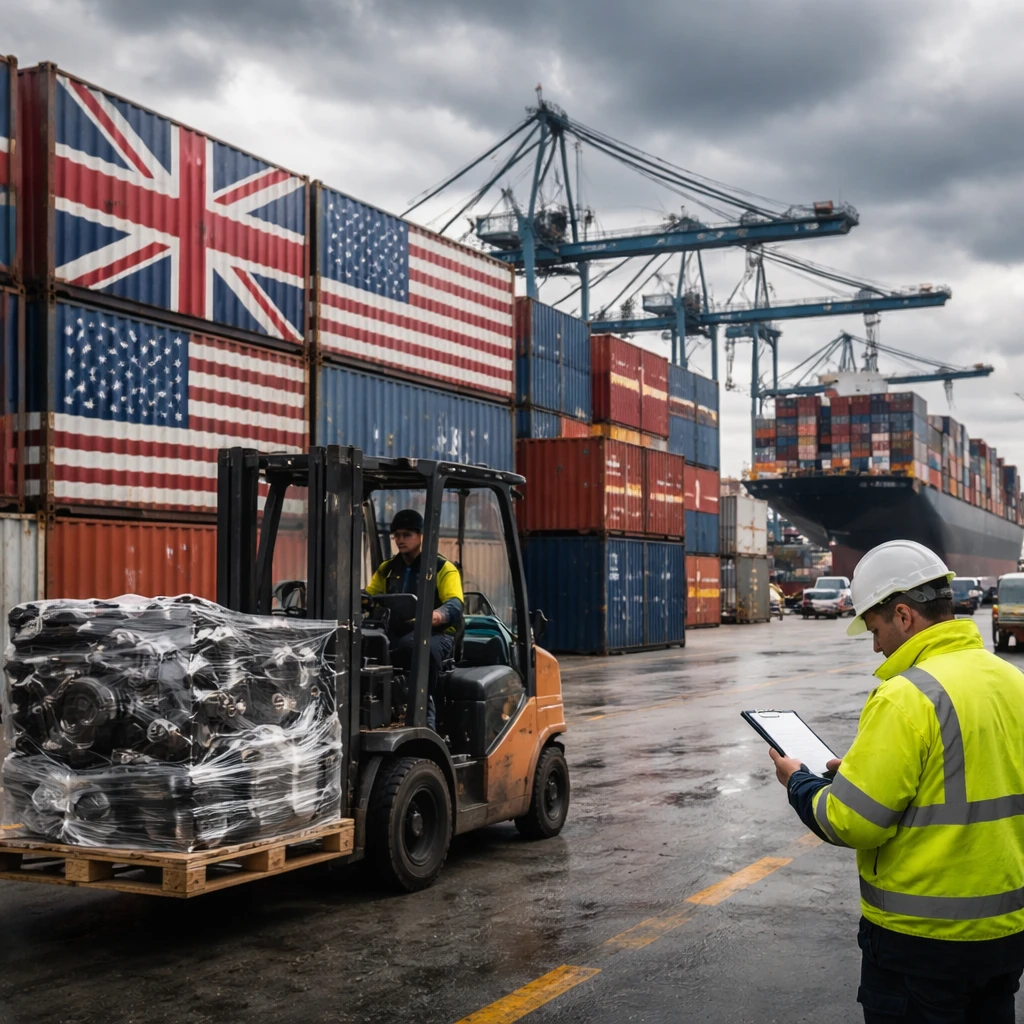
British goods exports to the United States fell 10.3% to £59.2 billion in the most recent year, according to an analysis of trade figures by the business advisers and chartered accountants Lubbock Fine. The drop follows the introduction of a package of tariffs by the US after President Trump returned to office last year.
The United States continues to be the UK’s largest single trading partner, accounting for 15.6% of the £379.8 billion of goods exported by the UK last year. Despite that standing, new trade barriers implemented in the past year have coincided with the first annual decline in exports to the US since the pandemic.
Most sectors saw a contraction in the value of shipments to the US. Exports of clothing slipped by more than 25% to £288.7 million, while footwear receipts fell 21.2% to £33.5 million. The market for works of art declined 16.4% to £1.2 billion.
The value of car exports to the US dropped 28.1% to £7.5 billion. That fall occurred despite a trade agreement reached in May that cut tariffs on British cars from 25% to 10% - a measure intended to ease costs for the sector. Cars remain one of the UK’s principal export categories.
Pharmaceuticals and medicinal products, the UK’s second-largest export sector, also saw a reduction in value to the US, down 8.4% to £10.2 billion. The analysis notes that the pharmaceuticals sector is exempt from the tariffs that were applied to many other goods.
Beyond the measures affecting specific industries, broader tariff policy is set to exert further pressure on UK exports. US Treasury Secretary Scott Bessent stated that Washington will impose a global 15% tariff imminently. Alex Altmann, a partner at Lubbock Fine, said: "Tariffs have already reduced the value of British goods exports to the US and with more likely on the way, I would not be surprised to see further falls in trade."
Last year’s US tariff package established a baseline 10% levy on UK goods exported to the United States, with much larger duties for particular categories. In sectors such as aluminium and steel, tariffs were set as high as 50% in certain cases. While the May trade deal trimmed tariffs across a range of sectors, the agreement is not legally binding.
On a regional basis, the US took a larger share of UK exports than any other single country, with Germany in second place at 8.9% of the UK’s goods exports. Exports to the 27 members of the European Union combined totalled £182.2 billion last year, a 1% decline on 2024.
Analysts at Lubbock Fine point to administrative frictions with the EU as an area where policy changes could support trade. Alex Altmann suggested that government cooperation with Brussels to reduce paperwork such as import and export declarations, document requirements and inspections would help boost trade flows.
Key figures highlighted in the analysis include a 10.3% fall in UK goods exports to the US to £59.2 billion; car exports down 28.1% to £7.5 billion; pharmaceuticals to the US down 8.4% to £10.2 billion; clothing exports down more than 25% to £288.7 million; footwear down 21.2% to £33.5 million; and works of art down 16.4% to £1.2 billion. The US represented 15.6% of the £379.8 billion in UK goods exports last year.