
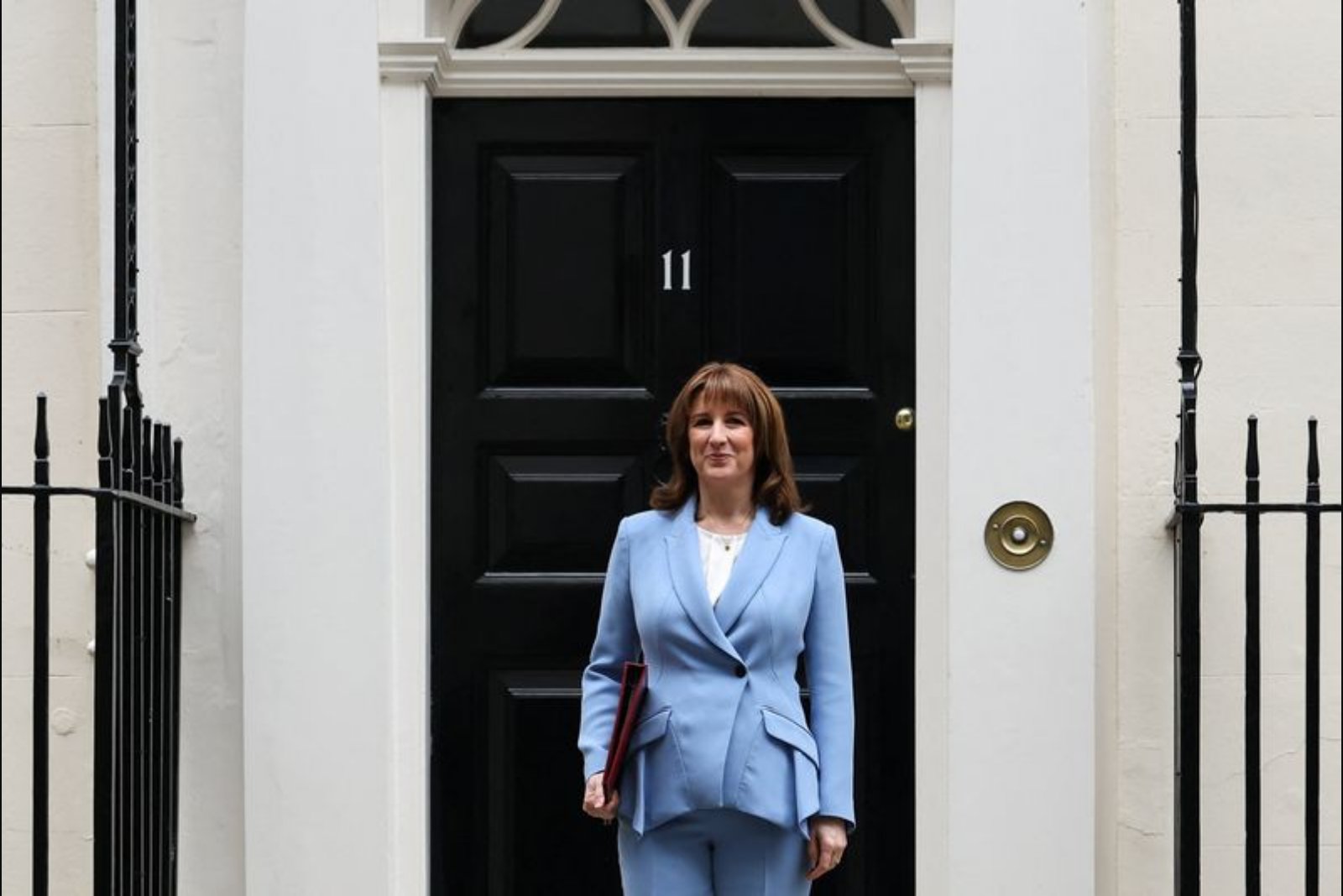
LONDON, March 3 - The economic projections that Rachel Reeves used to support her budget update on Tuesday may already be outpaced by events, as international conflict and domestic political fragility threaten the assumptions that underpin the government's fiscal plan.
Reeves told lawmakers that, according to the Office for Budget Responsibility - the independent fiscal watchdog - the United Kingdom was still on course to emerge from a period of low growth and elevated borrowing. She said the OBR's numbers gave her a slightly larger margin for meeting the government's fiscal targets.
During her speech, Reeves invoked geopolitical uncertainty roughly a dozen times, but she did not append qualifications to her assertion that the OBR's projections affirmed the correctness of her strategy. That lack of caveats drew scepticism from some economists. "All well and good, then, aside from the significant chance that the new forecast is already out of date before the ink has dried," Andrew Wishart, senior UK economist at Berenberg, said.
Financial markets signalled doubts. The cost of long-term British government borrowing recorded one of its largest one-day increases in years as the U.S.-Israeli war against Iran prompted concerns about a renewed period of higher energy prices and greater global inflationary pressure. Daniele Antonucci, chief investment officer at Quintet Private Bank, said: "The OBR forecasts may show debt stabilising over the decade, but that depends on a world that is already shifting." He added: "Even modest moves in yields show how sensitive the public finances are to further shocks," and noted his bank had recently trimmed holdings of British gilts.
The OBR itself compiled its forecasts before the recent turmoil in the Middle East and warned that the conflict "could have very significant impacts on the global and UK economies." That caveat has become more salient in the days since the forecasts were prepared.
Recovery at risk
Just before the latest escalation in the Middle East, the economic picture facing Reeves had been showing signs of improvement. Government borrowing costs were declining, there were tentative signs of an economic recovery and data for January indicated a short-term improvement in the public finances. The outbreak of wider regional conflict threatens to undo that progress if higher oil and gas prices persist.
Britain's exposure to international gas markets for electricity generation and home heating, combined with limited storage capacity - capable of holding only around a week's supply during the peak winter period - makes it relatively vulnerable to large swings in energy costs compared with some European peers that have moved more quickly to electrify heating.
Inflation in the UK sits at 3%, the highest among Group of Seven economies mentioned in the forecasts, although the OBR expects it to ease to about 2% soon. Still, recent market moves prompted analysts to re-evaluate those projections. Wishart at Berenberg said that an 18% rise in oil prices and a 40% increase in natural gas prices relative to his baseline assumptions would push inflation back close to 3% by the end of 2026 - a shift that would reduce the fiscal headroom Reeves had been relying on.
Capital Economics estimated that Reeves' room for manoeuvre could be compressed to roughly 16 billion pounds, down from an already modest 24 billion under the OBR's latest forecasts, if oil and gas prices remain at current elevated levels through next year.
Market pricing for Bank of England interest-rate cuts has also shifted. Investors have reduced expectations for rate reductions this year to a single quarter-point cut, compared with the OBR's assumption of roughly two reductions, which could further weigh on the pace of economic recovery.
Domestic political headwinds
Beyond global energy risks, the government's political position looks less secure. Prime Minister Keir Starmer saw his standing weakened when his Labour Party lost a seat that had been considered safe, and the party now faces a further test with local elections scheduled for May. Starmer's leadership has also been criticised following several policy reversals and over his 2024 decision to appoint Peter Mandelson as the UK envoy in Washington, despite Mandelson's known connections to the late Jeffrey Epstein. A YouGov poll published by Sky News on Tuesday placed Labour third, behind Nigel Farage's Reform UK and the Green Party.
Reeves appealed to her party colleagues to "reject the political instability which would put at risk all the progress we have made". Nevertheless, analysts note that, should Starmer remain in post beyond the coming weeks, he would likely face intense pressure to commit billions of pounds to measures that reduce the impact of any sustained fuel-price rise on household budgets.
Election and spending risks
Ruth Curtice, head of the Resolution Foundation, said the absence of major policy announcements from Reeves did not remove the fact that difficult choices remain. Those trade-offs, Curtice said, could test the government's fiscal resolve well before the next national election, which is due in 2029. "The government still faces the prospect of going into the next election with major tax rises and a fresh squeeze on public services funding," she warned.
The Institute for Fiscal Studies highlighted that the most severe trial of Reeves' tax and spending strategy is likely to come in 2027, when she must prepare a set of spending plans for subsequent years. That challenge comes as the government confronts broad demands for higher public-service spending, a recent pledge to step up investment in special-needs education, and Starmer's stated intention to accelerate increases in defence spending.
"Political uncertainty clearly also adds to the risk around the borrowing numbers," the IFS said, noting that volatile politics compounds the economic uncertainties already shaping the fiscal outlook.
With public finances sensitive to shifts in global yields, energy prices and political decisions at home, the modest margin Reeves reported could be eroded quickly if the international situation and domestic politics evolve in ways not reflected in the OBR's most recent forecasts.