
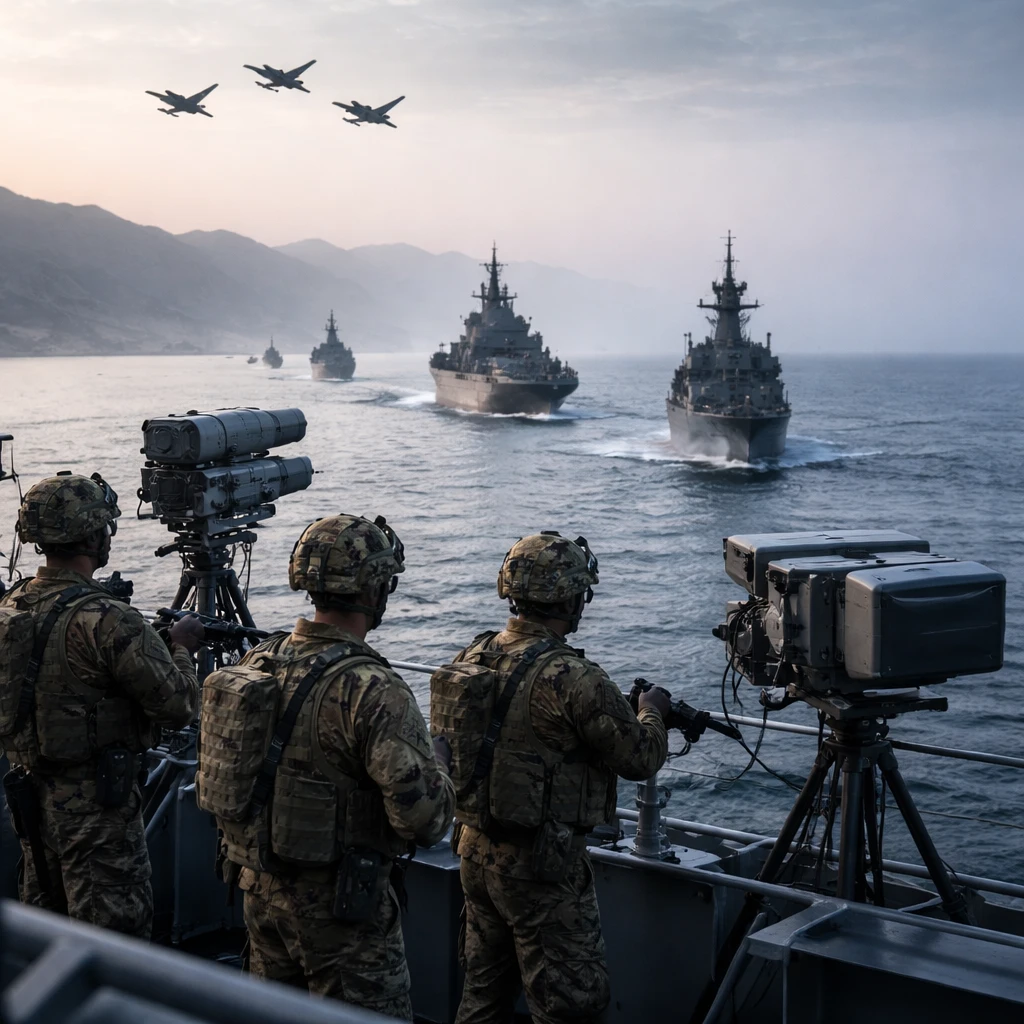
British Prime Minister Keir Starmer said on Monday that the United Kingdom is collaborating with allies to develop a collective plan to reopen the Strait of Hormuz and restore freedom of navigation in the Middle East, while acknowledging that the undertaking will not be straightforward.
Starmer told reporters that reopening the strait is required to ensure stability in the oil market. He said the UK is coordinating with European partners and other allies to create a viable plan aimed at restoring freedom of navigation as quickly as possible and reducing the broader economic impact.
On military and citizen-protection measures, the prime minister outlined a series of deployments and support efforts already underway. He said the UK has placed thousands of service members in Cyprus, dispatched three squadrons of fighter jets, and deployed counter-drone teams intended to help intercept Iranian attacks.
Starmer added that more than 92,000 British nationals have returned to the UK on both commercial and government charter flights, and that work continues to support British citizens remaining in Lebanon. He also noted that Foreign Secretary Yvette Cooper has been in the region in recent days.
The prime minister described recent diplomatic activity in quick succession, saying he met with Canadian Prime Minister Mark Carney earlier on Monday and that he will meet with President Volodymyr Zelenskiy soon.
Addressing the risk of escalation, Starmer said the UK will not be drawn into a wider Iran war and that London will continue to pursue a swift resolution. He added that when hostilities cease, some form of negotiated agreement with Iran will be necessary.
Starmer also said the conflict must not be allowed to become a windfall for Russian President Vladimir Putin, stressing the importance of continuing support for Ukraine.
Turning to domestic policy, the prime minister said the government is issuing legal direction to energy companies to ensure any savings are passed on to consumers. He announced that the government will provide £53 million to assist households that rely on heating oil. Starmer added that he will not permit companies to generate large profits from the hardship of working people, and reiterated his view that ending the war is the fastest way to ease the cost-of-living pressures.
Overall, the prime minister framed the coordination with allies, the military deployments, and the consumer-protection measures as concurrent efforts to both stabilise markets and protect citizens while diplomatic work continues.