
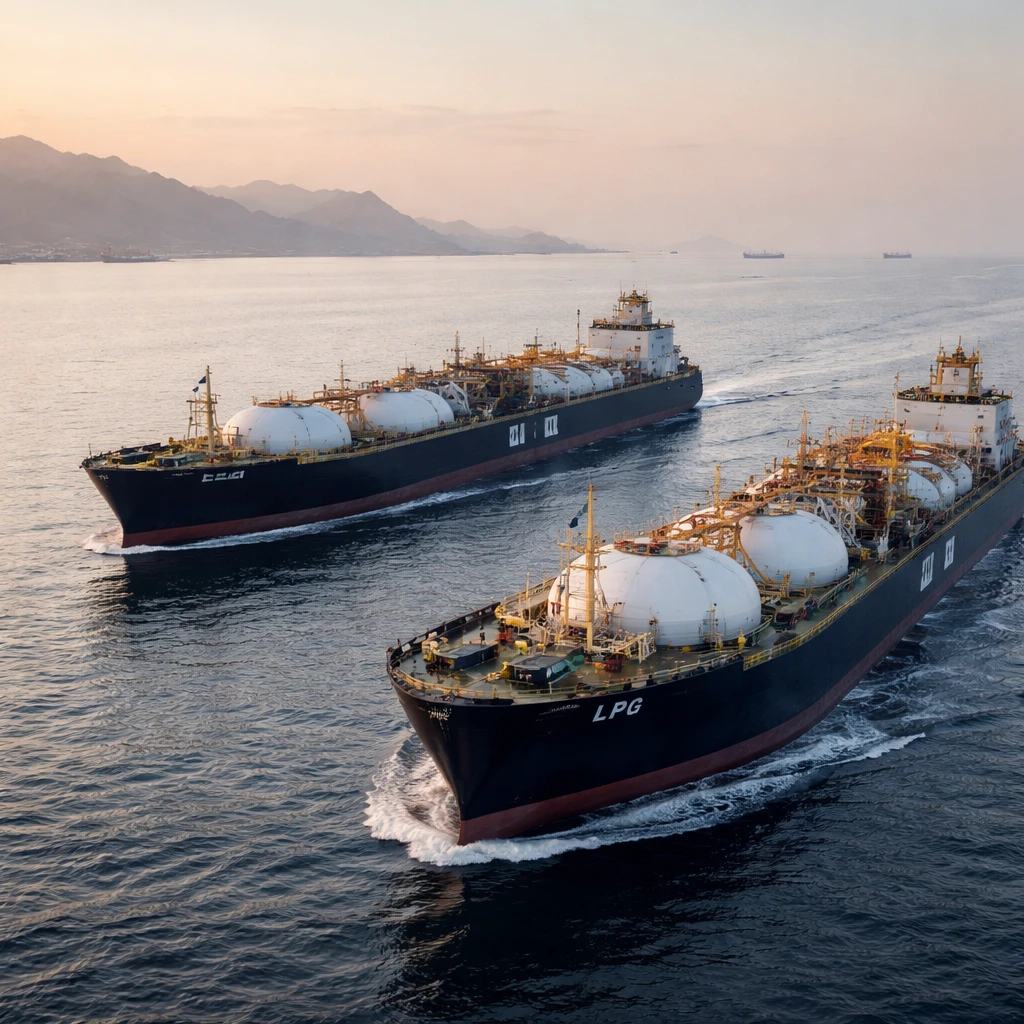
Two Indian-flagged vessels carrying liquefied petroleum gas completed an unescorted transit of the Strait of Hormuz early on Saturday and are expected to arrive at Indian ports in the coming days, a government source told reporters.
The tankers, named Shivalik and Nanda Devi, navigated the waterway without escort from Indian Navy ships, the source said. Rajesh Kumar Sinha provided the arrival timetable, saying the Shivalik is scheduled to reach the Indian coast on Monday while the Nanda Devi is due in early on Tuesday.
The passage occurred against a backdrop of recent diplomatic contact between New Delhi and Tehran. The two leaders held a telephone conversation last week - described in the report as the first since the war began - and authorities in India also assisted in repatriating more than 140 Iranian nationals via a chartered flight arranged by Iran.
Officials involved in the repatriation said the group returning on the charter included mostly non-essential crew members from the Iranian-flagged ship IRIS Lavan, as well as some tourists and a small number of diplomats.
Context and operational details
The two LPG carriers completed their Strait of Hormuz transit early on Saturday and will make port calls in India within the timetable provided by Rajesh Kumar Sinha. The report notes there was no naval escort accompanying the vessels during the crossing.
Separately, the report links the timing of the voyage to recent diplomatic interactions between India and Iran, including a phone call between Prime Minister Narendra Modi and Iranian President Masoud Pezeshkian and the coordinated repatriation of Iranian nationals.
Key points
- Two Indian-flagged LPG tankers, Shivalik and Nanda Devi, transited the Strait of Hormuz early on Saturday without escort.
- The Shivalik is scheduled to arrive on the Indian coast on Monday; the Nanda Devi is expected early on Tuesday, according to Rajesh Kumar Sinha.
- These movements follow a recent phone call between Indian Prime Minister Narendra Modi and Iranian President Masoud Pezeshkian and come after India helped repatriate more than 140 Iranian nationals on a charter flight.
Risks and uncertainties
- The report notes an ongoing war without detailing its scope or trajectory, creating uncertainty about future maritime security in the region.
- It is unclear whether the lack of naval escort for these two tankers reflects a change in operational protocols or is specific to this passage.
- The durability and future course of recent diplomatic engagement between India and Iran - highlighted by the leaders' phone call - remain unspecified in the report.
This article presents the movements of the two LPG tankers and the related diplomatic and repatriation developments as reported by the source. No additional information or analysis beyond those reported facts has been added.