
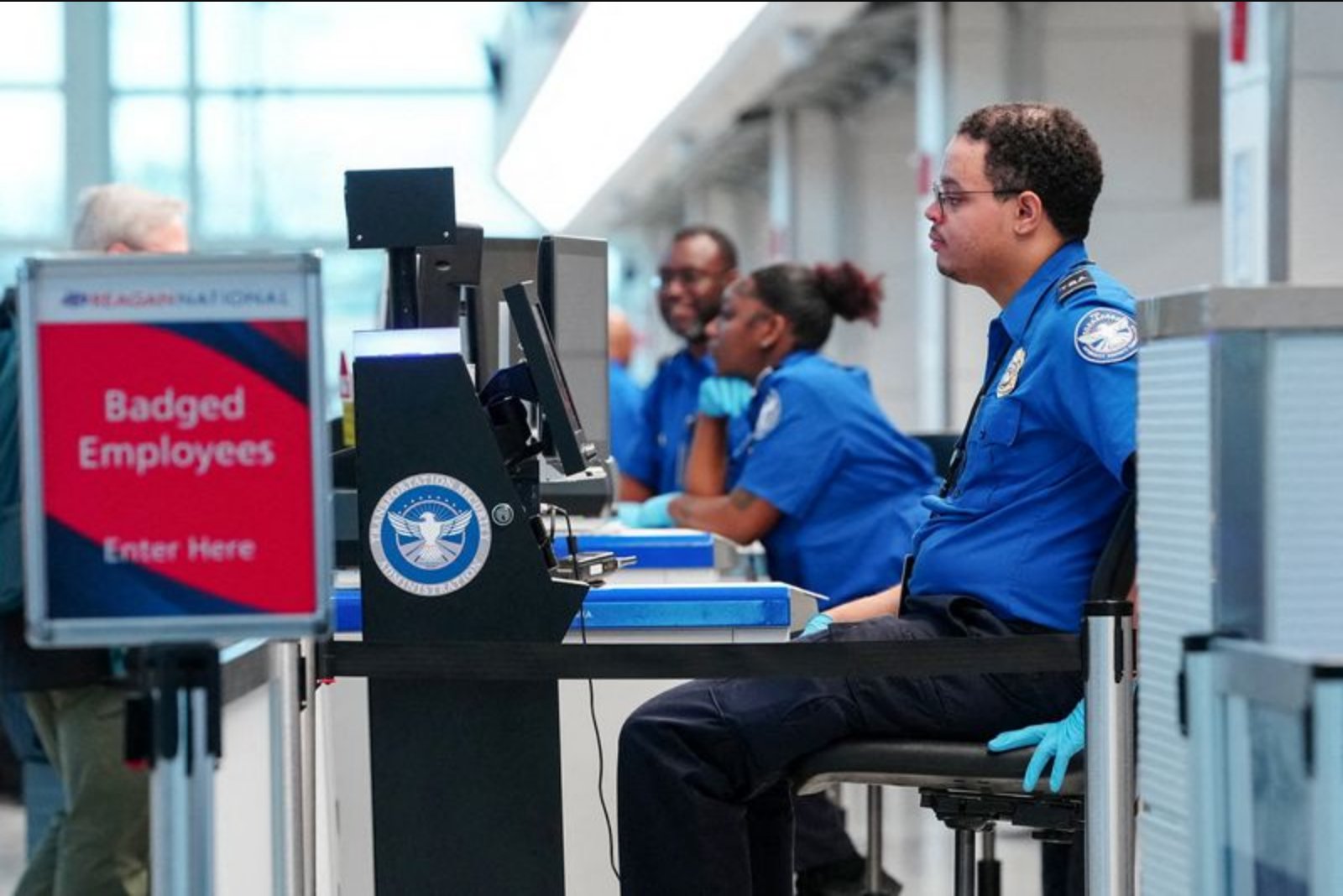
Absentee rates for Transportation Security Administration screening officers fell marginally to 9.9% on Tuesday as the partial government shutdown moved into its 33rd day, the Department of Homeland Security (DHS) reported. The shutdown has left about 50,000 TSA officers working without pay for the last month, and since Sunday roughly 10% of those officers have been failing to report to duty each day.
The staffing shortfalls have not been uniform. DHS said that on Tuesday roughly 30% of scheduled officers did not show up at New York JFK, Pittsburgh and Houston Bush airports, while Houston Hobby experienced an absence rate of about 40%. Over the preceding two days, Houston saw absences spike to more than 50%, and New Orleans and Atlanta recorded no-show rates exceeding 30%, contributing to passenger waits that in some cases stretched to two hours or longer.
Typically, DHS said, under 2% of TSA employees call in sick or otherwise fail to appear for work. The agency also noted that the absentee rate reached 10.2% on Tuesday, a figure it provided alongside the 9.9% number.
Operational responses have varied by airport. Some checkpoints have been closed temporarily because of staffing shortages, while others are working with local organizations to raise funds so TSA employees can purchase food and essentials as they go unpaid.
Acting Deputy TSA Administrator Adam Stahl warned of escalating consequences if the situation continues. Speaking on Fox News's "Fox and Friends," Stahl said: "As the weeks continue, if this continues, it’s not hyperbole to suggest that we may have to quite literally shut down airports - particularly smaller ones if callout rates go up."
DHS also reported that 366 TSA officers have left their positions during the shutdown. The agency's figures and the localized spikes in absences have already produced significant travel disruptions at times, prompting airline executives to press for a rapid resolution.
CEOs of the nation's largest carriers have urged a quick end to the funding impasse as spring break travel is in full swing. Airlines are expecting an especially busy spring travel period, with 171 million passengers forecast to fly during the referenced two-month period, an increase of 4% from the same period a year earlier.
The partial lapse in DHS funding began on February 13 after Congress did not reach an agreement on immigration enforcement reforms sought by Democrats, leaving TSA officers to continue working without pay. The current pattern of higher-than-normal callout rates and attrition echoes disruptions seen during prior shutdowns, when flight operations and airport staffing were also affected.
For now, air travelers and airport operators face heightened uncertainty over staffing levels and checkpoint availability as the shutdown persists. DHS warnings about potential airport closures - particularly at smaller facilities - add to the list of operational risks that could affect passenger flows and airline schedules if no funding solution is reached.
Summary
TSA absenteeism declined slightly to 9.9% on Tuesday as the partial government shutdown reached day 33, but concentrated no-shows at several major airports and the departure of 366 officers have created long security lines and raised the prospect of airport closures, especially at smaller facilities. Airlines expect heavy spring travel, with 171 million passengers forecast for the two-month period, up 4% year-over-year.
Key points
- Absenteeism among TSA officers was reported at 9.9% on Tuesday, with DHS also citing a 10.2% figure for the same day; usual no-show rates are under 2%.
- Significant localized shortages occurred at major hubs - about 30% no-shows at JFK, Pittsburgh and Houston Bush, and 40% at Houston Hobby - causing long passenger lines and checkpoint closures.
- The disruption affects aviation and airline operations during a busy spring travel window, with 171 million passengers expected over the two-month period, a 4% increase from last year.
Risks and uncertainties
- Continued high callout rates could force temporary closures of smaller airports, disrupting air service and local connectivity for affected regions - impact on regional airports and carriers.
- Ongoing staff attrition and unpaid work could lead to further checkpoint closures and longer passenger wait times, potentially causing flight delays and schedule disruption - impact on airlines and airport operations.
- If funding remains unresolved, further increases in absences or departures may exacerbate operational strain during peak travel, increasing the risk of broader travel disruptions - impact on travel demand and airport throughput.