
Summary: The Supreme Court's 6-3 decision found that the president exceeded his statutory authority by using the International Emergency Economic Powers Act (IEEPA) to impose broad tariffs, a ruling that puts recent U.S. tariff policy and the collection of about $175 billion in duties into legal limbo. President Trump denounced the ruling, accused justices of being swayed by foreign interests, and announced a new, temporary 10% tariff on imports from all countries under Section 122 of the Trade Act of 1974, a measure he said he could apply for up to 150 days.
The court's majority opinion, written by Chief Justice John Roberts, rooted its reasoning in the Constitution's grant of taxing power to Congress: "The Congress shall have Power To lay and collect Taxes, Duties, Imposts and Excises." The ruling rejected the administration's contention that an asserted national emergency justified limitless presidential tariff-setting under IEEPA.
Chief Justice Roberts wrote that the government effectively conceded that the president "enjoys no inherent authority to impose tariffs during peacetime," and noted that the administration did not invoke wartime powers to defend the challenged tariffs, observing plainly that the United States is not at war with every nation in the world.
The decision unsettled markets briefly. U.S. stock indexes initially jumped, then finished modestly higher as investors and analysts digested the implications and awaited further policy moves from the White House.
President's response and new tariff action
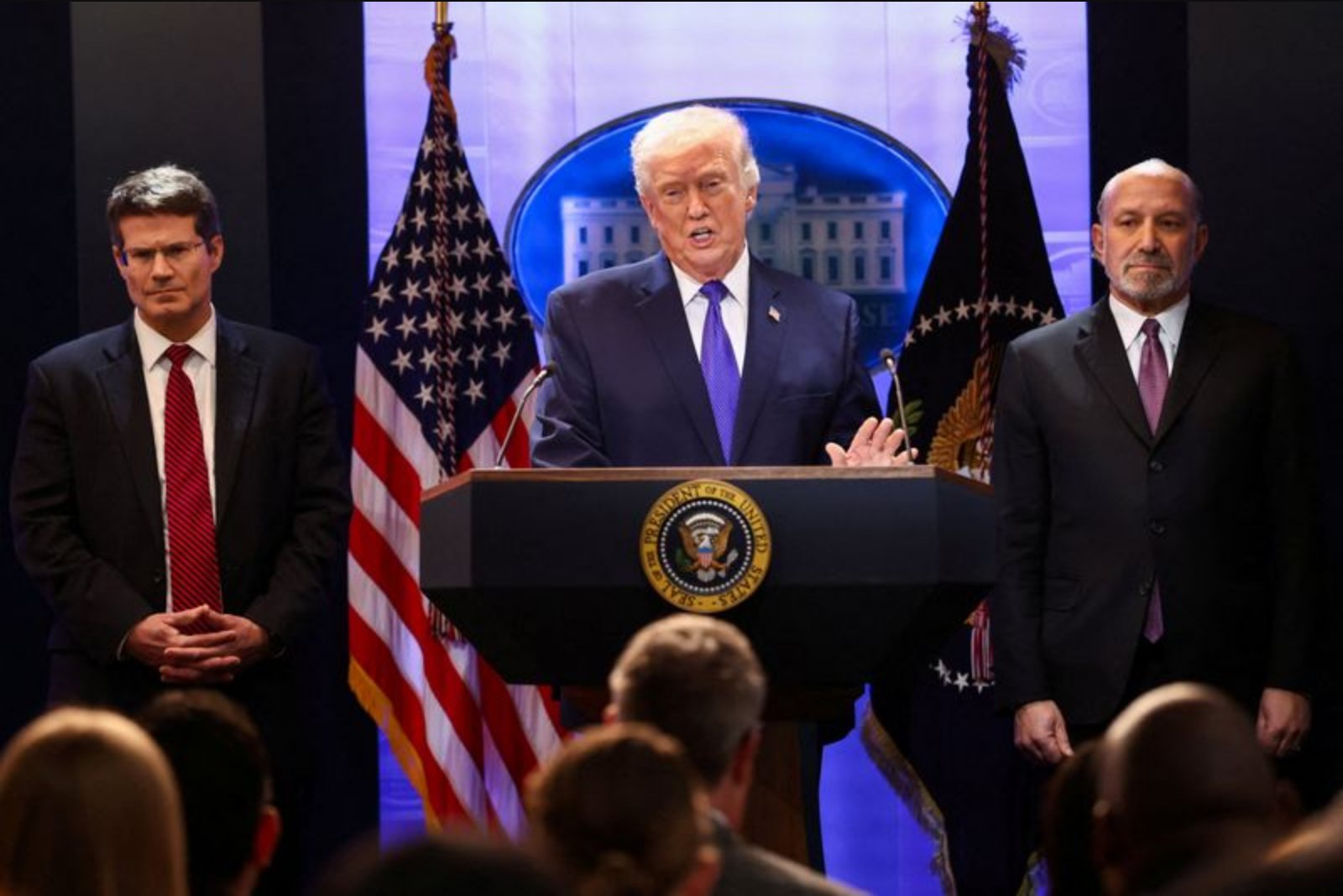
President Trump reacted to the ruling with visible anger. Speaking to reporters at the White House, he said he was "ashamed of certain members of the court, absolutely ashamed, for not having the courage to do what's right for our country," and accused them of being influenced by foreign interests and a "political movement" he described as small. He also said foreign countries were "ecstatic at the ruling" and were "dancing in the street."
Undeterred by the court's characterization of his earlier authority, the president announced an immediate 10% tariff on imports from all countries. The White House cited Section 122 of the Trade Act of 1974 as the legal basis, noting that the statute permits such tariffs of up to 15% for up to 150 days to address "fundamental international payments problems." The president's move under Section 122 could itself draw legal challenges and any extension beyond the initial period would require congressional authorization.
Despite the court's language that he exceeded his authority, the president told reporters: "It's ridiculous, but it's OK, because we have other ways, numerous other ways."
Implications for trade deals and government revenue
The ruling cast doubt on the leverage the administration has used at negotiating tables in the past year to reshape diplomatic and trade relationships. The court's opinion called into question the validity of tariff-based pressure that supported trade deals negotiated by the administration.
Legal analysts and market participants are also watching the status of roughly $175 billion that the administration has collected from U.S. importers under the now-rejected reading of the law. The court's decision left open the fate of those funds, which were gathered while the administration asserted authority under IEEPA.
Voices from Washington and policy watchers
U.S. Treasury Secretary Scott Bessent told "The Will Cain Show" on Fox News that the ruling had mixed consequences for presidential leverage. "The Supreme Court has taken away the President's leverage, but in a way, they have made the leverage that he has more draconian because they agreed he does have the right to a full embargo," he said. He added that the administration would seek to return to similar tariff levels for concerned countries by less direct and somewhat more convoluted means: "We will get back to the same tariff level for the countries. It will just be in a less direct and slightly more convoluted manner."
Outside analysts warned that the decision and the president's immediate reaction could usher in renewed uncertainty for global trade. Varg Folkman, an analyst at the European Policy Centre think tank, said: "I think it will just bring in a new period of high uncertainty in world trade, as everybody tries to figure out what the U.S. tariff policy will be going forward."
Legal and market uncertainties ahead
Legal challenges are likely to follow both the Supreme Court ruling and the president's invocation of Section 122. The court rejected the administration's broad reading of IEEPA and emphasized Congress's role in setting duties and taxes. Which trade measures remain legally sustainable, how quickly they can be implemented, and whether previously collected duties will be returned or retained are open questions the ruling left unresolved.
The president's use of Section 122 - under which he became the first president to invoke that specific provision, according to the administration - creates a different statutory pathway that carries its own limits, including the 150-day window and the need for congressional approval to extend such tariffs beyond that period.
What this means for markets and trade participants
For markets, importers, trade negotiators, and foreign governments, the decision and the immediate policy response signal a period of elevated uncertainty. Investors saw a short-lived rally in U.S. equities before gains settled, while importers and others who paid duties may face legal and administrative questions about refunds or continued liability.
The Supreme Court's ruling marks a clear judicial rebuke of the administration's expansive view of emergency tariff powers, but the president's swift pivot to an alternative statutory route means that trade policy will remain an active and contested arena for the coming months.