
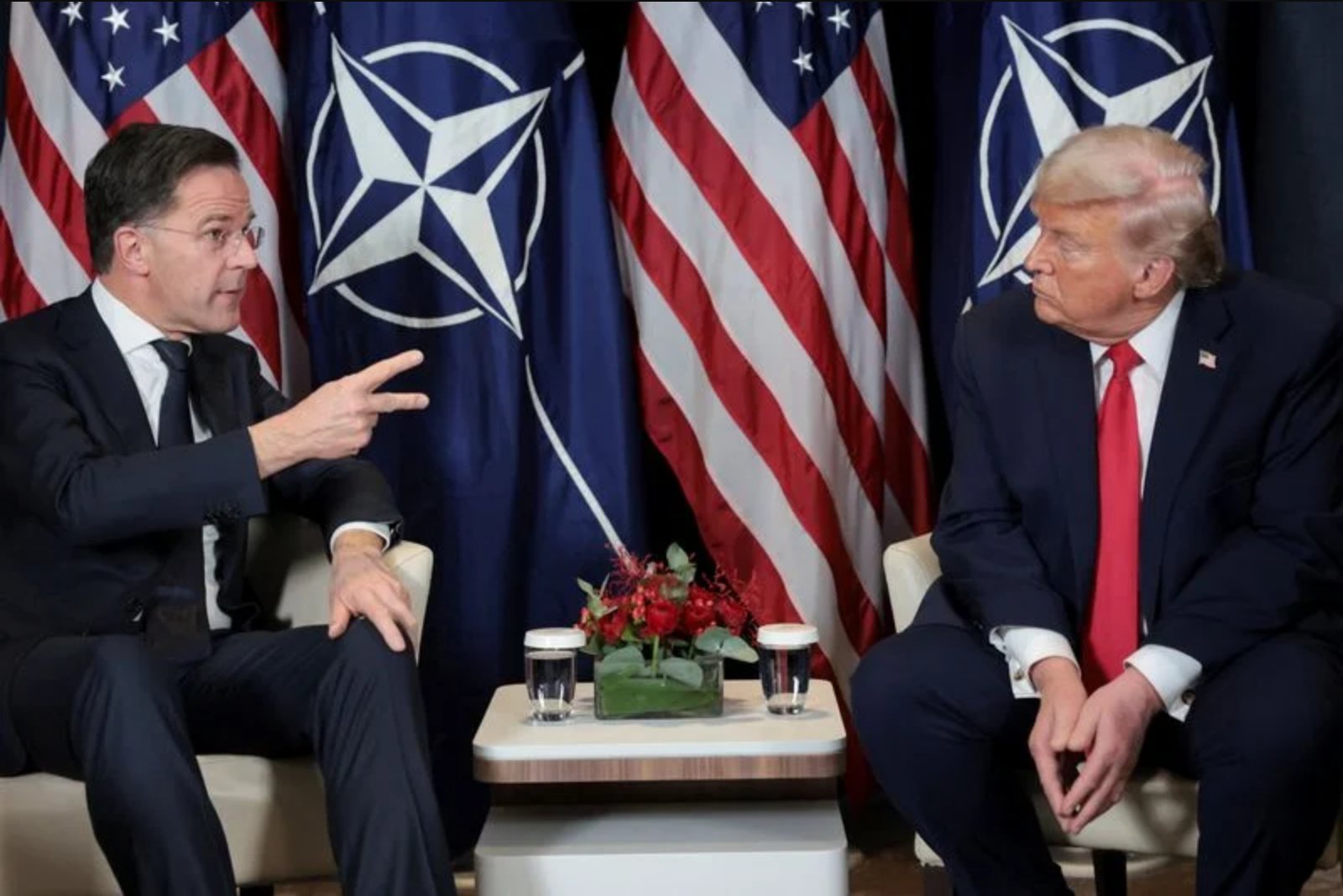
U.S. Secretary of State Marco Rubio confirmed to lawmakers on Wednesday that President Donald Trump will attend the NATO summit of heads of state taking place in Turkey in early July, removing uncertainty about American participation at the gathering.
While presidents have traditionally been present at NATO summits given the United States' leadership role in the transatlantic alliance, questions arose this year following repeated expressions of anger by Trump over what he described as NATO's reluctance to assist the United States in the conflict with Iran.
At a congressional hearing, Rubio outlined the source of the president's frustration, saying it stemmed largely from allied governments denying U.S. forces access to military bases in their countries during times of crisis. Despite that disappointment, Rubio said the president will attend and that U.S. officials will use the meeting to air their concerns.
"The United States is still in the NATO alliance, and we’ll be there in Turkey to talk about all these topics. The president himself will be attending the next NATO meeting of heads of state, where all these points will be made clear," Rubio told lawmakers.
Rubio also described the upcoming gathering as potentially historic for the alliance. "I think the next meeting of NATO in Turkey in July is probably the most important meeting in NATO’s history, because there are some things here that need to be cleared up and fixed," he said.
The session comes after several NATO members resisted direct support for the U.S. military campaign against Iran by denying U.S. military aircraft the use of their airspace or declining to send naval forces to assist in reopening the Strait of Hormuz for energy tankers.
European leaders have declined direct involvement in any U.S.-Israeli military operations against Iran, citing concern about becoming entangled in an unpredictable conflict whose objectives they say they do not fully understand and that is unpopular with segments of their domestic populations.
President Trump has repeatedly described NATO as a "paper tiger" and earlier this year threatened withdrawal from the 32-member transatlantic alliance. He has argued that European allies have depended on U.S. security guarantees while not providing sufficient support for the U.S.-Israeli bombing campaign in Iran.
The alliance will convene its leaders in the Turkish capital, Ankara, on July 7 and 8. The frequency of NATO summits has varied over the organization's 77-year history, but its leaders have met each summer since 2021. In late April, the alliance was considering whether to end the recent practice of holding annual summits, in part to avoid potentially tense encounters at future meetings.
Summary
Secretary of State Marco Rubio told a congressional hearing that President Trump will attend the NATO heads of state meeting in Ankara on July 7-8. Rubio linked the president's earlier public anger toward NATO to allied restrictions on U.S. military access during the Iran crisis, and said the summit will be used to press allied partners on these issues.
Key points
- President Trump will be present at the NATO summit in Turkey on July 7-8, Rubio announced.
- Allied denials of U.S. military access during the Iran conflict have been a major source of presidential frustration, particularly restrictions on bases and airspace and refusals to send naval forces to the Strait of Hormuz - sectors tied to defense and energy transportation.
- Rubio described the July meeting as possibly the most important in NATO's history, with leaders aiming to resolve outstanding issues within the alliance.
Risks and uncertainties
- Continued disagreement among NATO members over military support for operations related to Iran could heighten transatlantic tensions - impacting defense cooperation.
- Restrictions on use of allied bases and airspace, and refusals to assist in reopening the Strait of Hormuz, pose operational risks for U.S. military logistics and energy shipping routes - affecting defense and energy sectors.
- Potential changes to the cadence of NATO summits may reflect efforts to reduce friction at high-level meetings, but could complicate diplomatic coordination - affecting international security planning.