
Economy February 6, 2026

Trump Signs Order Removing 25% Tariff on Indian Imports After Trade Deal

White House says move follows an agreement to lower U.S. duties and curb India's purchases of Russian crude

By Derek Hwang
Trump Signs Order Removing 25% Tariff on Indian Imports After Trade Deal

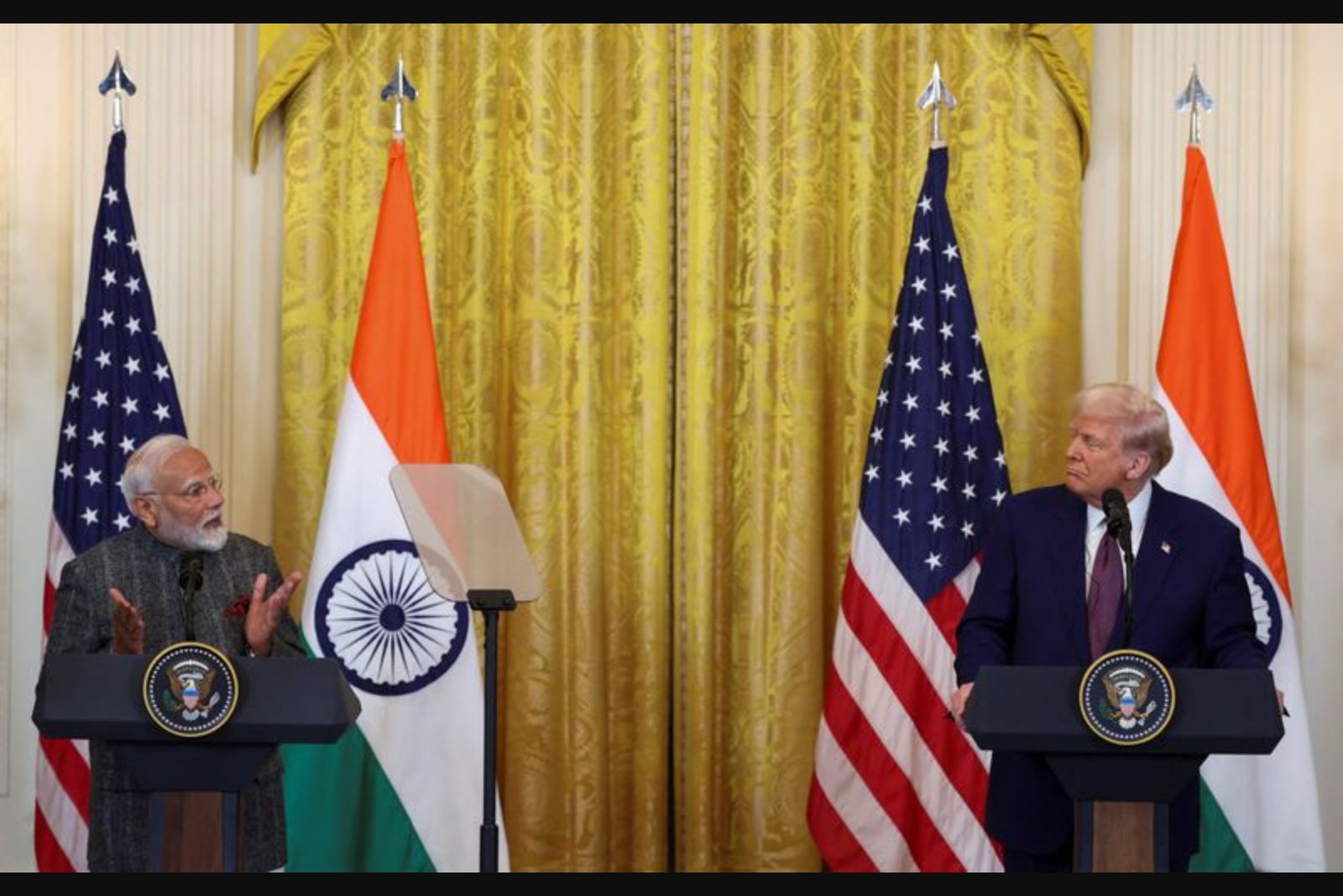
President Donald Trump issued an executive order rescinding a 25% punitive duty on all imports from India, the White House said. The action follows a trade agreement that reduced U.S. tariffs on Indian goods and included provisions tied to New Delhi's purchases of Russian oil and the lowering of trade barriers.

Key Points

  • The U.S. president signed an order removing a 25% punitive tariff on all imports from India.
  • A recent trade agreement cut U.S. tariffs on Indian goods to 18% from 50% in exchange for India halting purchases of Russian oil and lowering trade barriers.
  • India imports about 90% of its oil needs; purchases of cheaper Russian crude have reduced its import costs, but reported volumes have begun to decline from January into March.

President Donald Trump on Friday signed an executive order removing a punitive 25% duty that had applied to all imports from India, the White House said.

The measure comes after a trade agreement announced earlier in the week in which the United States and India agreed to a new tariff schedule. Under that deal, U.S. tariffs on Indian goods were cut to 18% from 50% in return for India agreeing to end purchases of Russian oil and to lower certain trade barriers, according to the White House statement.

India depends heavily on foreign crude, importing roughly 90% of the oil it consumes. Since Russia's invasion in 2022 and the ensuing sanctions from Western countries on Moscow's energy exports, New Delhi has turned to lower-priced Russian oil to reduce its import bill.

Recent patterns suggest India has begun to temper those purchases. Reuters reported that shipments in January were about 1.2 million barrels per day, with estimates projecting a decline to approximately 1 million barrels per day in February and to roughly 800,000 barrels per day in March.


Context and market note

Importing discounted Russian crude has been a factor in bringing down India's overall import costs in the period since the 2022 invasion. The trade agreement announced earlier in the week, and the White House action to rescind the 25% duty, align U.S. tariff policy with the commitments in that deal.

Subscriber note

The article includes promotional material highlighting an investment research product. It states that better data can improve investment decisions and describes a service called InvestingPro+ that combines institutional-grade data with AI-driven insights designed to help investors identify opportunities. The copy cautions that while such tools do not guarantee successful picks, they may aid in locating more winners more often, and it references an AI tool branded WarrenAI as a way to explore leading investments in 2026.

Risks

  • India's heavy reliance on imported oil - around 90% of consumption - leaves its import bill sensitive to changes in where it sources crude, affecting the energy sector and broader trade flows.
  • Uncertainty in future Russian oil purchase volumes - reported at about 1.2 million bpd in January with projected falls to roughly 1 million bpd in February and 800,000 bpd in March - creates variability for energy markets and import cost forecasts.
  • Modifications to tariffs and trade barriers under the agreement could alter competitive dynamics for exporters and importers, impacting trade-exposed industries and sectors linked to cross-border goods flows.

More from Economy

SCOTUS Ruling on IEEPA Tariffs Offers Relief but Leaves Major Questions for Markets and Treasury Feb 21, 2026 USMCA Goods Largely Exempted From New 10% Global Tariff, But Review Threat Looms Feb 20, 2026 U.S. Trade Office to Open Broad Section 301 Reviews Covering Major Partners Feb 20, 2026 Supreme Court Term Spotlight: High-Stakes Cases Shaping Law and Policy Feb 20, 2026 Trump Vows Fresh 10% Global Tariff After Supreme Court Limits His Trade Authority Feb 20, 2026