
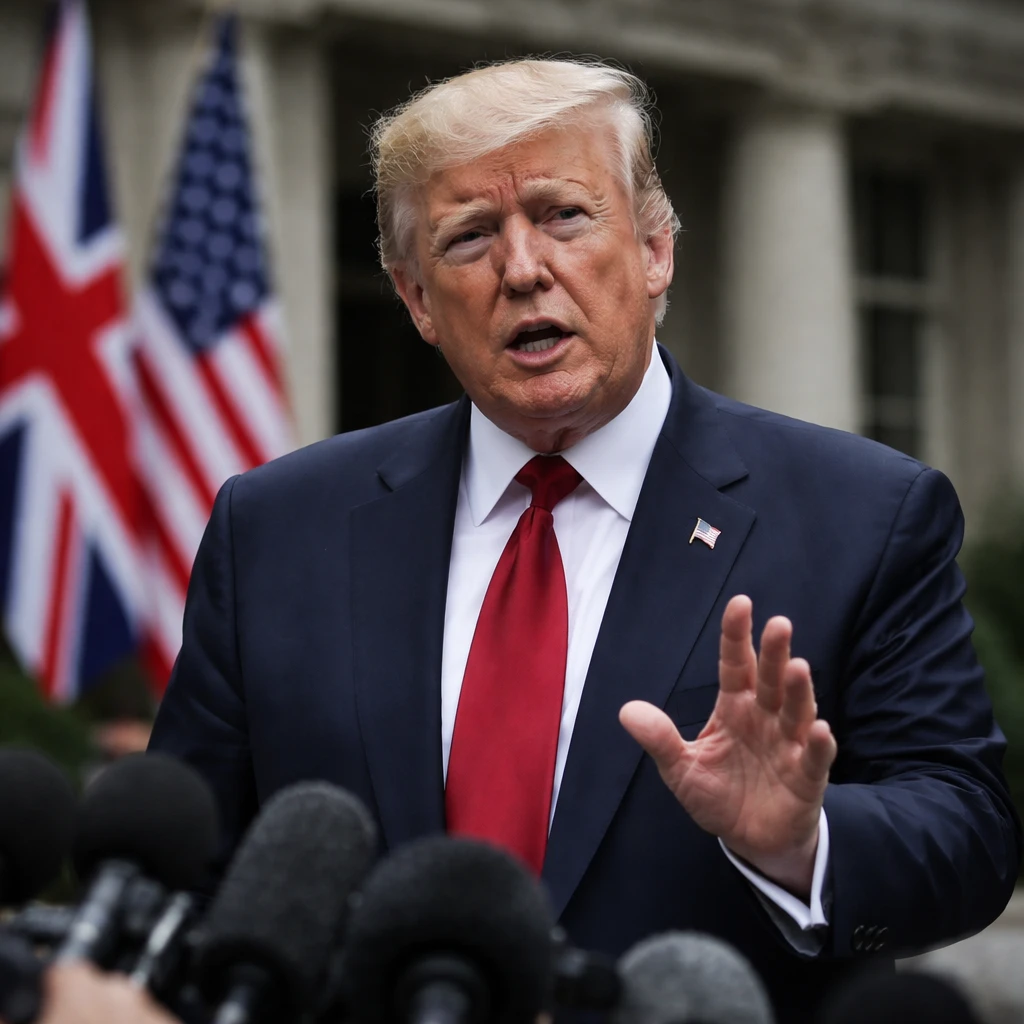
Donald Trump said the relationship between the United States and Britain has cooled after Prime Minister Keir Starmer initially declined to permit British military participation in strikes on Iran. In an interview with a British tabloid, Trump described the current rapport as "not what it was" and said it was "very sad" to see the change.
Trump noted that Starmer later allowed the United States to use British military bases for defensive strikes, pointing out that those bases were not used in the first wave of action against Iran. He framed London’s initial stance as a disappointment, arguing that the U.K. should have offered support even though the United States did not need British assistance to carry out operations in the Middle East.
Speaking to the tabloid, Trump said: "It’s very sad to see that the relationship is obviously not what it was. This was the most solid relationship of all." He added that the U.S. did not require Britain’s help, but maintained that Prime Minister Starmer "should have helped... he should have."
Trump contrasted Britain’s response with the approach of other European allies, praising France specifically and saying London had been "much different from others." He characterized the relationship with the U.K. as having entered a new phase and expressed surprise at Starmer’s initial position, saying: "He has not been helpful."
The U.S. former president reiterated his affection for Britain, stating: "We love the U.K." Yet he also said he did not expect the U.K. to act as it did, telling the interviewer: "I never thought I’d see that. I never thought I’d see that from the U.K."
When asked whether Starmer’s reluctance to endorse the initial military action might have been aimed at courting Muslim voters - a line of questioning that followed Labour’s recent by-election defeat in Gorton and Denton amid accusations of religious bloc voting - Trump said it "could be," adding that Starmer "has got his own difficulties."
Beyond the immediate dispute over the use of British bases, Trump leveled a broader critique of Britain under Starmer’s leadership. He said London has changed for the worse, took aim at Mayor Sadiq Khan, and urged the prime minister to reopen exploration in the North Sea to help bring down what he called soaring energy prices. Trump also called on Starmer to impose stricter limits on immigration, saying Britain should "stop people from coming in from foreign lands who hate you."
Trump revisited the controversy surrounding the proposed transfer of the British Indian Ocean Territory to Mauritius, referring to the Chagos Islands deal as "the woke island." His comments tied together complaints about foreign policy, domestic governance, and energy strategy.
Context and immediate developments - Starmer is reported to have reversed his initial position by permitting U.S. forces to use British military bases for defensive strikes. That change followed the initial non-use of those bases in the strikes on Iran and precedes the remarks Trump made in the interview.
Quotes highlighted:
- "It’s very sad to see that the relationship is obviously not what it was."
- "This was the most solid relationship of all."
- "He has not been helpful."
- "We love the U.K."
What remains uncertain - The interview documents Trump’s perspective on bilateral relations and on policy choices taken by the U.K. leadership, but it does not provide further detail on any formal diplomatic or operational consequences that might follow from his assessment.