
Economy March 16, 2026

Trump Says Iran Is Seeking a Deal, But Questions Remain Over Who Speaks for Tehran

At a Kennedy Center luncheon, the president said Iranian representatives are negotiating with U.S. officials but flagged uncertainty about Iran's leadership and whether a final agreement is possible

By Sofia Navarro
Trump Says Iran Is Seeking a Deal, But Questions Remain Over Who Speaks for Tehran

President Donald Trump told attendees at a lunch at the Trump Kennedy Center that he believes Iran wants to reach a deal to end the U.S.-Israeli conflict with Tehran, while stressing uncertainty over who currently speaks for the country and whether Iran is ready to close a deal. He said Iranian representatives are engaged in talks with U.S. officials, and he pointed to conflicting reports about the condition of Iran's new supreme leader.

Key Points

  • President Trump said Iranian representatives are in talks with U.S. officials and are negotiating, indicating active communications between the two sides.
  • Trump expressed his belief that Iran wants a deal to end the U.S.-Israeli conflict with Tehran, but he also said it is unclear whether Iran is ready to finalize any agreement.
  • Uncertainty about who speaks for Iran - including conflicting reports about the condition of Iran's new supreme leader - complicates understanding of Tehran's decision-making. Potentially sensitive sectors include defense, energy, and financial markets, which could be affected by shifts in diplomatic outcomes.

President Donald Trump said on Monday that he believes Iran wants to negotiate a deal to end what he described as the U.S.-Israeli conflict with Tehran, though he emphasized important unknowns about who is speaking for Iran and whether any agreement is imminent.

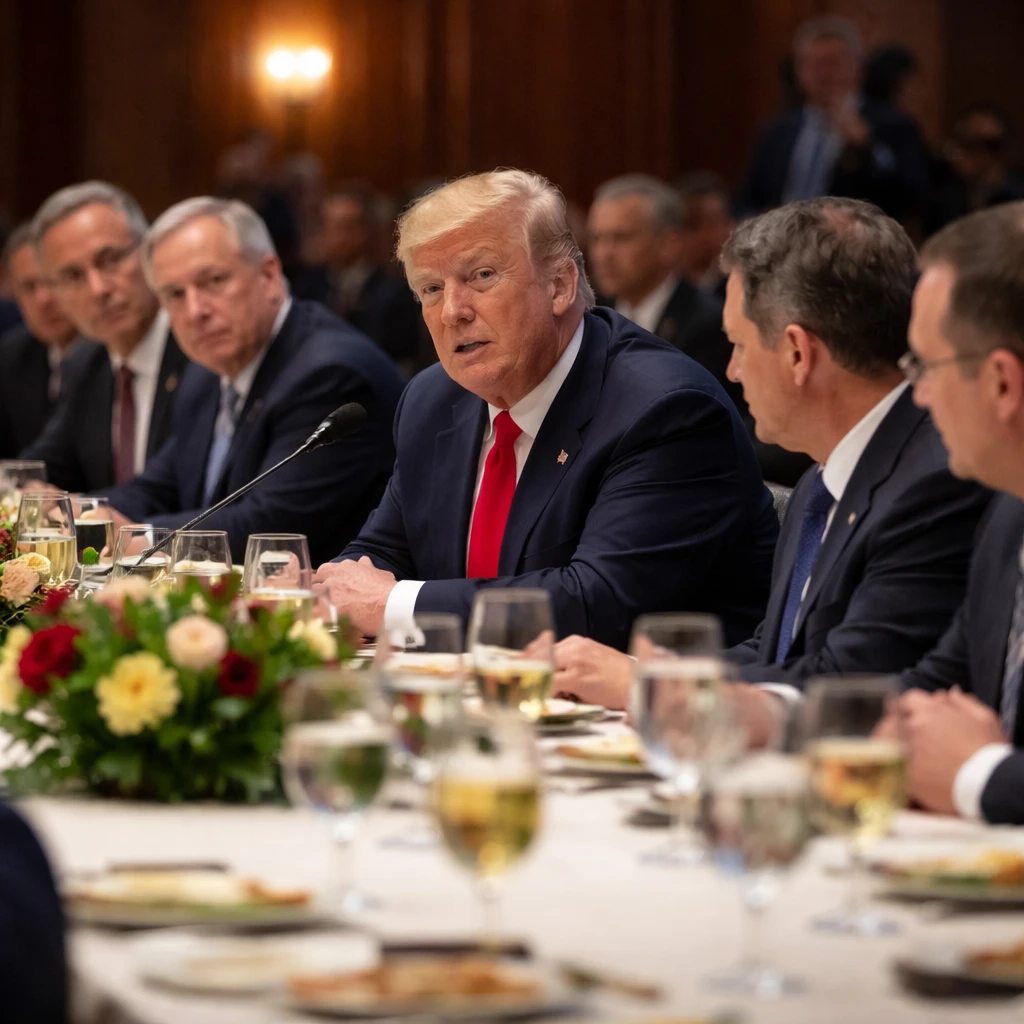
Speaking during a luncheon at the Trump Kennedy Center, the president said Iranian representatives have been in contact with U.S. officials and are engaged in negotiations. He stopped short, however, of asserting that a deal is close, saying it was not clear whether Iran was prepared to finalize an agreement.

Trump also underscored uncertainty about Iran's internal authority. He said the United States does not know Iran's leaders, a statement he linked to broader confusion about who holds decision-making power in Tehran. The president referred to Iran's new supreme leader and said reports are conflicting about his health, noting that some people are saying the leader has been hurt while others are saying he is dead.

The comments dovetail around three central points: that Iranian representatives are reportedly negotiating with U.S. officials; that the president believes there is a desire in Tehran to reach a deal to end the conflict involving the United States and Israel; and that significant ambiguity remains about who speaks for Iran and whether Iran is prepared to complete an agreement.

Those factors, as described by the president at the Kennedy Center luncheon, leave open several questions about the status and potential timeline for any diplomatic outcome. The statements highlight both active communications between representatives and American officials and the limits of available information about Iran's internal leadership and intentions.


What is known

  • Iranian representatives are reportedly talking to U.S. officials and are engaged in negotiations, according to the president.
  • The president said he believes Iran wants to make a deal to end the U.S.-Israeli conflict with Tehran.
  • There is uncertainty about who speaks for Iran and whether the country is ready to finalize any agreement; reports also differ on the condition of Iran's new supreme leader.

Limitations

  • The president described conflicting reports about Iran's leadership and the health of its new supreme leader, which contributes to unclear lines of authority in Tehran.
  • He explicitly said it remains unclear whether Iran is prepared to sign off on a final deal.

Risks

  • Unclear authority in Tehran: conflicting accounts about who holds power and reports on the new supreme leader's condition create uncertainty about who can negotiate and approve a deal - this uncertainty could influence geopolitical risk assessments.
  • Unknown readiness to finalize an agreement: while representatives are reportedly negotiating, the president said it is unclear whether Iran is prepared to sign a final deal, leaving the timeline and certainty of any settlement in doubt.
  • Ambiguity in communications: differing claims about Iran's leadership and mixed reports about the supreme leader's status increase the risk that negotiations could be derailed or delayed due to lack of clear interlocutors.

More from Economy

Apollo Executive Says Private Equity Software Marks Overstate Value, Warns of Losses for Lenders Mar 16, 2026 Trump Says Oil Facilities on Kharg Island Remain a Potential Target Mar 16, 2026 EBRD Preparing Measures to Shield Client Economies from Iran Conflict Spillovers Mar 16, 2026 Administration Seeks Reconsideration of Ruling That Blocked Subpoenas Targeting Fed Chair Powell Mar 16, 2026 Markets Revisit 2022 Playbook as Middle East Conflict Sends Energy Shockwaves Mar 16, 2026