
Summary
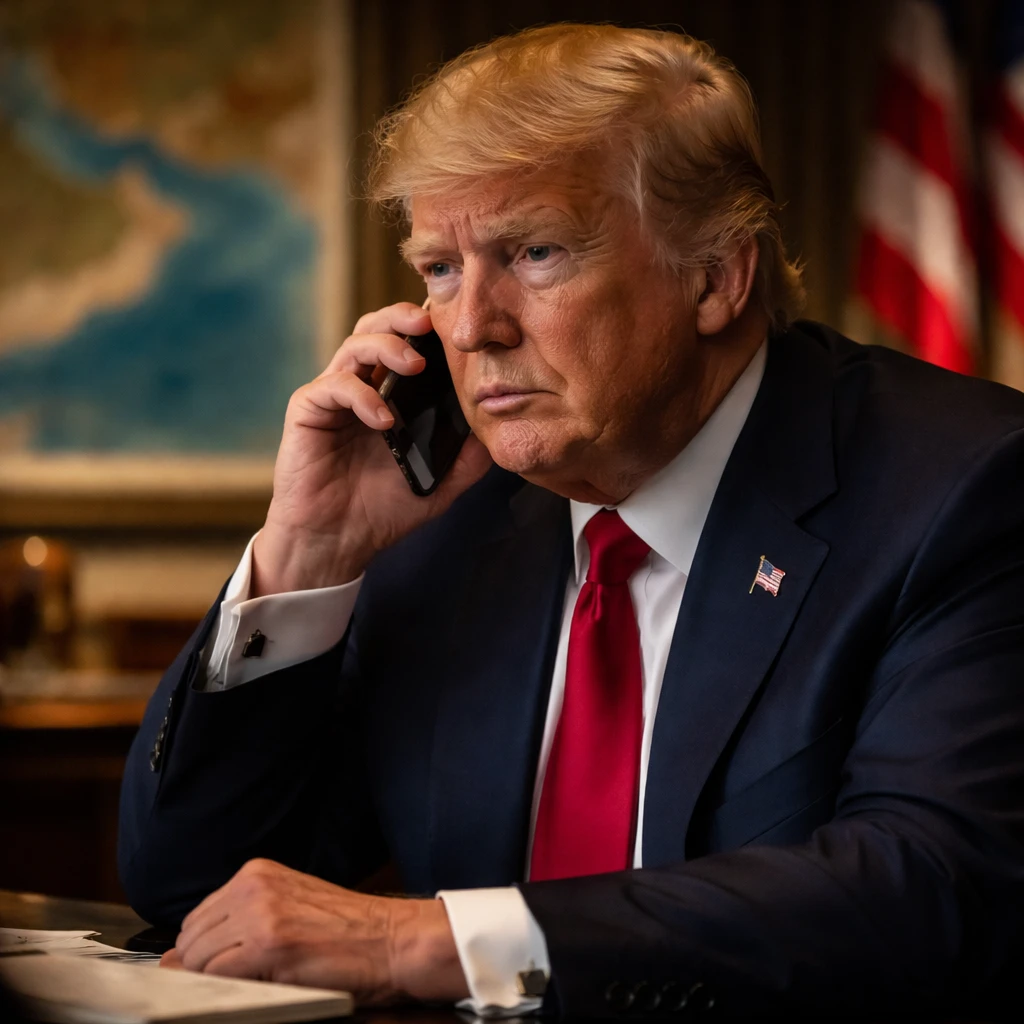
President Donald Trump said on Thursday that he must personally approve Iran’s next supreme leader, rejecting Mojtaba Khamenei as an acceptable choice and invoking a parallel with recent U.S. actions in Venezuela. Trump made the remarks during an eight-minute phone call with Axios, saying Iran’s delayed announcement of a new supreme leader is futile if the choice is the late supreme leader's son.
Trump’s comments
In the Axios call, Trump said Mojtaba Khamenei, identified in reporting as the 56-year-old son of the assassinated supreme leader Ali Khamenei, is not an acceptable successor. He said he would not accept a new Iranian leader who would continue the policies of the previous supreme leader, warning that such continuity "would force the U.S. back to war "in five years."
Trump told Axios, "They are wasting their time. Khamenei’s son is a lightweight. I have to be involved in the appointment, like with Delcy [Rodriguez] in Venezuela," and he added, "Khamenei’s son is unacceptable to me. We want someone that will bring harmony and peace to Iran."
Succession dynamics inside Iran
Reporting indicates the Iranian regime has delayed naming a new supreme leader for several days, with statements from Iranian politicians on Thursday suggesting an announcement could be imminent. Mojtaba Khamenei has emerged in coverage as the frontrunner to succeed his father. He is described as a hardline cleric with deep ties to the Islamic Revolutionary Guard Corps and, according to reporting, has never held public office.
Regional developments and disruptions
Separately, Israel bombed a building in Qom that houses the clerical body responsible for selecting Iran’s next supreme leader on Tuesday, an action reported to have been intended to disrupt vote-counting. Trump directly compared the Iran succession situation to his intervention in Venezuela, where he said vice president Delcy Rodriguez took over after U.S. forces captured Nicolás Maduro in January.
Market probabilities
According to Polymarket data cited in reporting, there is about a 66% chance that Mojtaba Khamenei will be the next supreme leader. Beyond that market signal, reporting contains no further economic forecasts or market analysis.
Given the limited publicly reported details around the internal selection process and the timing of any formal announcement, the situation remains fluid.