
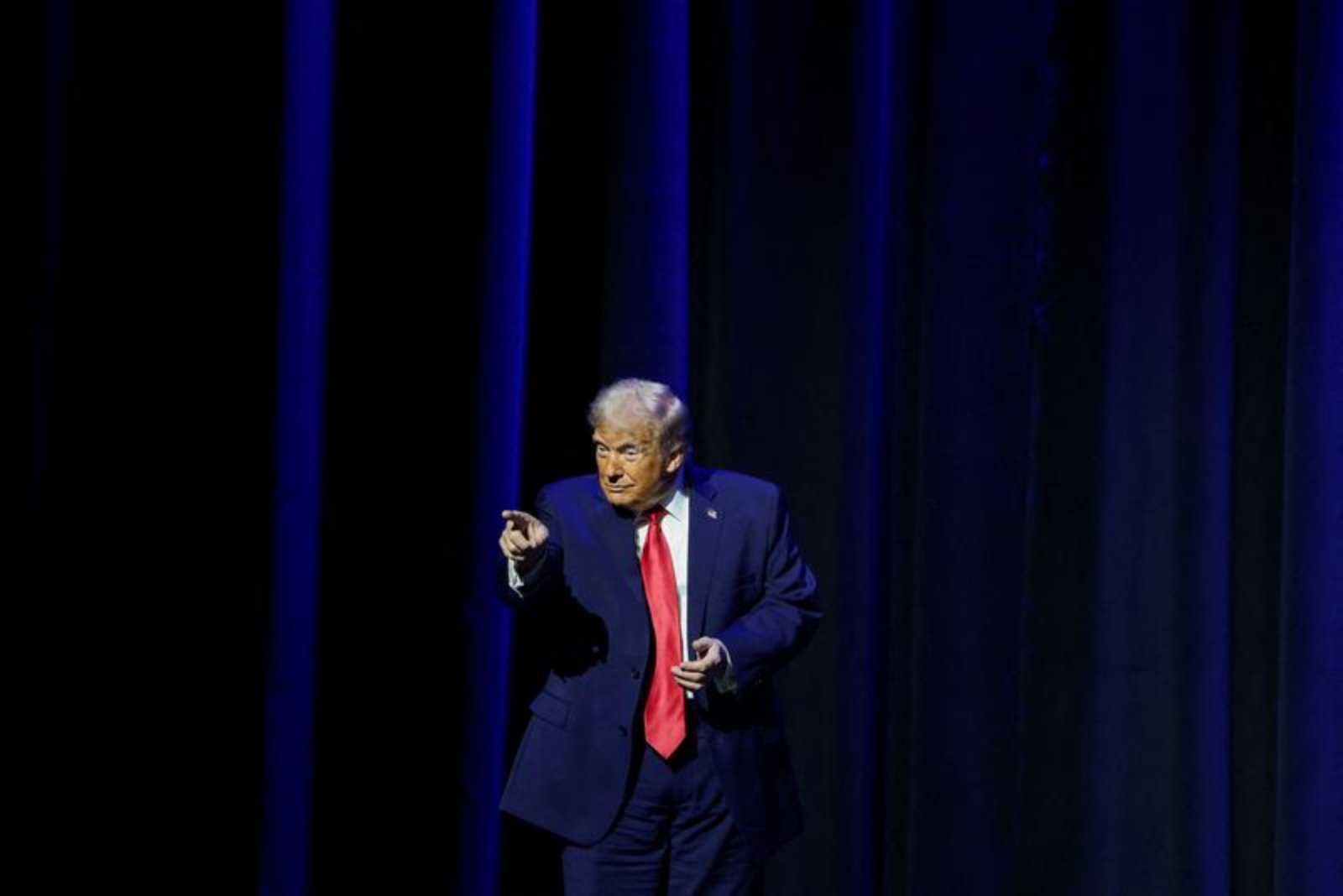
In a string of public addresses focused on the economy since December, the president has consistently framed inflation as a solved problem. A review of five recent speeches shows frequent declarations that inflation has been beaten and that prices are falling. Those statements appear at odds with data and with the daily experience of many Americans who still report higher costs for household staples.
The speeches contained nearly 20 direct assertions that inflation was beaten or markedly reduced and almost 30 claims that prices were falling. Taken together, the addresses sketch a message in which the administration insists the cost-of-living crisis has been fixed, even as headline inflation remains close to 3% on a year-over-year basis and certain everyday goods have moved higher in price.
Concrete examples underscore the gap between the administration's message and consumers' lived reality. Since the president returned to office a year ago, ground beef prices are up 18% and ground coffee prices are up 29%, illustrating how some grocery items have continued to climb despite a slower overall inflation rate.
Messaging vs. Measurement
Republican strategists interviewed for this piece cautioned that the administration's repeated, categorical statements about having defeated inflation risk eroding credibility in competitive races ahead of the November congressional elections. Voter dissatisfaction with the president's handling of the economy is evident in polls: 35% of Americans approved of his overall economic stewardship in a January 25 Reuters/Ipsos poll, a modest uptick from 33% in December but well below the 42% rating he held when he first took office a year earlier.
"He can’t continue to make claims that are demonstrably false, particularly at the expense of Republicans who are in competitive House districts or Senate races," said Rob Godfrey, a Republican strategist. "He must be disciplined and focused," he added.
One source close to the White House said the president needs to press the affordability message more directly and to deliver it through targeted visits to crucial districts. That source, speaking on condition of anonymity to speak more freely about internal discussions, said the message was not resonating and required a different approach.
A White House spokesman defended the administration's broader rhetorical focus. He said the president's attention to illegal immigration in public remarks is intended to link immigration to economic strain, saying undocumented residents contribute to overburdened public services, disrupted business activity due to crime, pressure on housing markets, and depressed wages. The spokesman also stressed that the president continues to cast himself as still doing the work required to clean up the economic situation left by his predecessor.
When the Message Wanders
The speeches did not remain tightly focused on inflation and prices. When not asserting that inflation had been defeated, the president spent nearly half of his speaking time on a broad set of grievances and topics unrelated to consumer prices. In roughly five hours of speech time across the five appearances reviewed, about two hours covered roughly 20 issues other than prices.
Illegal immigration drew the most attention among these diversions, totaling roughly 30 to 40 minutes across the speeches. The president also turned to a range of other subjects, including comments about Somali Americans in Minnesota, repeated criticism of a Somali-born Minnesota congresswoman, and mention of matters such as men in women’s sports, Venezuela, Iran, the Islamic State militant group, Greenland, Ukraine and Russia, military recruitment, news media criticism, and past claims about U.S. wars and the 2020 election.
In one instance at an Iowa event on January 27, the president declared: "Inflation is stopped. Incomes are up. Prices are down." Only twice across the five speeches did he concede that prices were still high, and when he did so he placed blame on his predecessor.
Observers inside Republican circles said the president’s habit of jumping from topic to topic - a style he has termed "the weave" - can blunt the potency of the core economic message. Doug Heye, a Republican strategist, said voters want clarity on what the president is doing to reduce costs, but that the volume and variety of rhetoric makes it hard for people to retain specific economic policy takeaways.
During a World Economic Forum appearance in Davos on January 21, for example, the president spent the first 22 minutes on topic before pivoting for the next 22 minutes to commentary on European nations, NATO, and media outlets, before returning to economic themes.
Data and Daily Experiences Diverge
There is a factual basis for some of the administration's assertions: headline inflation has edged down since the president took office, moving from 3% to 2.7% over the period cited in the speeches. A lower inflation rate indicates that prices are rising more slowly, not that prices are falling in absolute terms - a distinction economists emphasize and that amplifies the communications challenge.
At the level of specific goods, the speeches sometimes cited genuine declines. For example, egg prices fell roughly 21% year over year in December after having been about 60% higher during the president's early months back in office. Retail gasoline prices are about 4% lower since January of the prior year.
Yet those improvements have not been uniform across the grocery basket. In the 12 months through December 2025, food costs were up more than 3%, while average hourly earnings rose only 1.1% year over year. The unemployment rate stood at 4.4% in December, up from 4% when the president took office in January 2025, according to government data cited in the speeches.
Some products have shown notable price increases over the same timeframe - ground beef up 18% and ground coffee up 29% - further complicating the affordability narrative for households routinely buying these items.
Policy Proposals and Their Limitations
Within these speeches the president laid out a package of policy measures intended to ease costs for families. He cited recently enacted tax cuts that started to take effect last month and that the administration says will increase savings for tens of millions of families. He also highlighted the removal of taxes on tips, overtime and Social Security payments, proposals to lower mortgage interest rates and housing costs, and agreements with health insurers intended to reduce drug prices.
Most economists expect the tax cuts to provide some benefit to U.S. households and the broader economy in the months ahead. However, several economists cautioned that many of the administration's more recent proposals are unlikely to materially change the immediate cost-of-living picture through to November of this year.
One proposal to cap credit card interest rates at 10% for a year drew particular scrutiny. Some economists warned such a cap could backfire by reducing access to credit for lower-income households, because lenders might scale back offerings or tighten underwriting in response.
Supporters of the administration's agenda argue the measures will help working families. A spokesman for the National Republican Congressional Committee said the party and the president are delivering for working families and that voters are beginning to see the contrast with opponents.
Political and Communication Risks
Former economic officials noted that the current strategy - emphasizing that the economy is strong while pointing to selective indicators - mirrors mistakes made by the previous administration during a period of persistent inflation. Those officials say that simply pointing to favorable data points did not convince many voters in 2024, and that political damage followed.
Jared Bernstein, who led the prior administration's Council of Economic Advisers, described that past approach as talking past the public about inflation. He said officials would highlight strong jobs reports and other positive metrics, but that such arguments did not address the underlying reality of elevated price levels for many households. His comments were used to illuminate the communications challenge faced by presidents in an election year.
Republican strategists warn the president’s repetitive claims of victory on inflation risk creating a credibility gap for both him and the party, particularly in House districts and Senate races that could hinge on voters’ perceptions of economic competence.
What This Means for Voters and Markets
The president’s repeated insistence that inflation has been defeated is intended to reassure voters and to make affordability a centerpiece of the political message. But a combination of continuing price increases for certain goods, modest wage growth relative to food cost pressures, and an uptick in unemployment since the president took office complicates that narrative.
How the administration adjusts its communications and how voters interpret both the data and daily cost pressures will be important as the political calendar advances toward the November elections. One source familiar with White House thinking said the State of the Union address on February 24 is likely to serve as a starting point for more intense domestic travel aimed at amplifying the affordability message.
For now, the juxtaposition of categorical claims that inflation is over with concrete examples of price increases suggests an unresolved disconnect between national-level indicators and the pocketbook experiences of many households. That gap poses both political and policy challenges for the administration as it seeks to demonstrate that its actions are easing the economic strain that remains visible in many Americans’ shopping carts.