
Economy May 24, 2026 02:42 AM

Trump Pushes Back on Xi’s Criticism of Japan’s Takaichi During Beijing Talks

Report says U.S. president defended Japanese leader after Chinese concerns about regional stability were raised

By Hana Yamamoto

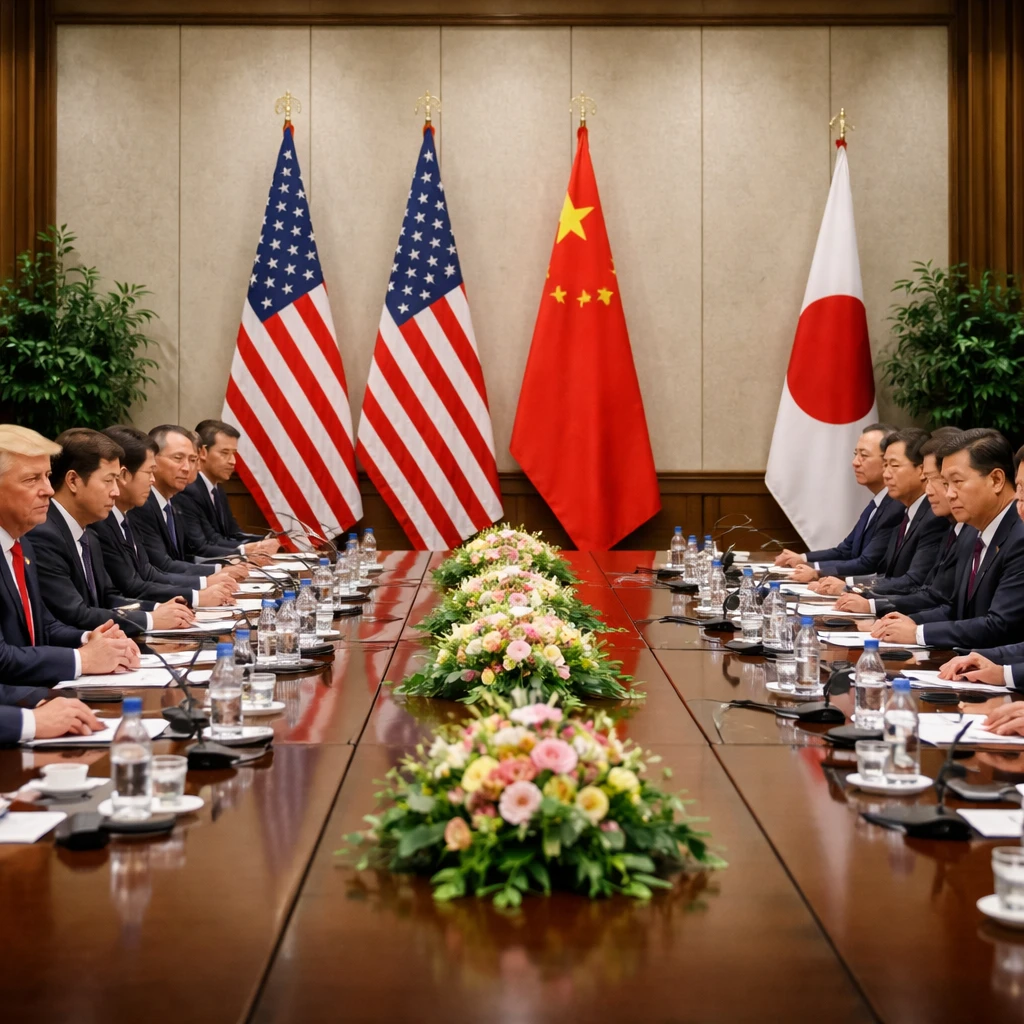
Japan’s Yomiuri Shimbun reported that during a summit in Beijing earlier this month, Chinese President Xi Jinping told U.S. President Donald Trump that Prime Minister Sanae Takaichi and Taiwanese President Lai Ching-te posed risks to regional peace and asked the U.S. not to support them. Trump replied that Takaichi did not merit such criticism. The exchange occurred during Trump’s visit to China, and hours after returning he spoke by phone with Takaichi, who said they reaffirmed the U.S.-Japan alliance.

Trump Pushes Back on Xi’s Criticism of Japan’s Takaichi During Beijing Talks

Key Points

  • Xi Jinping reportedly told President Trump that Prime Minister Sanae Takaichi and Taiwanese President Lai Ching-te posed threats to regional peace and urged the U.S. not to support them - relevant to diplomatic and security assessments in East Asia.
  • Trump is reported to have defended Takaichi, saying she did not deserve such criticism - a development with potential implications for U.S.-Japan diplomatic posture.
  • The exchange occurred during Trump’s recent visit to China; hours after the trip he spoke by phone with Takaichi and, according to the Japanese prime minister, they reaffirmed the strength of the U.S.-Japan alliance - a signal pertinent to defense and geopolitical risk considerations.

Japan’s Yomiuri Shimbun reported on Sunday, citing government sources, that U.S. President Donald Trump defended Japanese Prime Minister Sanae Takaichi after Chinese President Xi Jinping criticized her during a summit in Beijing earlier this month.

According to the report, Xi raised concerns directly with Trump, saying that both Takaichi and Taiwanese President Lai Ching-te represented threats to regional peace and urging the U.S. president not to back either leader. The newspaper said Trump responded by asserting that Takaichi was not the sort of leader who deserved such criticism.

The exchange reflects growing sensitivities in the region. Relations between Japan and China have been tense in recent months following comments by Takaichi last November in which she suggested that a potential Chinese attack on Taiwan could prompt a military response from Japan. Beijing regards Taiwan as part of its territory and has repeatedly opposed remarks or actions from foreign leaders that it interprets as support for the self-governed island.

Per the report, the conversation between Trump and Xi took place during the U.S. president’s visit to China earlier this month, a trip in which they discussed a range of bilateral and regional issues. The report said that, several hours after finishing his two-day visit, Trump had a phone call with Takaichi. The Japanese prime minister told reporters that during the call the two leaders reaffirmed the strength of the U.S.-Japan alliance.

Attempts to reach officials for immediate comment were not successful. Officials at Japan’s prime minister’s office, the foreign ministry, and the U.S. Embassy in Tokyo were not immediately available for comment outside normal business hours, the report said.


This account comes amid an ongoing focus on Taiwan and wider security concerns in East Asia, which continue to shape relations among the United States, China, and Japan. The reported exchange underscores the diplomatic frictions at play and the degree to which statements by leaders in the region can prompt direct responses at the highest levels.

Because the report is based on government sources cited by the Yomiuri Shimbun, details are confined to what those sources provided, including the characterization of the private remarks and the chronology of the phone call between Trump and Takaichi. The report does not include additional corroborating statements from the involved embassies or ministries at the time it was published.

Risks

  • Heightened diplomatic friction between China, Japan, and the United States could increase geopolitical uncertainty - a factor that can affect defense-related sectors and regional market sentiment.
  • Public remarks and private criticisms between top leaders may escalate tensions around Taiwan, leaving regional security and trade-sensitive industries exposed to volatility.
  • Limited immediate comment from official offices means details remain confined to cited government sources, creating uncertainty about the full diplomatic context and follow-up actions.

More from Economy

Markets Weaken as Hezbollah Rejects Israel-Lebanon Ceasefire; U.S. Jobs Report in Focus Jun 5, 2026 UK House Prices Flat in May as Middle East Turmoil and Cost Pressures Weigh on Market Jun 5, 2026 SpaceX IPO, ECB Rate Move and Global Data Set the Week’s Market Agenda Jun 5, 2026 AirTrunk Pledges $30 Billion to Build 5 GW of Data Centre Capacity in India by 2030 Jun 5, 2026 Bank Indonesia to Draft Rules to Reflect Expanded Economic Mandate Jun 5, 2026