
Summary: U.S. President Donald Trump posted a warning on Truth Social telling Iran not to carry out additional retaliatory attacks against the United States and its regional partners. Tehran has reportedly launched intensive strikes on neighboring states tied to the United States despite the killing of its Supreme Leader, Ayatollah Ali Khamenei. The strikes have hit locations in the United Arab Emirates and across the Gulf, closing major airports, halting key airline operations and prompting pauses in shipping services. Analysts warn the disruption has major implications for crude oil and LNG flows.
In his social media message, President Trump said Iran had threatened intensive attacks on neighboring countries associated with the United States and signaled a readiness to respond with overwhelming force. In that post he warned, "We will hit them with a force that has never been seen before." The specific meaning of that phrase has not been clarified, and it is uncertain whether the warning will deter further strikes.
The statement reflected continuing activity by Iran's military despite the reported killing of Supreme Leader Ayatollah Ali Khamenei. Iranian forces have, according to the public record in this account, carried out retaliatory strikes against several Gulf states following that event.
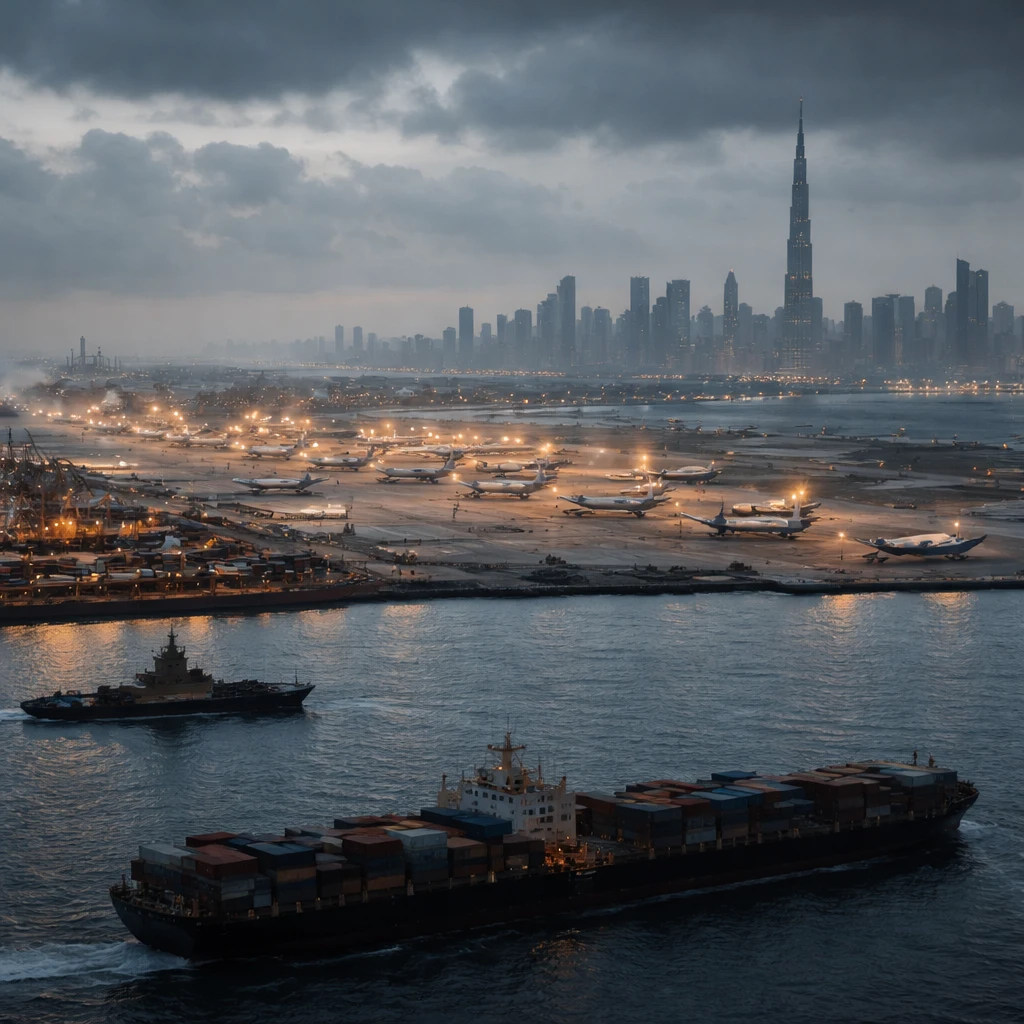
Reported targets include the United Arab Emirates, where attacks reached Dubai International Airport and the Burj Khalifa. Attacks have also been directed at Bahrain's capital, as well as locations in Qatar and Kuwait. In response to the attacks, Gulf nations have warned they could take retaliatory measures against Iran.
Operational disruptions have been significant. Qatar has closed its main airport in Doha, and Dubai International Airport has also been shut down as a result of the attacks attributed to Iran. Major Gulf carriers - including Emirates, Qatar Airways and Etihad - have suspended their operations indefinitely, compounding the travel and transit disruption that followed the abrupt airport closures.
Maritime operations have also been affected. Three major Japanese shipping lines have reportedly paused their Gulf operations after a U.S. naval warning. The firms named are Nippon Yusen K.K (TYO:9101), Mitsui OSK Lines Ltd ADR (OTC:MSLOY) and Kawasaki Kisen Kaisha, Ltd. (TYO:9107).
Analysts at RBC Capital Markets describe the combined effect of recent U.S. strikes on Iran and Iran's retaliatory actions as triggering a domino effect across the Gulf. They report that the Strait of Hormuz is now considered "practically closed," a status that has halted 20% of the world's LNG exports and 90% of Japan's crude oil imports. Those analysts predict a substantial rise in crude oil prices as the conflict escalates, noting that neither side appears willing to return to negotiations at present.
It remains unclear whether the U.S. President's warning will prevent additional strikes or what specific operations would follow the stated intention to use "a force that has never been seen before." The immediate, observable impacts are concentrated on aviation and shipping in the Gulf, with consequential risks to global energy supplies and trade routes.
Key points
- President Trump warned Iran on Truth Social against further retaliatory attacks, saying the U.S. could respond with unprecedented force.
- Iran has carried out strikes on the UAE - including Dubai International Airport and the Burj Khalifa - and attacks on Bahrain's capital, Qatar and Kuwait; Gulf states have warned of possible retaliation.
- Airline and shipping disruptions are extensive: Doha and Dubai airports are closed, Emirates, Qatar Airways and Etihad have suspended operations indefinitely, and three major Japanese shipping lines - Nippon Yusen K.K (TYO:9101), Mitsui OSK Lines Ltd ADR (OTC:MSLOY) and Kawasaki Kisen Kaisha, Ltd. (TYO:9107) - have paused Gulf services.
Risks and uncertainties
- Escalation risk: It is uncertain whether Trump’s threat of "a force that has never been seen before" will stop further Iranian attacks; an unclear deterrent raises the prospect of additional military exchanges that could further disrupt regional stability and markets.
- Energy and trade disruption: With the Strait of Hormuz described as "practically closed," 20% of global LNG exports and 90% of Japan's crude oil imports have been halted, creating immediate risk for energy markets and supply chains.
- Operational continuity for carriers and shippers: Indefinite suspension of Gulf carrier operations and paused services by major shipping lines introduce uncertainty for global aviation, logistics and trade flows while it remains unclear when normal operations can resume.
Observers and market participants are watching developments closely for their potential to move crude oil and LNG prices sharply, as signaled by the RBC Capital Markets analysts cited in these reports. The pace and direction of any de-escalation, as well as the clarity of military postures from the parties involved, will be central to how the situation unfolds.