
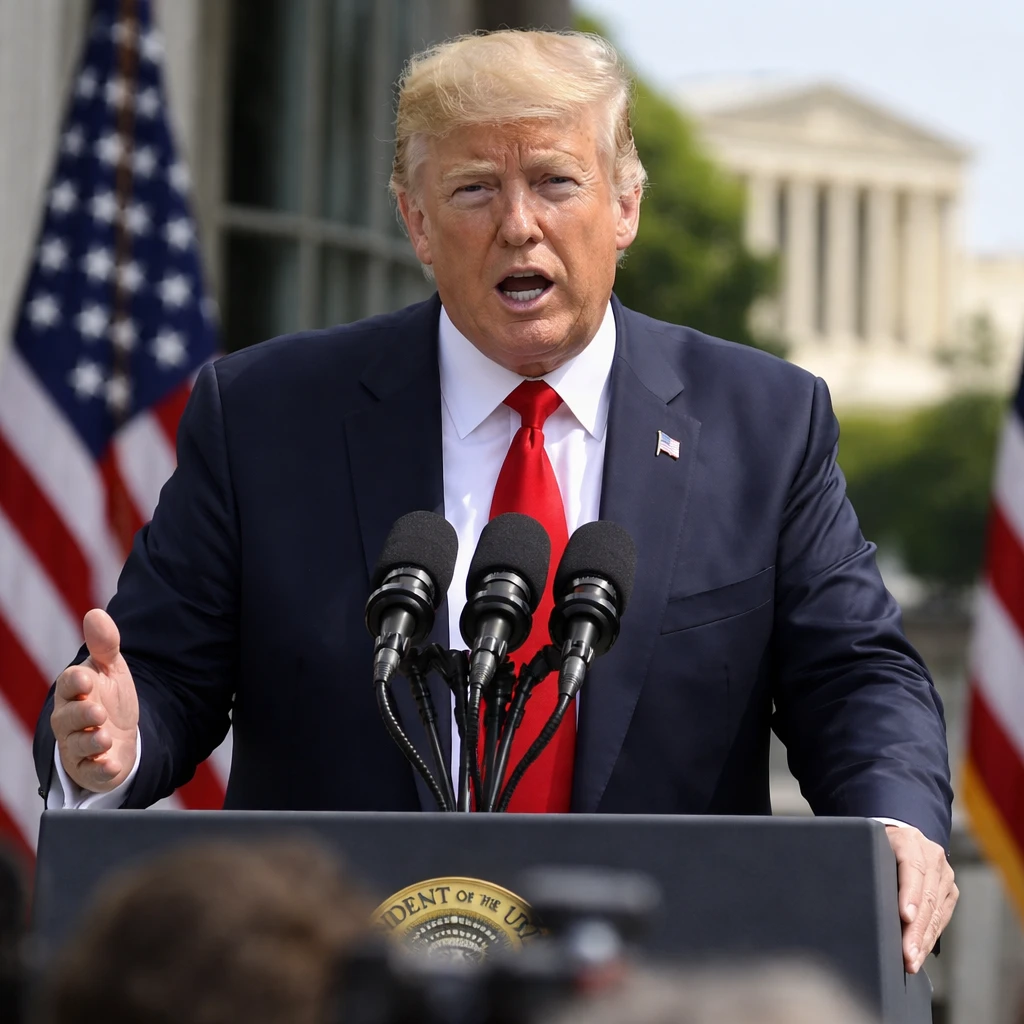
President Donald Trump expressed sharp criticism on Friday following a U.S. Supreme Court decision that blocked his use of emergency powers to impose tariffs on foreign countries. The court, in a 6-3 ruling earlier on Friday, found that those actions were unconstitutional.
At remarks delivered from the White House, the president described the verdict as "deeply disappointing" and said he was "absolutely ashamed" of the justices who voted against him in the case. He portrayed the decision as a victory for foreign governments, saying they were "ecstatic, so happy, dancing in the street" in the immediate aftermath, but warned that "countries won't be dancing for long."
Trump told the gathered audience that he intends to pursue alternative measures in response to the court's decision. He said, "there are methods that are even stronger available to me" and added that "other alternatives will be used on tariffs." He suggested some of those options might yield greater financial returns, stating "could be we take in more money."
"I am allowed to cut off all trade with a country" and "I am allowed to impose an embargo," the president said, citing broader executive authorities he believes are available to him.
The president's comments emphasized both frustration with the judicial outcome and an intent to maintain pressure through different policy tools. He framed the court ruling as a temporary setback while signaling that administration efforts on tariff policy would continue through other channels he described as potentially stronger.
Summary
- The Supreme Court ruled 6-3 earlier on Friday that the president's use of emergency powers to impose tariffs was unconstitutional.
- President Trump called the decision "deeply disappointing" and said he was "absolutely ashamed" of the justices who opposed him.
- He stated he would pursue other measures on tariffs, including stronger methods he suggested could bring in more revenue, and referenced authority to cut off trade or impose an embargo.
Key points
- The court's 6-3 decision removed the legal basis for the president's previous emergency-tariff actions, prompting immediate presidential pushback - sectors tied to international trade, such as manufacturing and import-dependent retail, could be impacted by any ensuing policy changes.
- The president publicly signaled he will explore alternative tools to impose trade pressure, which he described as potentially stronger and possibly revenue-generating - financial markets and trade-sensitive industries may view this as a new policy risk to monitor.
- Mr. Trump's remarks included explicit references to cutting off trade and imposing embargoes, underscoring the administration's focus on using executive authority on trade matters going forward.
Risks and uncertainties
- Uncertainty about which specific alternative measures the administration will pursue - the article reflects only the president's statement that "other alternatives will be used on tariffs."
- Potential for severe trade actions if the administration moves to cut off trade with a country or impose an embargo, as the president said he is "allowed to cut off all trade with a country" and "allowed to impose an embargo."
- Unclear fiscal impact of the alternatives the president referenced - while he said "could be we take in more money," the article provides no detail on how revenue outcomes would be realized.