
Economy February 20, 2026

Trump Announces Plan for 'Even Stronger' Tariff Actions After Supreme Court Setback

President signals use of alternate federal statutes and anticipates higher tariff revenue despite court ruling against his broad measures

By Sofia Navarro
Trump Announces Plan for 'Even Stronger' Tariff Actions After Supreme Court Setback

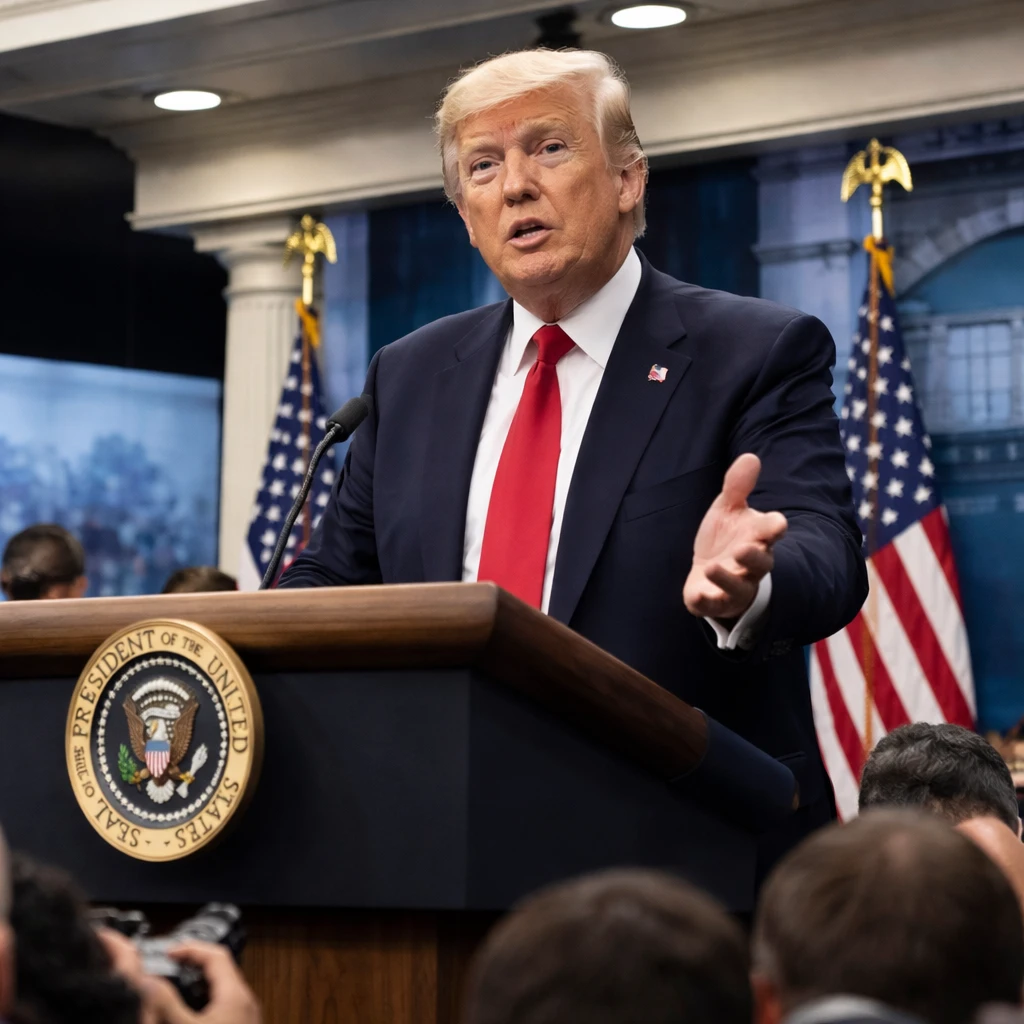
President Donald Trump said he will pursue a more forceful tariff strategy after the U.S. Supreme Court ruled against his broad tariff measures. At a briefing, he said he intends to rely on other federal authorities - citing the Trade Expansion Act and the 1974 Trade Act - to impose trade restrictions and predicted that tariff receipts would rise under his revised approach. He also characterized the court's ruling as boosting his ability to implement tariffs.

Key Points

  • President Trump said he will pursue an "even stronger" approach to tariffs after a Supreme Court decision that ruled against his sweeping tariff measures - impacts trade and policy-making.
  • He indicated he will rely on alternative federal authorities, naming the Trade Expansion Act and the 1974 Trade Act as potential legal bases for new trade restrictions - relevant to trade, manufacturing, and import-dependent sectors.
  • Trump asserted the court ruling enhanced his ability to impose tariffs and said tariff income would increase under his revised strategy - a point with implications for fiscal and trade-related revenue expectations.

Overview

President Donald Trump said Friday he plans to adopt an "even stronger" stance on tariffs following a U.S. Supreme Court decision that did not uphold his comprehensive tariff program. Speaking at a briefing, the president outlined a path forward that relies on alternative federal legal authorities to enact trade restrictions.

Legal route and statutes cited

During the briefing, Trump said he would turn to other statutes to support new tariff actions. He specifically mentioned the Trade Expansion Act and the 1974 Trade Act as potential legal frameworks he may use to implement future trade limitations. The remarks indicated an intent to shift from the authorities the court rejected to different statutory bases for imposing tariffs.

President's interpretation of the ruling

Trump characterized the Supreme Court's decision as one that ultimately strengthened his position on tariffs. He said the ruling made his authority to levy tariffs "more powerful," a description he used to explain why he believes new measures could be implemented more effectively. He also said that income from tariffs would increase under his adjusted approach.

Implications noted by the administration

The administration's public remarks framed the Supreme Court outcome not as a barrier but as a catalyst for pursuing different legal avenues. By pointing to alternative statutes by name, the president signaled the intent to continue using tariffs as a policy tool despite the court's move against his prior, broader measures.


Key takeaways

  • President Trump intends to pursue an "even stronger" tariff strategy after a Supreme Court ruling went against his sweeping tariff measures.
  • He said he will invoke alternative federal authorities, specifically citing the Trade Expansion Act and the 1974 Trade Act, to implement trade restrictions.
  • Trump asserted the ruling increased his tariff powers and said tariff revenues would rise under his revised approach.

Context and limits

The president's statements reflect a plan to use other statutory authorities following the court decision. The briefing presented the administration's interpretation of the ruling and its intended next steps, but did not provide additional procedural details or timelines for new measures.

Risks

  • Legal uncertainty - The Supreme Court ruling against the prior sweeping measures and the plan to invoke alternate statutes creates potential legal ambiguity over future tariff authority, affecting policymakers and legal advisers.
  • Policy and market uncertainty - The pursuit of stronger tariffs using different federal acts introduces uncertainty for sectors tied to trade, including manufacturing and consumer goods, which could be sensitive to changes in import restrictions.
  • Revenue and implementation uncertainty - While the president said tariff income would rise under his revised approach, the article does not provide details on implementation timing or scope, leaving the scale and timing of any revenue changes unclear.

More from Economy

Bessent: Administration to Shift Tariff Strategy After Supreme Court Ruling Feb 20, 2026 Trump Repeats Call for Much Lower Interest Rates, Criticizes Fed Chair Feb 20, 2026 White House to Apply 10% Global Tariff for 150 Days, Citing Trade Act Authority Feb 20, 2026 Trump directs temporary 10% global tariff under Trade Act after Supreme Court rebuke Feb 20, 2026 Trump Denounces Supreme Court Ruling on Tariffs, Signals Sweeping Alternatives Feb 20, 2026