
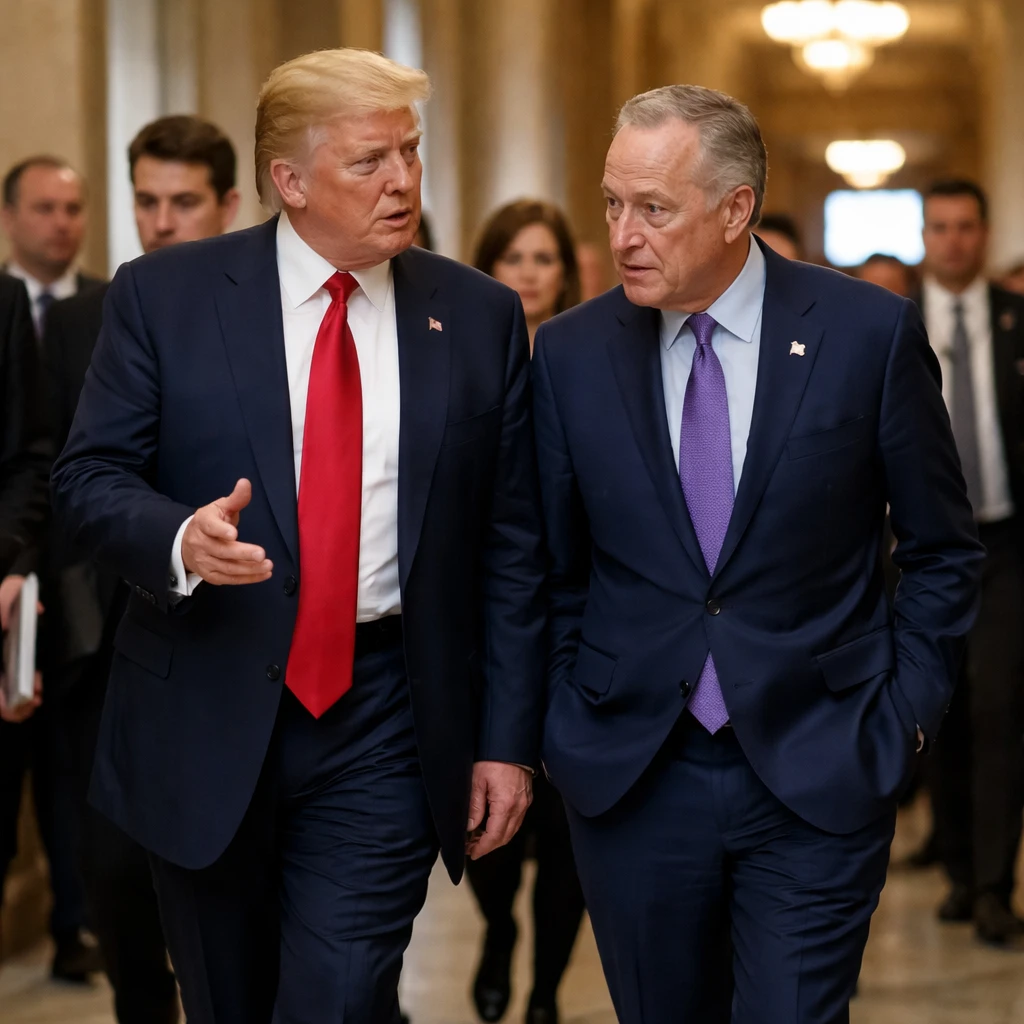
Senior leaders in Washington appear to be approaching a compromise aimed at averting a potential federal funding lapse later this week. According to officials cited in recent reporting, President Donald Trump and Senate Democratic leader Chuck Schumer have been engaged in discussions that could produce a narrowly focused agreement to stave off a shutdown.
At the center of the reported discussions is a proposal to impose further restrictions on federal immigration agents. That element has been described by officials as a key concession for Democratic senators who have been critical of the administration's immigration enforcement tactics.
Under the framework being discussed, the Senate would separate legislation to fund the Department of Homeland Security from a larger, six-bill package that contains the spending measures needed to keep many other federal agencies operating. The separated DHS bill would allow senators to address immigration-related concerns independently of the broader appropriations bundle.
Timing is crucial. The consolidated spending package must be approved before government funding expires on Friday night. Failure to pass the necessary measures by that deadline would create the conditions for a government shutdown. If funding does lapse, it would represent the second shutdown during President Trump's second term, following a record-length closure in October and November.
Democratic senators have broadly criticized the conduct of the administration's immigration enforcement efforts, with some members advocating for reductions in DHS funding. The reported plan to isolate DHS funding is intended to accommodate those concerns without delaying the passage of appropriations for other agencies included in the six-bill package.
Context and implications
The proposed split of DHS funding from the larger package aims to provide a procedural route for senators to negotiate policy limits on immigration enforcement while avoiding a broader funding impasse. The approach would require rapid legislative action in the Senate ahead of the funding deadline.
Details remain contingent on ongoing negotiations and comments attributed to officials involved in the discussions. Observers note that the outcome depends on whether leaders can reconcile policy demands over immigration enforcement with the need to pass appropriations for multiple federal agencies before the Friday night cutoff.
Summary
Leaders appear to be moving toward a targeted agreement that would separate DHS funding from a six-bill appropriations package to address Democratic concerns about immigration enforcement, with the goal of preventing a government shutdown before funding expires Friday night.