
President Donald Trump used social media late Saturday to publicly rebuke reported British military intentions, a move that has introduced fresh tension into the long-standing U.S.-U.K. security relationship as the conflict involving the United States, Israel and Iran escalates.
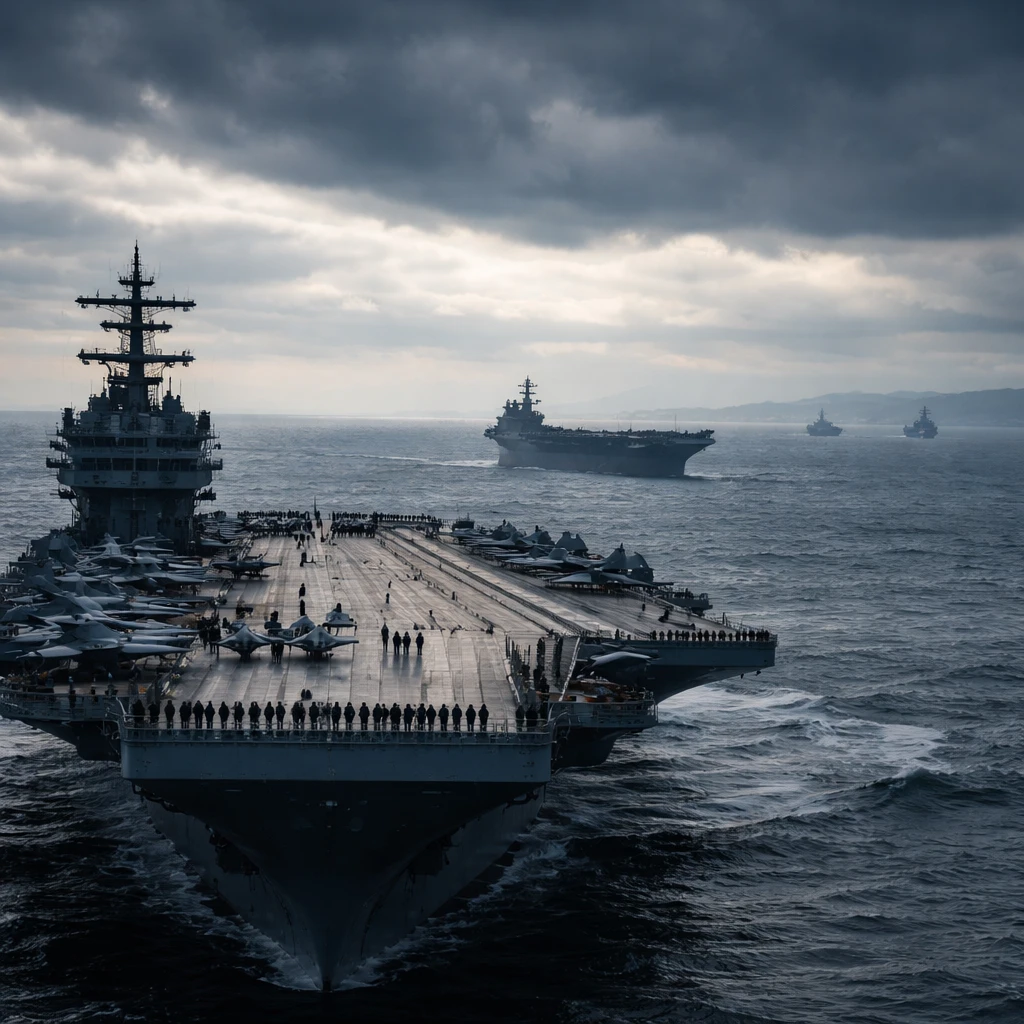
Reports indicate that Prime Minister Keir Starmer is considering sending two Royal Navy aircraft carriers - the HMS Queen Elizabeth and the HMS Prince of Wales - to the Middle East to assist a coalition grappling with the closure of the Strait of Hormuz. The carriers were described in reporting as intended to take pressure off U.S. carrier strike groups operating in the region.
In response, the U.S. president dismissed the notion of late-coming allies in a social media post, writing: "We don’t need people that join Wars after we’ve already won!" He added a separate warning, saying "we will remember," language that was interpreted as a signal this administration could view delayed support as a breach of trust with possible consequences for future defense cooperation and procurement relationships.
The public exchange occurs against a backdrop of intensified military action. The United States and Israel are reported to be continuing bombardments of Iran, while Iran has conducted retaliatory strikes on neighboring countries, including Kuwait, Bahrain, Qatar and the United Arab Emirates, with particular reference to strikes affecting Dubai. The broader geopolitical confrontation has had an immediate market impact, contributing to a rise in global crude oil prices toward $95 a barrel.
Beyond the immediate operational and diplomatic implications, the episode also intersects with domestic economic pressures facing the United Kingdom. British officials must weigh the decision to deploy carriers at a time when the U.K. economy is contending with rising inflationary pressures and elevated energy costs. Observers and investors are watching whether Prime Minister Starmer will proceed with the planned naval movement or alter strategy in response to the U.S. president's rebuke.
For governments and markets alike, the situation illuminates how military decisions, transatlantic relations and energy prices can interact. The possible deployment of the HMS Queen Elizabeth and HMS Prince of Wales was framed as a practical measure to support allied operations, while the U.S. reaction underscores how timing and perceptions of commitment can shape diplomatic and procurement dynamics going forward.
Key context:
- The U.K. carriers were reported as intended relief for U.S. carrier strike groups in the Middle East.
- The U.S. president publicly rejected late participation with the quoted line: "We don’t need people that join Wars after we’ve already won!"
- Ongoing hostilities have been linked to spikes in global crude prices toward $95 a barrel.