
Economy February 12, 2026

Top House Democrat Demands Probe After Photographs Suggest DOJ Tracked Lawmakers' Epstein File Reviews

Representative Jamie Raskin asks the DOJ Inspector General to investigate alleged monitoring after Attorney General displayed a document tied to Representative Jayapal's search history

By Jordan Park
Top House Democrat Demands Probe After Photographs Suggest DOJ Tracked Lawmakers' Epstein File Reviews

Representative Jamie Raskin, the ranking Democrat on the House Judiciary Committee, has called for an Inspector General inquiry into whether Department of Justice personnel monitored members of Congress as they reviewed Jeffrey Epstein-related files on DOJ computers. The request followed photographs from a committee hearing in which Attorney General Pam Bondi displayed a document labeled as Representative Pramila Jayapal's search history. The episode adds to tensions over the department's handling and redaction of millions of pages of documents tied to Epstein.

Key Points

  • Representative Jamie Raskin, ranking Democrat on the House Judiciary Committee, has requested a DOJ Inspector General probe after photographs suggested DOJ monitoring of lawmakers reviewing Epstein-related files.
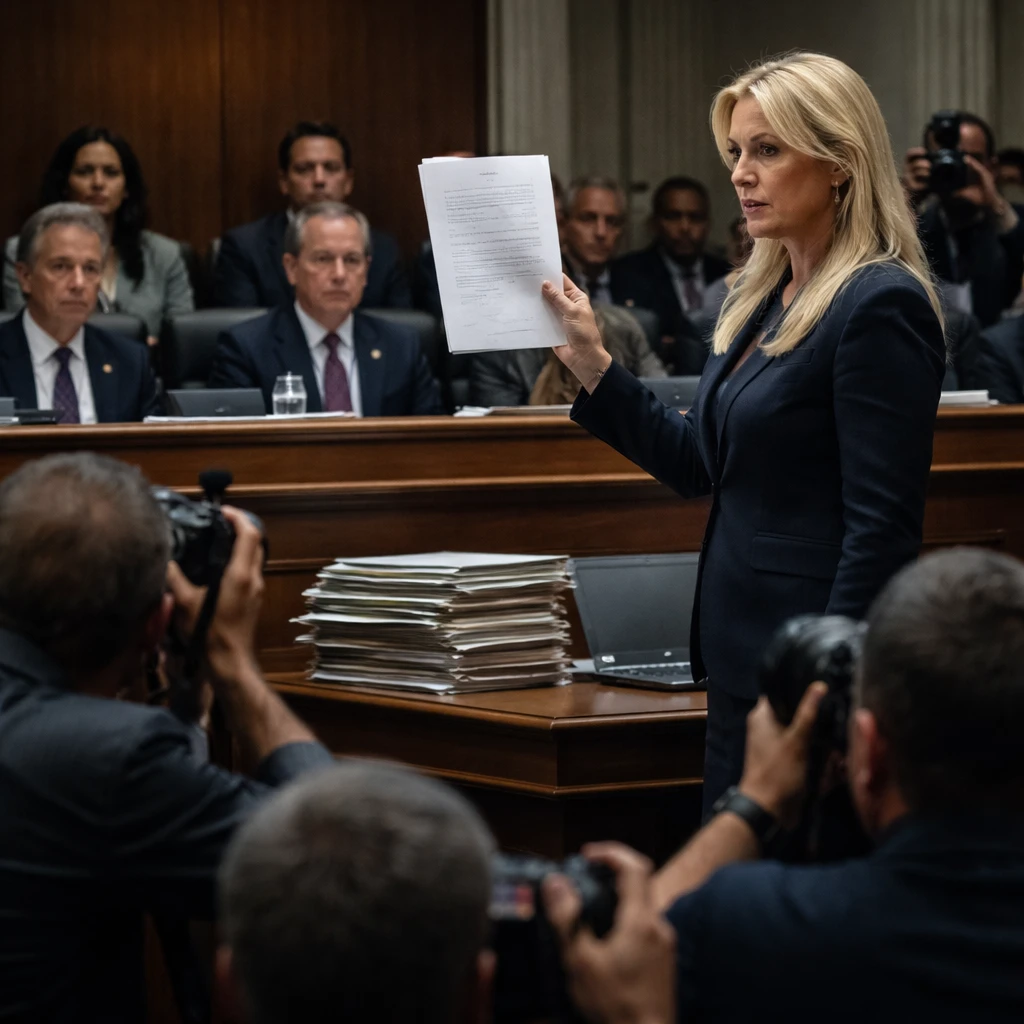
  • Photographs from a Wednesday hearing showed Attorney General Pam Bondi holding a document labeled as Representative Pramila Jayapal's search history, which appeared to list files Jayapal viewed while using DOJ computers to access less-redacted Epstein documents.
  • The episode adds to tensions over the Justice Department's release of more than 3 million pages of materials and ongoing questions about redactions; sectors most directly implicated include government oversight and legal review processes, while market effects are not specified in the reporting.

Representative Jamie Raskin, the top Democrat on the House Judiciary Committee, said he will request an investigation by the Department of Justice Inspector General after photographs from a recent committee hearing suggested DOJ scrutiny of lawmakers reviewing Jeffrey Epstein-related records on government computers.

The images published after Wednesday’s hearing showed Attorney General Pam Bondi holding a document identified as "Jayapal Pramila Search History." The paper appeared to list specific files that Representative Pramila Jayapal had viewed while accessing less-redacted Epstein materials at a Justice Department facility.

Raskin responded in a statement released on Wednesday, saying the photographs of what he called Attorney General Bondi’s "burn book" confirmed his suspicions. He said in the statement:

"Today, photographs of Attorney General Bondi’s ’burn book’ confirmed my suspicions. Not only has the Department of Justice illegally withheld documents from Congress and the American people... But now Bondi and her team are spying on Members of Congress conducting oversight."

Calling the episode "an outrage," Raskin said he would ask the DOJ Inspector General to examine what he labeled an "abuse of power."

The development intensifies already strained relations between congressional Democrats and the Trump administration over access to Epstein documents. The Justice Department has released in excess of 3 million pages of materials under congressional legislation, but lawmakers have raised questions about redactions in some of those files.

Members of Congress have been allowed to review certain unredacted documents at a Justice Department satellite office in Washington. Raskin has said that during those review sessions "DOJ staffers look over our shoulders," an assertion tied to his concerns about monitoring during the review process.

Wednesday’s Judiciary Committee hearing at times became heated, with shouting between Attorney General Bondi and several lawmakers. Bondi acknowledged that there are pending investigations connected to Epstein-related matters but did not offer details. Republican committee members backed Bondi as she emphasized the department’s work in advancing the Trump administration’s agenda.

The dispute highlights continuing congressional scrutiny of the Justice Department’s handling of sensitive materials and the conditions under which members of Congress view those documents.

Risks

  • Potential institutional tension between Congress and the Justice Department could complicate oversight activities - impact primarily on government and legal oversight sectors.
  • Unresolved questions about the extent and nature of redactions in released documents may prolong disputes and keep scrutiny focused on DOJ document-handling practices - affecting legal review workflows and transparency concerns.
  • Allegations of monitoring could trigger formal investigations by the DOJ Inspector General, creating further political and operational uncertainty for the department - relevant to government operations and related contractors.

More from Economy

Supreme Court Term Spotlight: High-Stakes Cases Shaping Law and Policy Feb 20, 2026 Trump Vows Fresh 10% Global Tariff After Supreme Court Limits His Trade Authority Feb 20, 2026 Supreme Court Ruling Narrows Presidential Tariff Options, Treasury Secretary Says Feb 20, 2026 Supreme Court Curbs Emergency Tariff Authority, Sparking Market and Policy Reactions Feb 20, 2026 Brazil Says U.S. Supreme Court Decision Restores Country's Edge in American Market Feb 20, 2026