
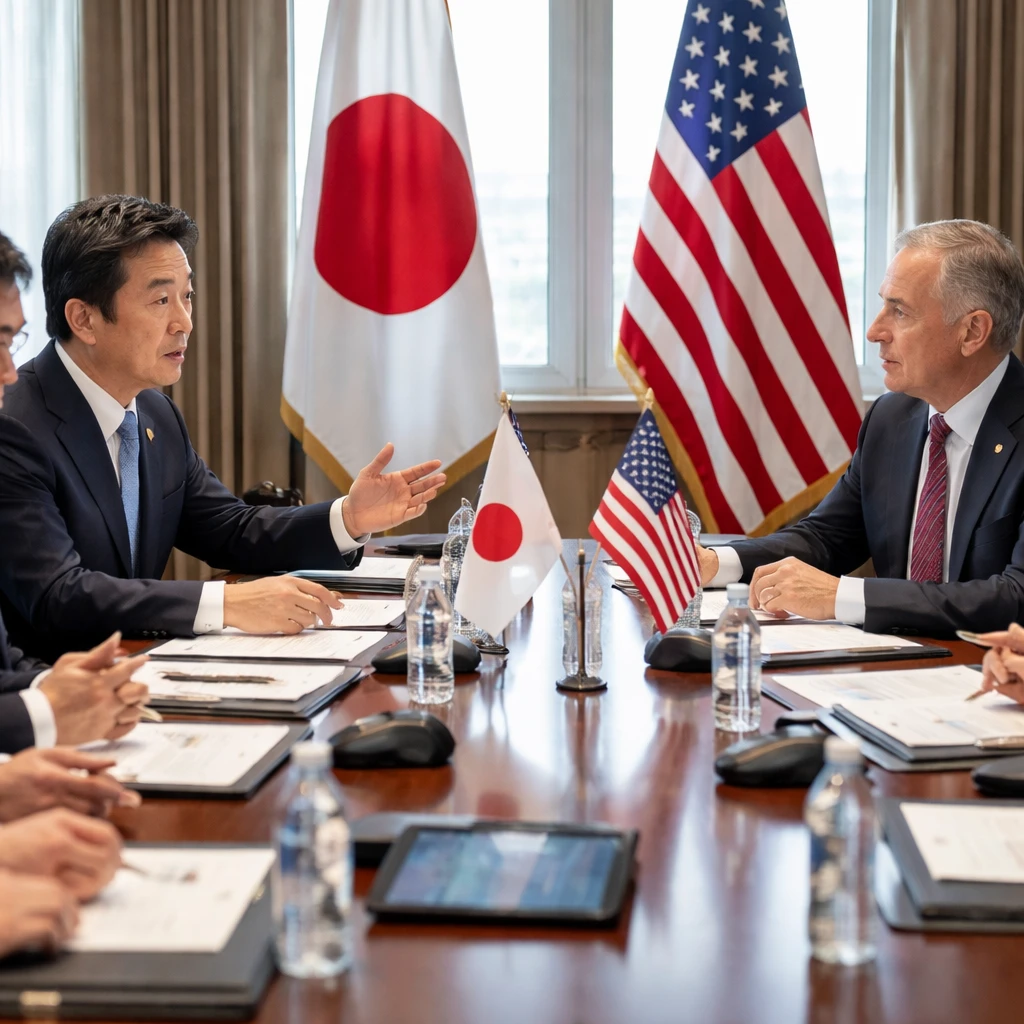
Japan has made an official appeal to U.S. authorities seeking assurance that trade concessions it negotiated will not be eroded by recently announced American tariff measures. The request was communicated by Japanese Minister of Economy, Trade and Industry Ryosei Akazawa during discussions with U.S. Commerce Secretary Howard Lutnick on Friday, where Akazawa sought an exemption for Japanese goods from a newly proposed blanket 15% tariff.
The talks unfolded against a backdrop of market sensitivity. The USD/JPY exchange rate rose to 157.80 by 16:58 ET (21:58 GMT), reflecting heightened trade uncertainty, while the Nikkei 225 staged a late rally to finish at 55,620.84, a 0.62% gain on the session. Despite that recovery, the index remained more than 5% lower on the week.
The Japanese appeal follows a turbulent period in U.S. trade policy and court rulings. After the U.S. Supreme Court struck down several of President Donald Trump’s prior tariffs in February, the administration responded by instituting a fresh 10% baseline duty. That baseline carries the potential to be increased to 15%, a move that could effectively "stack" additional levies on top of existing duties and thereby negate a central element of last year’s bilateral agreement.
Under the 2025 deal, Japan had secured a 15% ceiling on automobile tariffs, a marked reduction from the earlier 27.5% level. That concession was achieved in return for Japan’s commitment of $550 billion in investments into U.S. infrastructure and energy projects. Akazawa stressed that Japan’s treatment under U.S. trade policy should "not become less favorable than what was agreed last year," and warned that any change would materially increase costs for Japan’s export-oriented industries.
Despite the dispute over duties, both sides emphasized ongoing economic cooperation. Discussions between Akazawa and Lutnick covered progress on the $550 billion investment package and a proposed second wave of projects aimed at critical minerals and energy security.
Reports referenced during the talks indicate a significant nuclear power project involving Westinghouse is being considered for inclusion in the deal’s next phase. These deliberations follow an initial $36 billion tranche that targeted offshore drilling and natural gas production.
The bilateral discussion also served as a prelude to Prime Minister Sanae Takaichi’s upcoming visit to Washington on March 19. The U.S. Commerce Department posted about the meeting on social media, though its public comment did not mention the specific request from Japan for tariff exemptions.
Market and sector context
- Currency - USD/JPY movements reflected immediate trade-policy risk.
- Equities - The Nikkei showed resilience intraday but remained under weekly pressure.
- Industry impact - The automobile sector, energy projects and critical minerals investments are central to the talks.