
Thailand’s largest state pension vehicle, managed by the Social Security Office and valued at $88 billion, is under fresh scrutiny after recent market turbulence pushed its internal risk metrics beyond set limits, two board members told Reuters.
The fund, which supports healthcare, unemployment benefits and pensions for roughly 25 million people in Thailand, saw its value-at-risk (VaR) measure exceed the fund’s 8% threshold on March 9. Sustarum Thammaboosadee, a member of the Social Security Office board, attributed the breach largely to the fund’s exposure to Thai equities.
"The impact exceeded our value-at-risk limit for the first time in two years," Sustarum said, referring to the model the fund uses to assess potential portfolio volatility. The same selloff pushed Thailand’s benchmark share index sharply lower after the start of the U.S.-Israeli war against Iran, with panic selling culminating in an 8% drop on March 4 that triggered a market circuit breaker - the first such activation since the COVID-19 pandemic.
Portfolio composition and risk profile
As of December, Thai equities comprised 7% of the fund’s holdings. The portfolio otherwise remains heavily allocated to government and state enterprise bonds and other low-risk assets: data shows 69% of the fund is invested in low-risk instruments.
That concentration in domestic, low-yielding assets lies at the centre of concerns voiced by members of the fund’s investment board, who say the structure limits the fund’s ability to both seek higher returns and react quickly to global market shocks.
Structural shortcomings highlighted by board members
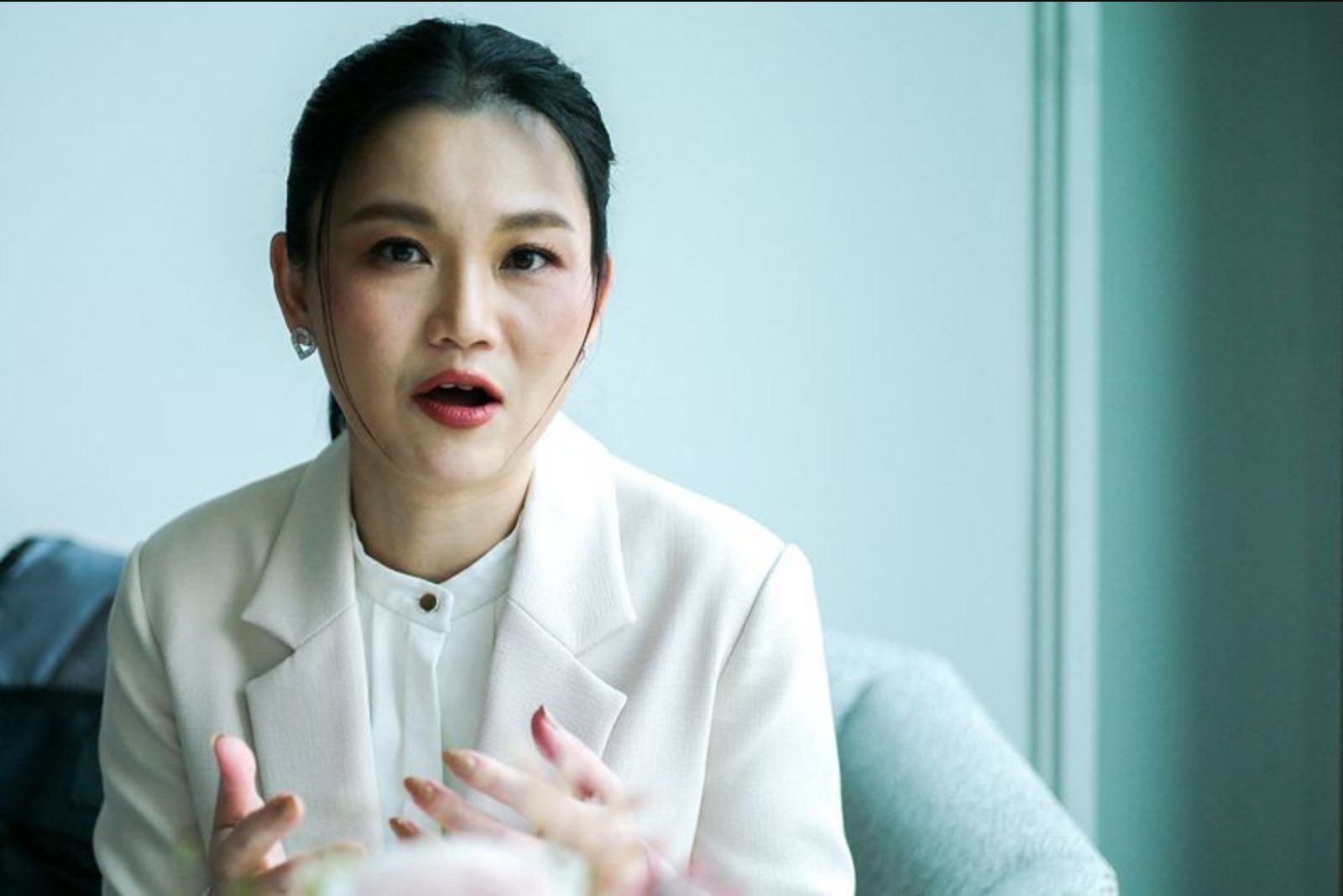
Phanthira "Petch" Vergara, another investment board member, described a set of entrenched structural problems that hamper performance: limited diversification, slow bureaucratic decision-making and a governance framework she likened to where Malaysian pension funds stood a decade ago. She pointed out that countries such as Japan, South Korea and Malaysia have implemented reforms that Thailand has not yet adopted.
Phanthira said returns on some parts of the portfolio are so low they can scarcely be considered investments, arguing that the fund needs higher returns to manage the twin pressures of expected global shocks and a growing elderly population.
"We have the potential to be the next Malaysian or South Korean pension fund in Asia if we are able to fix our problems," Phanthira said, noting examples of professionally managed, independent funds elsewhere in the region.
Phanthira, who previously served as an executive director at Goldman Sachs, has set forth a target rebalancing plan for the fund: reduce allocations to low-risk assets to 60% from more than 70%, and raise allocations to higher-risk investments to 40%. That higher-risk allocation would include a proposed $11.6 billion commitment to global private assets such as private equity, private credit and hedge funds. Ultimately, the fund aims for a 50-50 split between lower- and higher-risk holdings by 2027.
Despite that stated ambition, progress has been slow: low-risk assets still account for 69% of the portfolio.
Diversification and overseas exposure
Board members say the fund’s heavy domestic focus further compounds its vulnerability. Approximately 60% of the fund is invested in domestic assets, including bank savings, while about 40% is in foreign markets. Phanthira noted that when Thai markets are healthy, they still tend to lag global peers, and without greater international diversification the fund misses opportunities available to other national pension pools.
She cited South Korea’s national pension fund as an example of broader international exposure delivering stronger returns: that fund reported a return of 18.82% in 2025, a figure Phanthira linked to its wider global allocation.
Governance constraints and calls for independence
Board members also flagged the fund’s legal and operational position as a government agency under the Labour Ministry as a major constraint. Sustarum said this status limits the fund’s flexibility to communicate and act during periods of heightened global volatility.
"In other pension funds, there would be a process to inform the public about how the fund is managing the volatility," Sustarum said. "But for us, it is a closed system that lacks flexibility and transparency."
The Social Security Office has defended its stewardship of the fund. Spokesperson Niyada Seneemanomai told Reuters the office retains a reasonable degree of flexibility and can hire professionals on competitive salaries.
Nonetheless, reform proponents argue that greater independence and professional governance are essential to the fund’s long-term health. Proposed structural changes include increasing representation of insured workers on the board and transitioning management to an independent body of professional fund managers to pursue better returns and more agile risk management.
Phanthira underscored the practical consequences of the current arrangement: it not only complicates risk management during global crises but also prevents the fund from fully exploiting opportunistic investments when markets present attractive entry points.
Outlook and implications
Executives on the investment board framed the need for reform as both immediate and strategic: immediate because recent market shocks exposed risk-management limits; strategic because the fund faces growing long-term liabilities tied to an aging population. Their remarks outline a pathway of diversification, re-weighting toward higher-return asset classes and governance reform intended to align management practices with internationally reformed peers.
How fast and how far the fund moves on those proposals remains unclear. Board members have articulated targets and priorities, but current allocations and the fund’s institutional structure indicate that significant change will require sustained effort and likely regulatory and political navigation.