
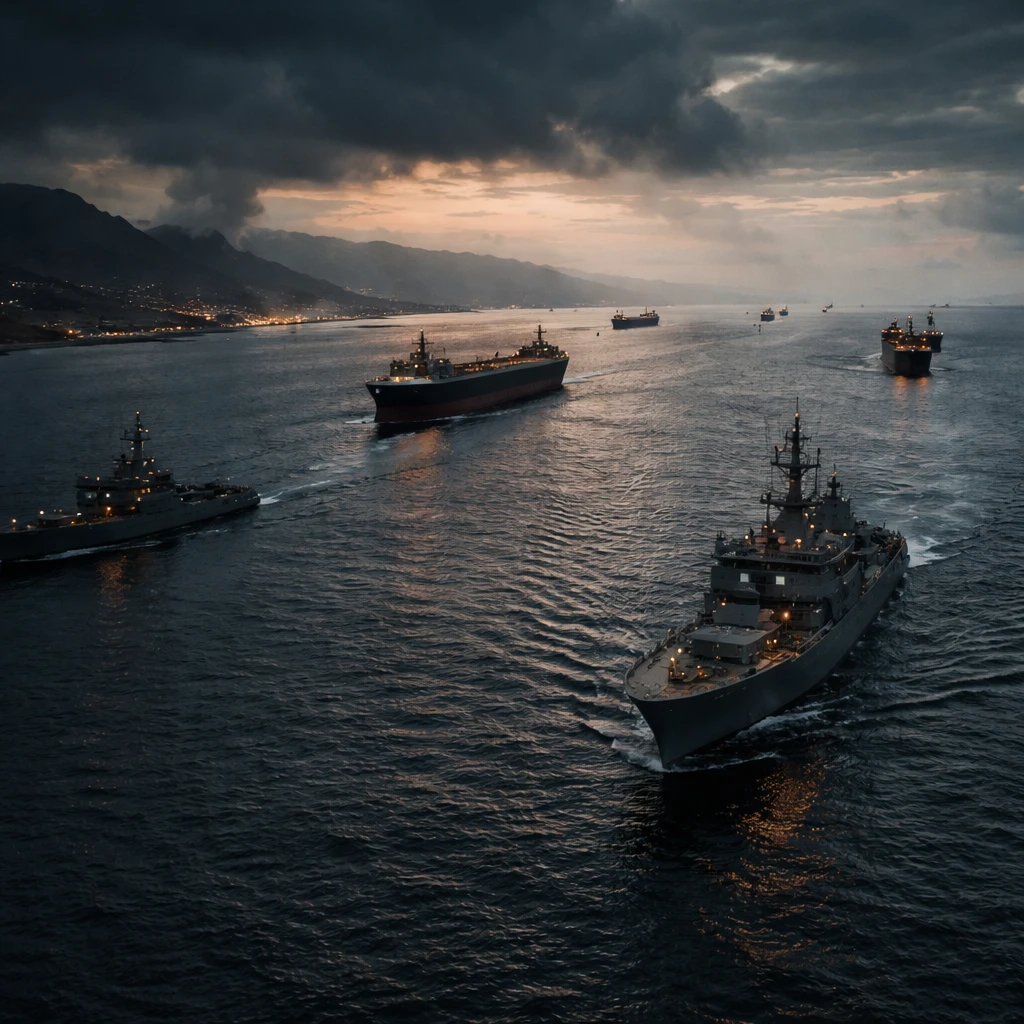
Iranian officials are showing little appetite for negotiating a reopening of the Strait of Hormuz as they contend with persistent military strikes, according to people involved in direct, high-level contacts with Tehran.
Those contacts say that assaults on energy infrastructure and targeted strikes against Iranian officials - including the recent killing of security chief Ali Larijani - have delayed attempts to resume normal commercial shipping through the strategic waterway.
The security deterioration has coincided with a sharp rise in oil prices. Brent crude traded above $111 a barrel, while the most active U.S. crude futures climbed more than 2.9% to trade above $98.35 a barrel by 1:45 pm ET on Friday, reflecting market concern over disruptions to supply routes.
Diplomatic momentum to arrange escorted transits through the strait has also faltered. Nations that had been pushing to provide naval escorts, including the UK and France, have seen that effort lose traction as the fighting shows no clear sign of abating.
The same assessment is said to be common across officials in Europe and the Middle East. Those officials are reportedly losing confidence that the United States and Israel have an exit plan, and they expect deeper economic disruptions if the violence continues.
In Brussels on Thursday, leaders of the European Union voiced concern about a potential sustained price shock. "The real issue now is to assert Europe's position in this increasingly challenging world and to ensure that we can keep pace, both in terms of our defense capabilities and our energy supply," German Chancellor Friedrich Merz said Thursday. "All of this is only possible with a strong economy." The leaders framed the challenge as particularly problematic for Europe as it seeks to lower energy costs, rebuild military capability and maintain pressure on Russia over its war in Ukraine.
At the outset of the conflict, Iran told regional intermediaries that it was willing to discuss a truce if it had guarantees there will be no further attacks on the country, but such an outcome now seems unrealistic, according to the same contacts.
Implications and context
- Attempts to reestablish commercial navigation through the Strait of Hormuz have been slowed by both attacks on energy infrastructure and targeted strikes on Iranian figures.
- Rising crude prices indicate the market is pricing in heightened risk to shipments through the region.
- Efforts by European states to organize escorted transits have lost momentum amid ongoing violence and growing doubts about a clear exit strategy from involved powers.
Observers and officials cited in direct contacts with Tehran emphasize that, while there was early willingness from Iran to consider a ceasefire under strong guarantees, the evolving security environment has made such a diplomatic outcome appear unlikely at present.