
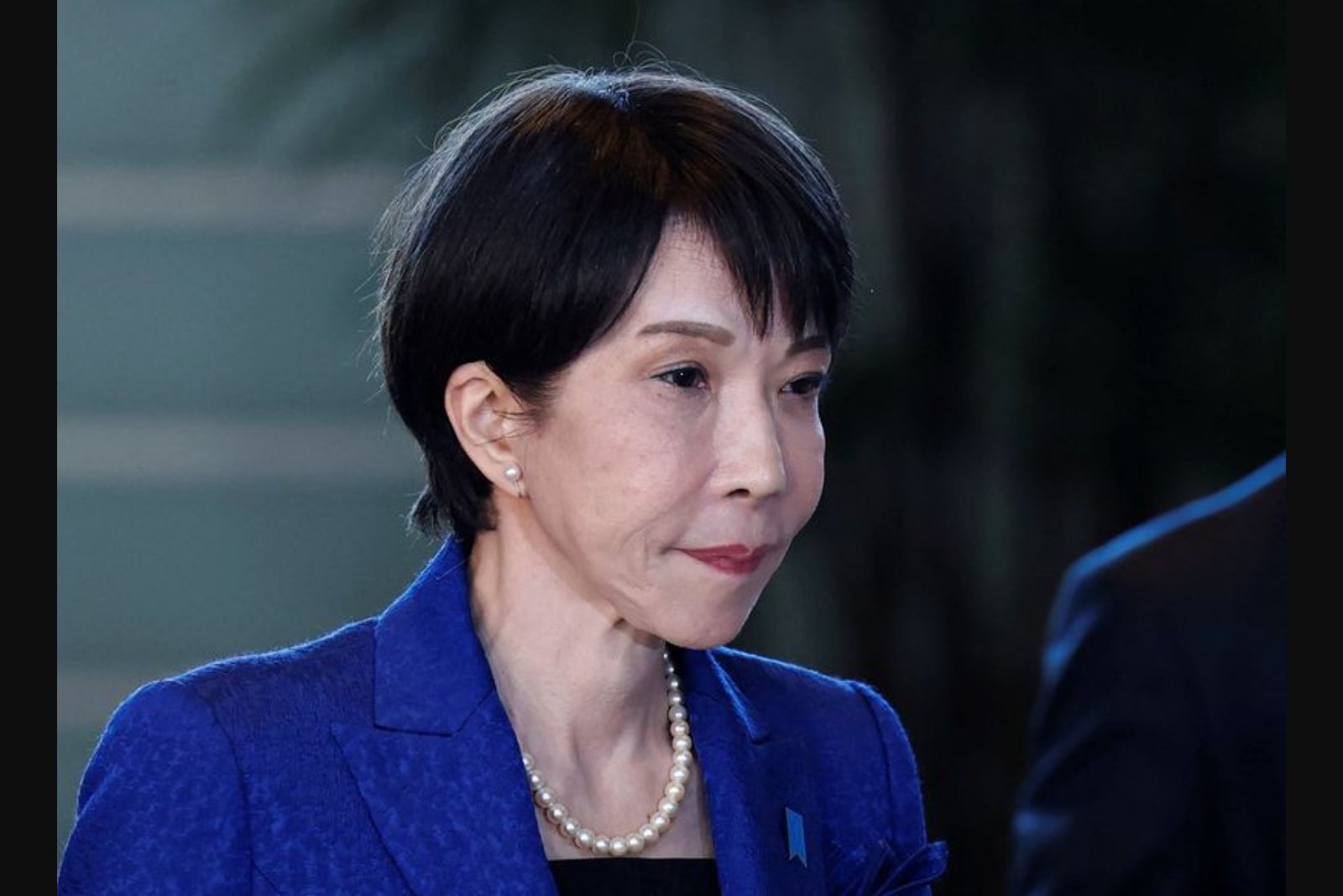
TOKYO, Feb 9 - Japan's vast foreign currency reserves, valued at about $1.4 trillion, have come under renewed examination as the government searches for ways to finance an ambitious tax-cut proposal unveiled after Prime Minister Sanae Takaichi's decisive election triumph. The reserves - a key buffer for future yen interventions - are being discussed as a possible source of funds to cover an estimated 5 trillion yen annual shortfall linked to suspending the consumption tax on food.
Takaichi has pledged to accelerate debate on scrapping the 8% tax on food sales for two years and said the measure would be pursued without issuing fresh government debt. She also indicated further consultations with other parties would shape the details of the plan. The scale of the proposed fiscal move - and the insistence on avoiding new borrowing - has put pressure on officials to examine alternative sources within existing public assets.
Some government insiders, speaking on condition of anonymity because discussions are sensitive, say the prime minister may consider tapping surplus income linked to the currency reserves. In a campaign speech she highlighted that Japan's foreign reserves had been a "major beneficiary of the weak yen and 'performing very well.'"
Finance Minister Satsuki Katayama acknowledged the possibility on television, saying it was conceivable that the large surplus could be used. "However, this touches on the issue of foreign-exchange intervention. From the standpoint of national interest, it is not desirable to disclose all the details of what is available," she said.
The prospect of leaning on reserve-related income has already affected markets. Takaichi's tax-cut intentions and broader expansionary fiscal agenda pushed Japanese financial markets into turbulence last month, driving bond yields to record highs amid investor concern about the government's capacity to finance the additional spending in a country with the heaviest debt load among developed economies.
In the most recent fiscal year, a special government account tied to currency reserves recorded a record surplus of 5.4 trillion yen. That surplus reflected income from holdings of U.S. Treasuries accumulated during earlier rounds of dollar-buying intervention. The assets in that account are primarily invested in U.S. Treasuries and are financed through yen-denominated borrowing, with the narrow gap between borrowing costs and returns widened by the U.S.-Japan interest rate differential.
There is precedent for diverting surplus from the reserve account to general government finances. Under current rules, at least 30% of an annual surplus must be retained in the account as a buffer against potential future losses, but that requirement has sometimes been relaxed to allow the full amount to be transferred to the general account. One government official observed that "currency reserves have at times been used for political purposes."
Still, voices inside and outside government caution against overreliance on reserves as a fiscal source. Saisuke Sakai, senior economist at Mizuho Research & Technologies, said: "Foreign currency reserves are, at their core, a safety mechanism to ensure currency stability." He added that while income from the reserves matters, "it should not be relied on excessively as a permanent funding source as it fluctuates with markets and interest rates."
Given the scale of the revenue shortfall implied by the tax suspension, any additional surplus from reserve income is likely to be small in comparison. That has prompted the largest opposition party to call for more sweeping reforms, suggesting the creation of a sovereign wealth fund by folding Japan's foreign currency reserves together with the central bank's ETF holdings to seek higher returns.
Opposition lawmaker Isamu Ueda commented that "the size of the reserves may be a bit excessive in light of the purpose of ensuring currency stability." He noted that U.S. Treasuries are extremely stable assets and that a "somewhat more proactive investment approach" could be pursued without necessarily taking on significantly higher risk.
Several government officials privately rejected the idea of large-scale restructuring or sales of Treasury holdings as impractical. One official warned that big sales of U.S. Treasuries could upset Washington at a time when the U.S. bond market remains sensitive; Japan is the largest foreign holder of U.S. government debt.
Concerns extend to Japan's future capacity to intervene in currency markets. Hiroshi Watanabe, a former vice finance minister for international affairs, said some fear that Japan "could be unable to intervene to curb yen weakness if its foreign currency reserves are insufficient."
Fred Neumann, chief Asia economist at HSBC in Hong Kong, agreed with that caution, stating "it would be risky to sell reserves primarily for fiscal purposes, and not for exchange rate management, as this would lower available reserves for possible future intervention."
Currency conversion used in public reporting at the time put $1 equal to 156.2900 yen.
As Tokyo weighs options to fill a multibillion-yen gap while honoring a pledge to avoid new debt, policymakers face competing objectives: finding revenue to support electoral commitments, maintaining a safety buffer for market stability, and managing international sensitivities tied to large-scale asset sales. The debate over how, or whether, to use reserve-related income is likely to continue as the government refines its fiscal approach in the weeks ahead.