
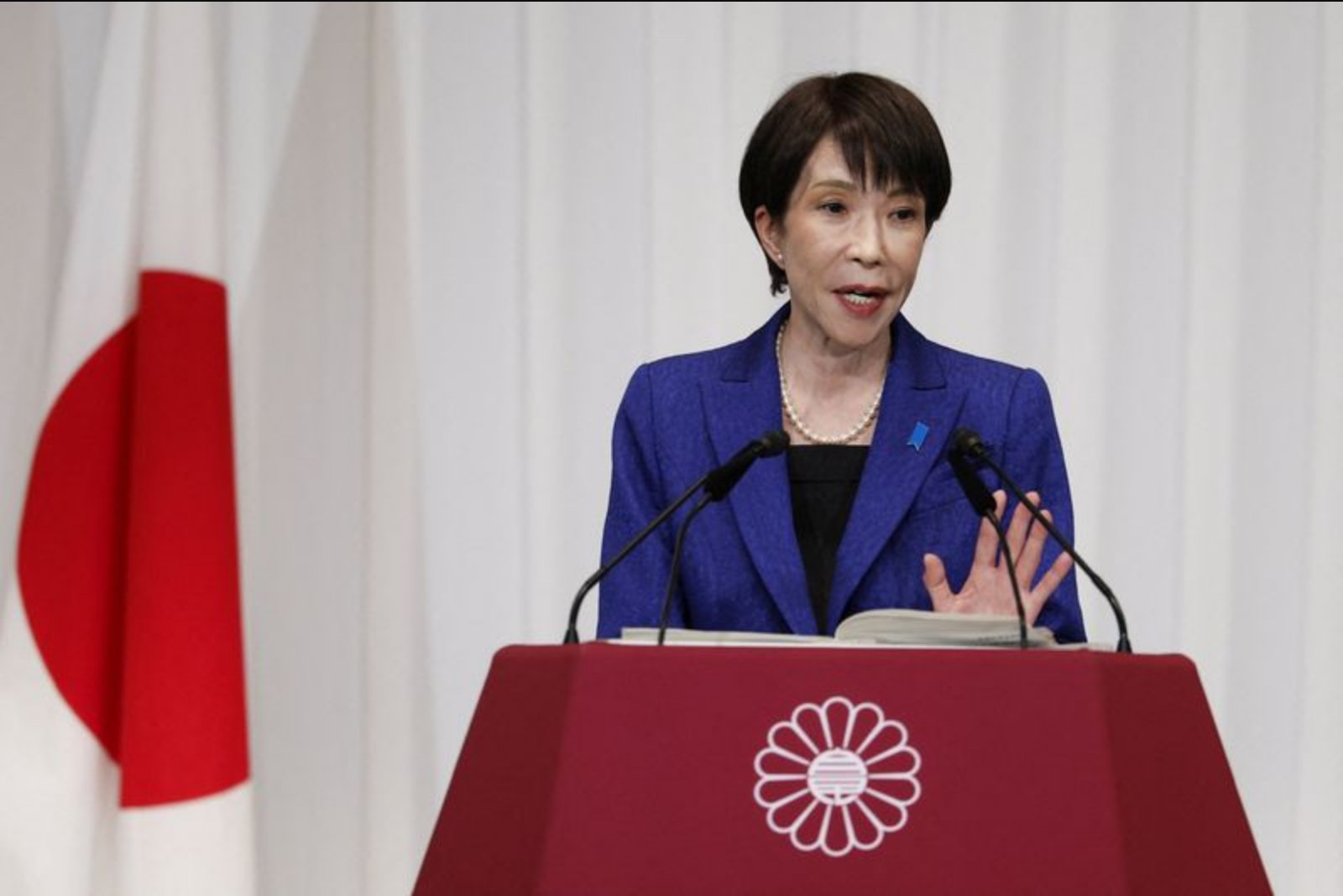
Japanese Prime Minister Sanae Takaichi’s commanding election result has strengthened her hand to advance policies aimed at re-energising growth through higher investment and tax relief. Her renewed mandate bolsters a political case for easier financing conditions, yet the specter of further yen depreciation - and the subsequent rise in import-driven inflation - remains a clear check on efforts to block or delay interest rate increases by the Bank of Japan.
Takaichi’s win last weekend has been interpreted by some policymakers and market participants as providing political cover for measures to stimulate the economy. Those measures, which centre on promoting investment and trimming taxes, would typically reduce the incentive for higher borrowing costs. Several analysts say she may also try to influence the monetary policy debate by nominating central bank board members who share her reflationist view when two seats open this year.
Yet three sources and independent analysts told Reuters that the risk of renewed yen selling - which would push up import prices and add to household pain through higher food costs - is one of the few tangible constraints that could dissuade Takaichi’s administration from confronting the BOJ over rate hikes. They spoke on condition of anonymity because of the sensitivity of the subject.
Former Bank of Japan executive Akira Otani, who is managing director at Goldman Sachs Japan, warned that currency weakness and its inflationary consequences could prompt a faster-than-expected tightening by the BOJ. Otani currently expects a rate increase at the BOJ’s July meeting but said there is a significant chance of earlier action in April or June if those risks materialise.
Otani added that if government officials refrain from opposing rate rises and instead publicly state that monetary policy decisions will be left to the BOJ, it could signal coordination between the government and the central bank that clears the way for rate increases.
Takaichi is reported to be attuned to market reactions to her moves, especially fluctuations in the yen and Japanese government bond yields, according to two sources. Those market dynamics have weighed on public sentiment before: previously elevated food prices, in part attributed to a weaker currency, damaged household finances and eroded the governing party’s approval ratings - a dynamic that cost former premier Shigeru Ishiba his position.
"What’s most important for the BOJ is to avoid drawing political heat for causing unwelcome yen declines, which work to accelerate inflation," a third source said. "Yen moves will be key to how soon the BOJ pulls the trigger."
Under Japanese law the Bank of Japan nominally has independence, although its record shows it has at times been responsive to political pressure to expand support for the economy. The most prominent intervention cited by analysts was in 2013, when then-Prime Minister Shinzo Abe appointed Haruhiko Kuroda to lead a shift toward a more aggressive stimulus stance at the central bank.
Markets have been pricing in about an 80% probability of a BOJ rate hike by April, although the bank itself has given few explicit clues about exact timing. The BOJ’s next monetary policy meeting is scheduled for March 18-19, roughly when Takaichi is expected to travel to the United States to meet President Donald Trump. The bank will conduct a formal review of its growth and price forecasts at a meeting on April 27-28.
Naomi Muguruma, chief bond strategist at Mitsubishi UFJ Morgan Stanley Securities, said the BOJ likely aims to raise rates again around April, June or July, but emphasised that the precise timing will hinge on the yen’s movement.
Takaichi herself has stressed a dual focus: to use proactive fiscal policy to encourage investment and growth while remaining mindful of market developments when shaping government policy. That stance underlines her sensitivity to the inflationary risk posed by further yen depreciation and the potential political fallout from rising import costs.
The BOJ has likewise flagged exchange-rate shifts as a determinant for the timetable of future rate increases. In January the central bank revised upward its price projections and cautioned that a weak yen could lift underlying inflation by prompting firms to pass on higher input costs to consumers. Minutes from that month showed policymakers debating whether mounting price pressures driven by currency moves risked leaving the bank behind the curve.
Last December the BOJ implemented a rate hike to 0.75% after a period of sharp yen weakening - a move that met limited resistance from the government at the time. When Governor Kazuo Ueda pre-announced that tightening, the finance minister said she had no objection to his comments.
There remains uncertainty about the depth of Takaichi’s commitment to keeping interest rates low and the extent to which she will attempt to influence monetary policy in practice. The first tangible test of her stance will come with the selection of nominees for two BOJ board seats opening this year. One vacancy arises when Asahi Noguchi’s term ends in March; Noguchi, once seen as a dove, voted for the last two rate increases. The other opening happens when Junko Nakagawa’s five-year term expires in June.
Choosing candidates with dovish views could tilt the nine-member board toward a softer stance on tightening, complicating the BOJ’s efforts to lift still-low interest rates. Such appointments would also signal whether Takaichi intends to pursue similar nominations when two more seats become available in 2027, and for the governor’s post when Governor Ueda’s term concludes in 2028.
"If the yen stabilises, there are few reasons for the BOJ to rush," Muguruma said. "With the personnel appointments looming, the BOJ may not push too hard in getting a hike done early."
Key decisions on currency moves, personnel choices at the central bank, and how the government publicly frames its stance on monetary policy will be watched closely by markets and households alike. Those factors will influence the timing and pace of any future rate moves and the political calculus that surrounds them.