
Economy February 9, 2026

Takaichi Thanks Trump and Pledges Deeper U.S. Alliance After Lower House Supermajority

Prime minister to visit White House this spring as victory clears path for fiscal and security priorities

By Marcus Reed
Takaichi Thanks Trump and Pledges Deeper U.S. Alliance After Lower House Supermajority

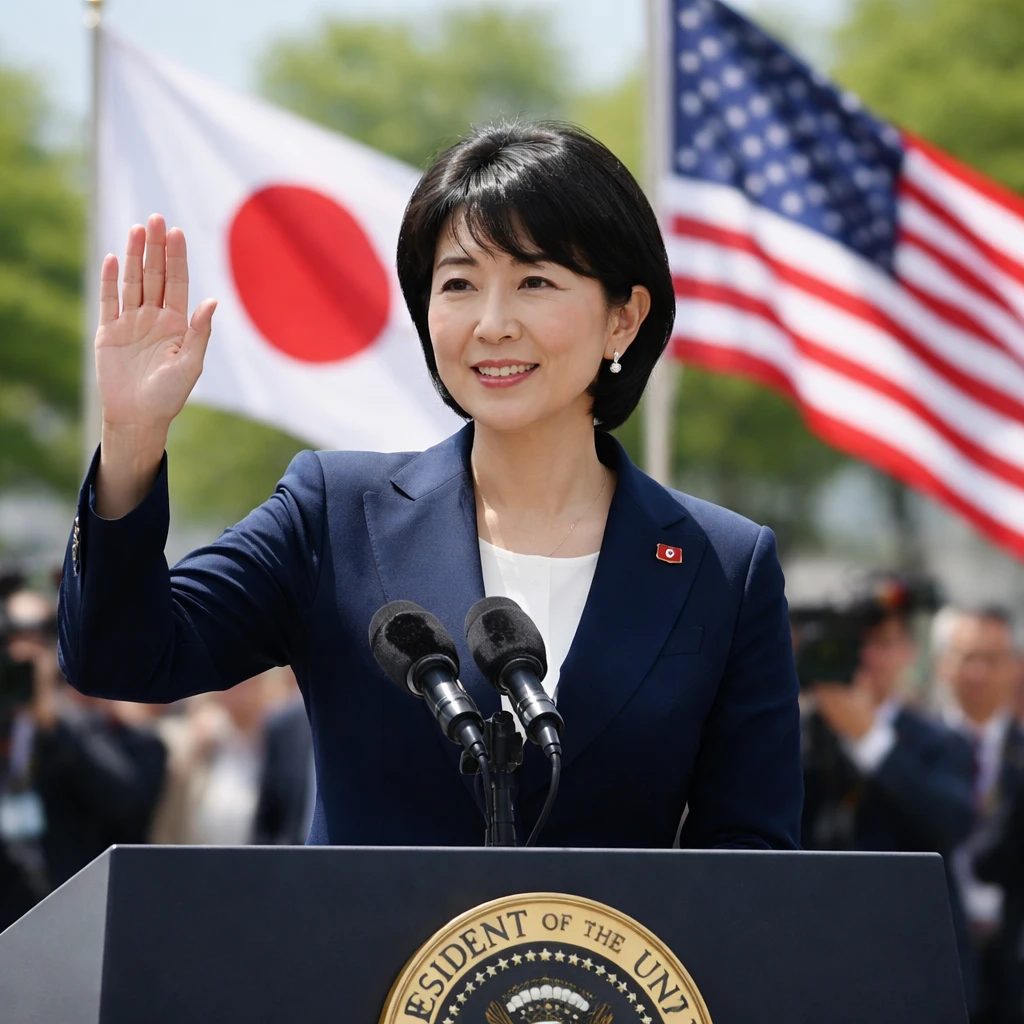
Japan's Prime Minister Sanae Takaichi expressed gratitude to U.S. President Donald Trump following a decisive lower house election result that delivered a supermajority for her ruling coalition. She says she will visit Washington this spring and intends to press ahead with a fiscal agenda and an assertive security policy emphasizing closer ties with the United States.

Key Points

  • Takaichi publicly thanked U.S. President Donald Trump and said she will visit the White House this spring.
  • Her ruling coalition - the Liberal Democratic Party and the Japan Innovation Party - won a supermajority in the lower house, opening a path to pursue her fiscal agenda and enabling bypass of an upper house where her parties lack a majority.
  • Takaichi, Japan's first female prime minister, has prioritized increased defence spending, a tougher stance toward China, and closer ties with the United States.

Japanese Prime Minister Sanae Takaichi on Monday publicly thanked U.S. President Donald Trump for his support after her ruling coalition secured a landslide victory in the lower house over the weekend. In a social media post, Takaichi said she is "sincerely grateful to President Donald J. Trump for his warm words," and announced plans to travel to the White House in the spring.

In the same post she highlighted the strategic focus of her administration, stating, "I look forward to visiting the White House this spring and to continuing our work together to further strengthen the Japan–U.S. Alliance." She added, "The potential of our Alliance is LIMITLESS."


The election outcome came as the coalition formed by the Liberal Democratic Party and the Japan Innovation Party won a supermajority in Japan's lower house on Sunday. That parliamentary strength, the prime minister's office said, opens a route for Takaichi to advance her fiscal agenda. The supermajority also creates the procedural ability to bypass the upper house, where her parties do not hold a majority.

President Trump had offered his endorsement of Takaichi prior to voting and sent his congratulations on Sunday evening after her victory was confirmed.


Takaichi, Japan's first female prime minister, has advanced a more assertive foreign and security stance. Her stated priorities include increased defence spending and a tougher posture toward China. Strengthening the relationship with the United States has been identified by her administration as a central element of that agenda.

She previously met with President Trump shortly after taking office in October 2025, and Monday's public remarks reaffirmed the administration's intention to maintain close coordination with Washington.


Taken together, the electoral outcome and Takaichi's stated priorities set the immediate political context: a strengthened ruling coalition with the parliamentary tools to pursue fiscal measures and a clearer mandate to press forward on defence and bilateral security cooperation with the United States. How those priorities translate into concrete legislation and policy measures will depend on the coalition's ability to sustain its parliamentary position and on subsequent engagements with international partners.

Risks

  • The prime minister's policy program depends on maintaining the lower house supermajority to advance fiscal measures - a shift in parliamentary dynamics could impede that agenda. (Impacted sectors: fiscal policy, government finance)
  • Although the supermajority allows the lower house to bypass the upper house procedurally, legislative friction remains possible given the coalition lacks a majority in the upper house. (Impacted sectors: domestic policy, public spending decisions)
  • The administration's emphasis on increased defence spending and a tougher stance toward China introduces uncertainty for sectors linked to defence procurement and international trade. (Impacted sectors: defence, trade and shipping)

More from Economy

SCOTUS Ruling on IEEPA Tariffs Offers Relief but Leaves Major Questions for Markets and Treasury Feb 21, 2026 USMCA Goods Largely Exempted From New 10% Global Tariff, But Review Threat Looms Feb 20, 2026 U.S. Trade Office to Open Broad Section 301 Reviews Covering Major Partners Feb 20, 2026 Supreme Court Term Spotlight: High-Stakes Cases Shaping Law and Policy Feb 20, 2026 Trump Vows Fresh 10% Global Tariff After Supreme Court Limits His Trade Authority Feb 20, 2026