
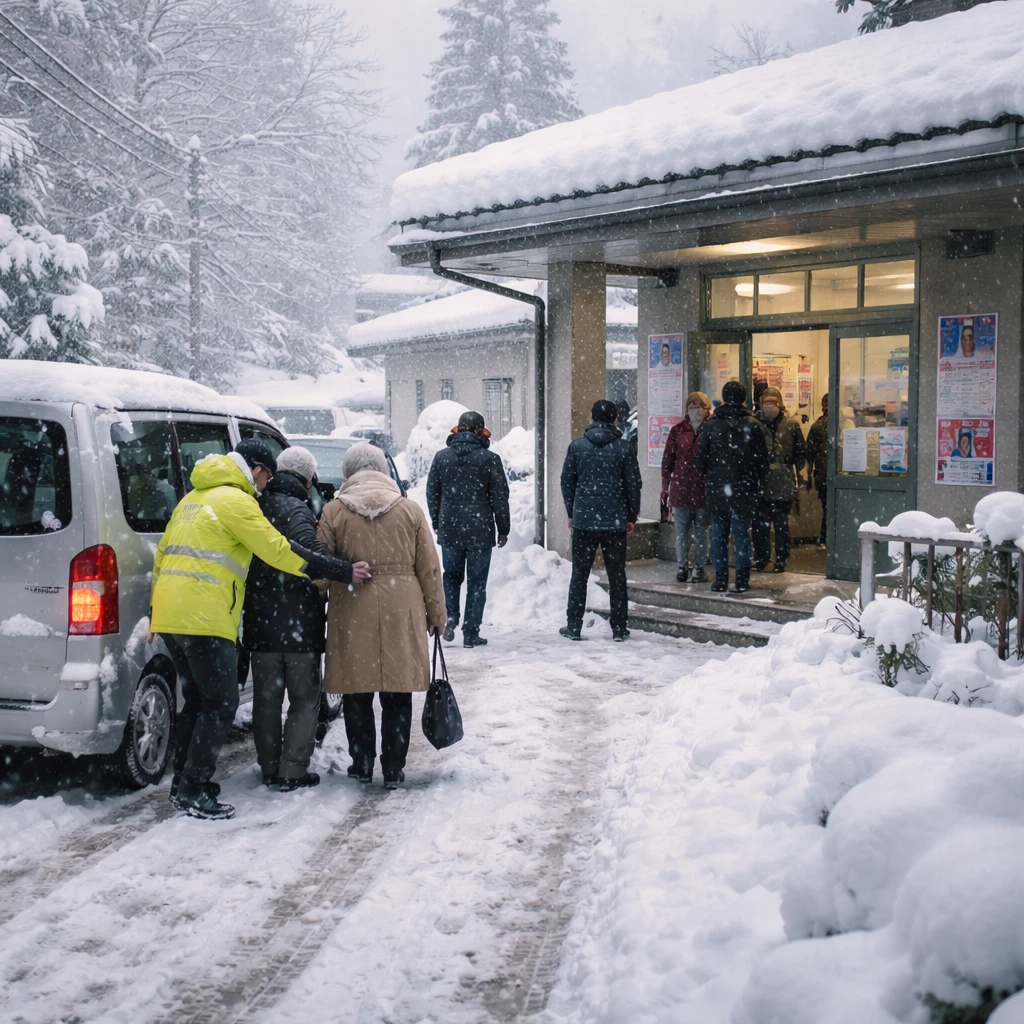
Voters across Japan cast ballots on Sunday in an election widely expected to hand Prime Minister Sanae Takaichi and her allies a substantial victory, even as record winter storms threatened to depress turnout in parts of the country.
Multiple opinion polls indicate the conservative coalition led by Takaichi could secure more than 300 of the 465 seats in the lower house of parliament, a marked increase from the 233 seats it currently defends. If the alliance of Takaichi's Liberal Democratic Party and the Japan Innovation Party - commonly called Ishin - reaches 310 seats, it would gain the capacity to override the opposition-controlled upper chamber.
Takaichi has said she will resign if the coalition fails to hold a majority. The stakes are therefore high not only for the governing alliance's legislative agenda but for political stability in the near term.
Campaign momentum and policy priorities
Sanae Takaichi, 64, who was chosen as LDP leader in October and assumed the premiership then, called the uncommon winter election seeking a fresh public mandate. Her candidacy has drawn notable support from younger voters and developed a social-media driven following dubbed "sanakatsu" - a trend that celebrates products she uses, such as the handbag and the pink pen she employs when taking notes in parliament.
Her platform has emphasised stepped-up military spending to counter China - a policy that has already resulted in a diplomatic row - and a mix of economic stimulus measures and tax reductions that analysts say have unnerved financial markets. She has pledged to suspend the 8% sales tax on food for two years to ease pressure on households facing higher prices in part linked to the sharp decline of the yen.
Seiji Inada, managing director at FGS Global, noted that a sizable victory for Takaichi would expand her political latitude to pursue measures such as consumption tax cuts, and that markets could react in the days following a decisive result - with potential renewed pressure on the yen.
Weather complicates turnout and could amplify organised voting
Authorities forecast up to 70 cm (28 inches) of snow in northern and eastern districts on Sunday, forcing some voters to contend with blizzard conditions to make it to polling stations. Only three postwar elections have been held in February - most are scheduled in milder months - and the heavy snowfall prompted organisers and campaigners to urge citizens to vote early where possible.
In Nagaoka, a rural city in Niigata prefecture, snowfall had already piled along roadsides to more than 1 metre (3 feet) on Saturday. Local campaign volunteers encouraged early ballots and some parties mobilised to transport supporters. "It's bad enough here in the towns, but in the mountains there's twice as much snow. It's hard just to leave the house," said Takehiko Igarashi, a volunteer with the Japanese Communist Party, describing efforts to call up supporters and offer rides to polling places.
Recent lower house elections have seen turnout around the mid-50% range. A substantial dip on Sunday could increase the relative influence of organised voting blocs, including Komeito - which last year left its coalition with the LDP and formally merged into a centrist group alongside the main opposition Constitutional Democratic Party of Japan. Komeito maintains close links with the lay-Buddhist Soka Gakkai organisation, which claims at least 8 million members nationwide.
Electoral mechanics and timetable
Voters were selecting lawmakers in 289 single-seat constituencies, with the remainder of lower house seats determined by proportional-representation ballots allocated to parties. Polling stations were scheduled to close at 8 p.m. local time (1100 GMT), and broadcasters were expected to produce projections based on exit polling when voting ended.
Takaichi's popularity among the youngest electorate has been striking in surveys - one recent poll showed more than 90% support among voters under 30 - although that demographic historically turns out at a lower rate than older cohorts that have long bolstered LDP support. On Thursday prior to the vote, Takaichi received an endorsement from U.S. President Donald Trump, a signal that may appeal to right-leaning voters while possibly alienating some moderates.
Implications to watch
The outcome will determine whether the prime minister secures the parliamentary strength to press ahead with promises on fiscal measures such as consumption tax relief and accelerated defence spending. Market participants have been watching the campaign closely for signs of how policy direction might shift and how those shifts could affect the yen and broader financial conditions.
As ballots were being cast, the interaction of severe weather, youth mobilization, organised voting groups and the distribution of seats across single-member districts and proportional lists made for an unusually high-variance electoral test of Takaichi's leadership.